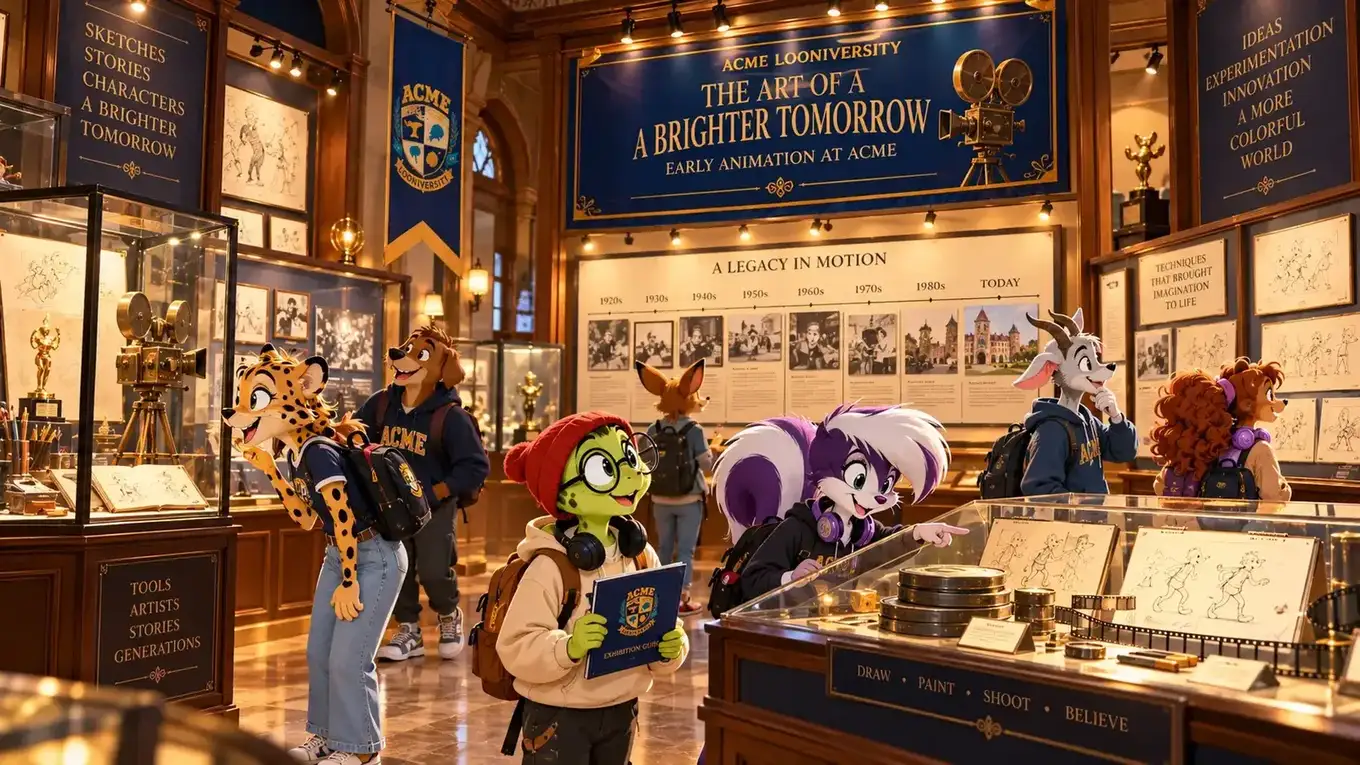
THE UNIVERSITY ARCHIVE has opened a new exhibition tracing how ACME Looniversity’s teachers shaped the language of animated performance, from early character movement and musical timing to the interdisciplinary classrooms students know today.
The display brings together photographs of visiting instructors, rehearsal notes, annotated storyboards, student exercises and preserved course programs. Some of the materials document eras when cartoon technique was taught as an informal craft, passed between performers and animators on the studio floor. Others come from the period when ACME Looniversity began building more systematic instruction around those techniques.
Visitors can follow the transformation of a classroom demonstration across decades: an early exercise in walking and weight might become a course on exaggerated motion; a simple chase sequence becomes a study of anticipation, camera placement and the physics of a good landing. The exhibition pays particular attention to the people who taught these lessons, including former faculty members whose careers took them far beyond campus.
Teachers behind the timing
ACME’s instructional history includes performers, directors, scientists, musicians and occasional visitors who brought unusual professional experiences into the classroom. A section of the exhibition looks at how early animation instruction gradually expanded to include voice performance, production design, sound, storytelling, medicine, and the legal responsibilities that come with owning a character.
Faculty archive cards, preserved teaching tools and photographs from campus performances show how the university’s programs changed without losing their focus on collaboration. The goal is not to present one perfect way to make a cartoon, organizers say, but to explain how different approaches developed and why later generations continue to borrow from them.
Students in history and journalism courses are invited to contribute research notes to the archive. Animation students can compare historical exercises with modern digital methods, while performers are encouraged to try short scenes in the styles represented by the displays.
An archive that keeps growing
The exhibition is part of an ongoing effort to organize university collections and make them useful to students rather than leave them in storage. Alumni are encouraged to share production programs, photographs and firsthand recollections through the university’s established archive channels.
Visitors may explore related collections during posted archive hours. The university hopes the exhibition will remind students that the future of animation depends on understanding the inventive—and sometimes messy—work of the people who came before them.
For additional history, visit the university’s story and the faculty archive.
Return to University News