LOS ANGELES — There comes a moment in every unexpected awards campaign when Hollywood stops talking about the movie you actually made and starts talking about the respectable movie it has decided you might have made.
For Obsession, that moment has arrived.
Focus Features is mounting a broad Academy Awards campaign around Curry Barker’s horror breakout, positioning Inde Navarrette in Best Actress and Barker in the mildly exhausting combination of Best Director, Original Screenplay and Film Editing. The studio is also campaigning the picture and a long list of performers and crafts.
No, this does not make Obsession an Oscar nominee.
If announcing an Oscar campaign made you an Oscar nominee, half of Los Angeles would be walking around with acceptance speeches in their pockets.
Some of them already are.
What it does mean is that the industry has begun talking about Obsession as though it belongs in the room.
For horror, that distinction matters.
Because horror has spent decades being invited to Hollywood’s party, making everybody rich, cleaning up the blood afterward and then being told the awards dinner is formal attire.
THE PRESTIGE CONVERSION
Awards season has its own peculiar vocabulary.
A drama is “serious.”
A period piece is “prestigious.”
A musical is “ambitious.”
A horror movie that receives the same compliments has somehow “transcended genre,” which is a wonderful phrase because it allows everyone to praise a horror film without enduring the indignity of admitting they enjoyed a horror film.
Hotchie motchie, what a system.
The phrase has always irritated me.
If a horror movie is beautifully acted, brilliantly directed and formally adventurous, it has not ceased to be horror. It has simply become good horror.
We do not say a terrific western has “transcended horses.”
Nobody congratulated The Godfather for overcoming organized crime.
Yet horror must regularly arrive at awards season carrying a note from its mother explaining that it is not like the other scary movies.
Animation knows this routine too.
For generations, animated performers and filmmakers have watched Hollywood admire their work while simultaneously placing the medium in a charming little side room where nobody will accidentally mistake it for cinema.
Horror gets a slightly different version of the same compliment.
The industry adores horror when the grosses arrive.
It becomes strangely bashful when the ballots do.
That is what makes Focus’s Obsession campaign interesting.
The studio is not presenting the film as an amusing genre curiosity that wandered onto the red carpet.
It is presenting it as a movie.
What a concept.
THE NAVARRETTE BET
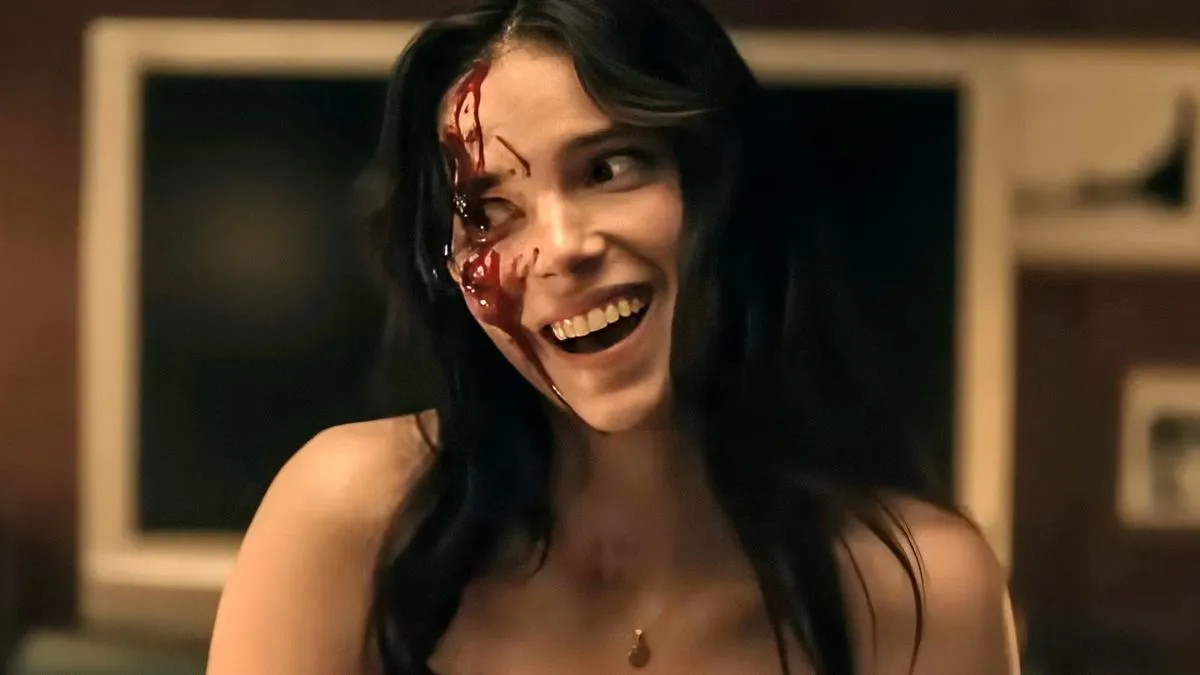
Inde Navarrette is the center of the campaign.
Focus will push her in Best Actress for her performance as Nikki, making the breakout role the most visible piece of a much wider awards strategy.
This part makes sense.
Craft campaigns demonstrate breadth. A director campaign supplies authorship. But an acting campaign gives awards season what it truly craves:
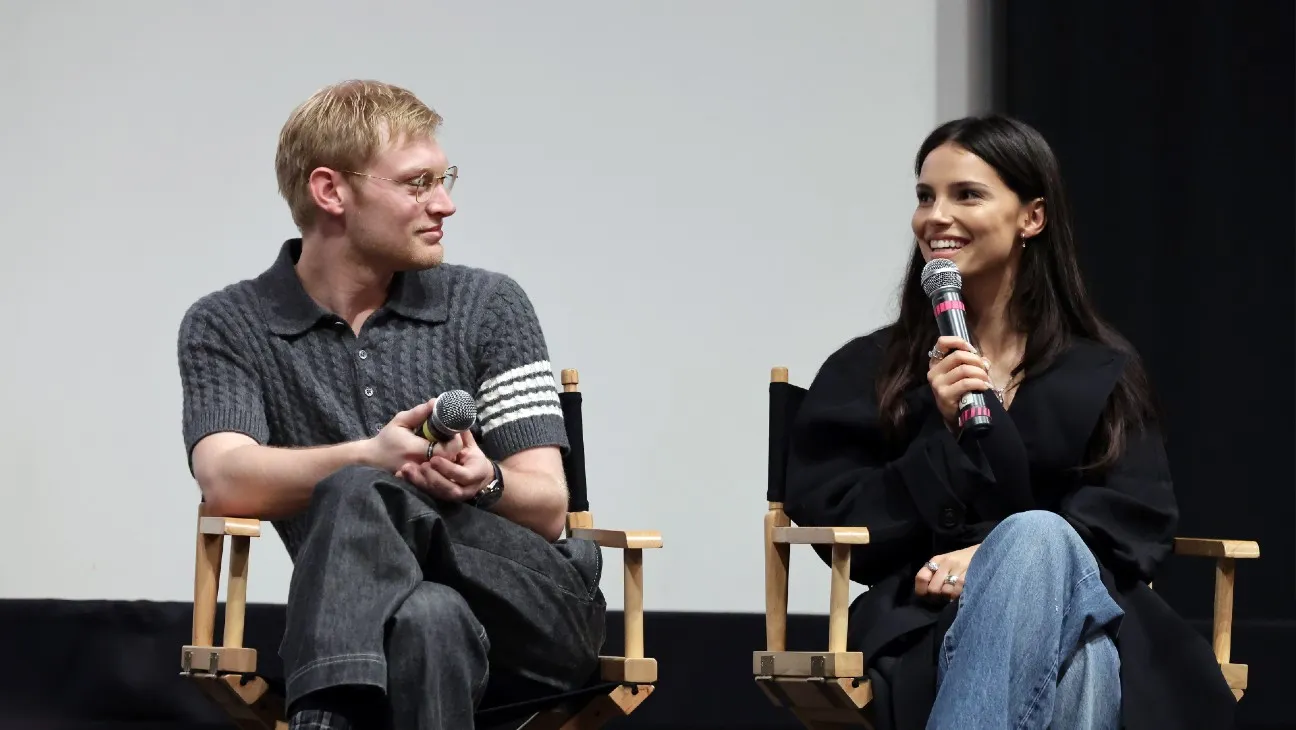
a human being who can sit on a stage beneath a tasteful spotlight and answer the same six questions at 47 different Q&As.
Navarrette also does not arrive with the standard awards-season biography.
She is not a beloved veteran whose nomination has been described as “overdue” so many times that the word now requires its own publicist.
Her career simply looks different after Obsession than it did before it.
That makes this less a coronation than a discovery campaign.
Hollywood loves discovering people.
Almost as much as Hollywood loves insisting afterward that it knew about them all along.
THE BARKER PROBLEM — OR ADVANTAGE
Then there is Curry Barker.
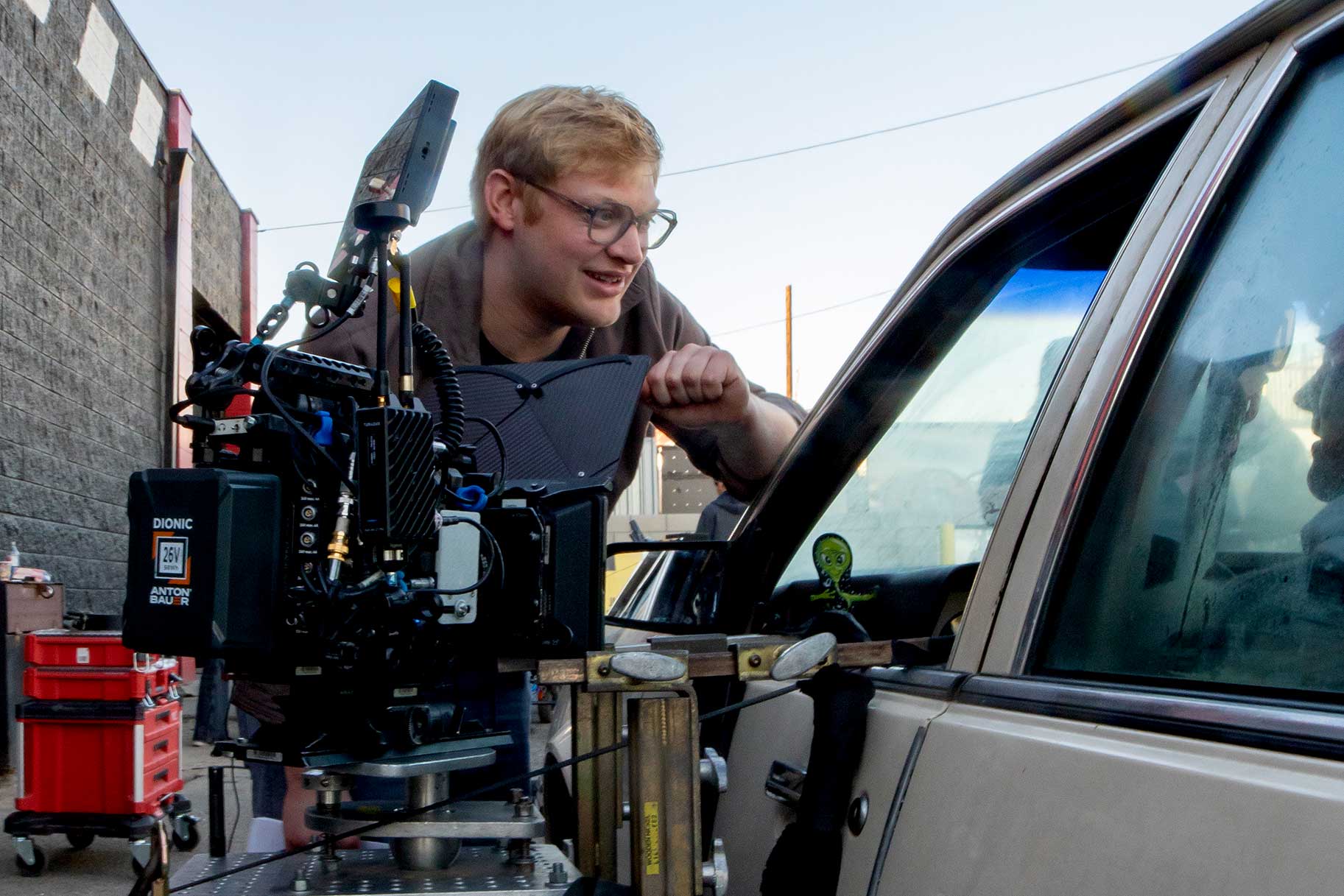
Focus intends to campaign him for directing, original screenplay and editing.
There is an industry term for a filmmaker who writes, directs and shapes his own picture when that filmmaker already has three homes and a shelf full of trophies:
auteur.
When a younger filmmaker comes through YouTube and makes a horror movie on resources closer to an ambitious independent production than a traditional awards vehicle, we tend to call the same thing:
surprising.
Barker has said the production initially had roughly $650,000 and 20 shooting days, with additional money arriving later for more photography.
That background hands Focus something awards consultants would cheerfully trade several relatives to acquire:
a story.
Barker did not spend years assembling an obvious prestige object involving a grieving mathematician, an English coastline and an emotionally significant cello.
He made a horror movie.
People responded to it.
The awards campaign came later.
That chronology is important.
There is a difference between a movie designed to collect trophies and a movie that suddenly finds trophies collecting around it.
THE ‘GET OUT’ QUESTION
Naturally, Get Out is hovering over the conversation.
Jordan Peele’s film turned cultural impact, genre filmmaking and a breakout leading performance into four Academy Award nominations — Picture, Director, Actor and Original Screenplay — and won the last of those.
It is an obvious comparison.
It is also a trap.
Awards season has a terrible habit of allowing one unusual movie through the gates and then forcing every remotely similar movie to present the same passport.
A horror movie cannot simply be excellent.
It has to become “this year’s Get Out.”
An animated drama becomes “the animated film adults can enjoy.”
A comedy becomes “more than a comedy.”
The compliment somehow requires insulting the category on the way in.
Imagine doing this with any other art form.
“An extraordinary novel — so good you’ll forget it’s a book!”
Thank you, I suppose.
Obsession deserves to be considered as Obsession, not as the latest contestant in Hollywood’s annual search for The One Horror Movie We Have Permission to Take Seriously.
THE CRAFT CAMPAIGN MATTERS
The breadth of Focus’s campaign may actually help.
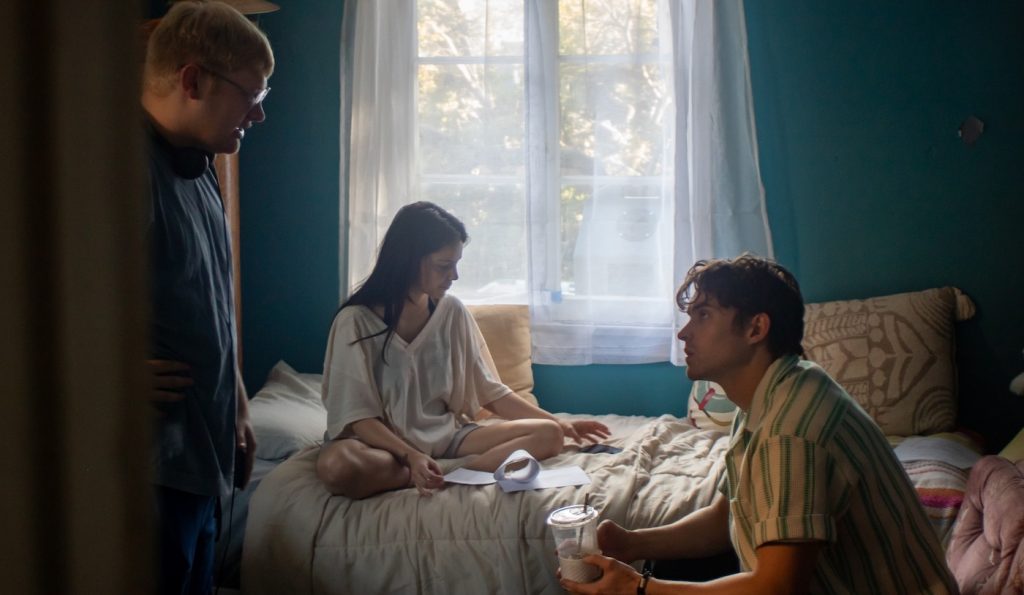
The submission plan extends well beyond Navarrette and Barker into cinematography, production design, costumes, makeup and hairstyling, sound, score, casting and other crafts.
Good.
Genre filmmaking is routinely discussed as though its effects happen by spontaneous combustion.
“The scare worked.”
“The room felt wrong.”
“The monster looked real.”
“The tension was unbearable.”
Yes.
Because somebody made it that way.
A good scare involves timing, sound, framing, performance, design, editing and usually one poor crew member crouched behind something uncomfortable waiting to move an object six inches at precisely the right moment.
Nobody watches Wile E. Coyote fall off a cliff and assumes nature simply took its course. Somewhere, somebody drew the cliff, timed the fall, painted the dust cloud and argued over the pitch of the impact.
Horror deserves the same courtesy.
Effortlessness is generally the result of an alarming amount of effort.
Horror just uses more fake blood.
Usually.
WHAT AN OSCAR CAMPAIGN ACTUALLY MEANS
There is also a persistent misunderstanding outside Hollywood that an awards campaign is a prediction.
It is not.
An awards campaign is an argument.
Focus is telling voters where it believes they ought to look.
The next several months determine whether they bother.
There will be screenings.
There will be Q&As.
There will be receptions containing tiny food on enormous plates.
Craftspeople will spend weeks explaining decisions audiences did not consciously notice because, in many cases, consciously noticing them would have meant the decision failed.
Navarrette will discuss Nikki until she can answer questions about the character while sedated.
Barker will discuss editing while campaigning as an editor, directing while campaigning as a director and writing while campaigning as a writer, occasionally without being permitted to leave the building between conversations.
Eventually somebody will serve him chicken on a skewer.
That is awards season.
The film does not change.
Everything surrounding the film does.
HORROR HAS BEEN HERE BEFORE
Will Obsession actually convert all this attention into nominations?
Ask me after people vote.
Until then, anybody confidently explaining the nominations is either guessing or employed by an awards website whose business model requires pretending guessing is a science.
The more interesting question is why horror must still prove it deserves the conversation in the first place.
The Academy has nominated and rewarded genre films before. Horror is not an unknown substance recently recovered from the ocean floor.
Voters understand monsters.
They understand violence.
They understand the supernatural.
They certainly understand fear. They work in Hollywood.
The resistance has always been cultural rather than procedural.
Certain movies arrive already dressed as prestige.
Others are required to change in the lobby.
Animation knows this.
Comedy knows this.
Horror knows it particularly well.
The maddening part is that the distinction has very little to do with whether the filmmaking is good.
A mediocre drama does not have to defend the existence of drama before someone praises its cinematography.
A mediocre biopic does not make biopics spend ten years rebuilding their credibility.
But when horror gets taken seriously, we talk about the genre as though it has finally behaved itself.
Obsession does not need to stop being horror to deserve serious consideration.
It just needs to be good.
That ought to be the entire argument.
Focus has now bought the film a seat at the table.
If voters like what they see, they should vote for it.
And if somebody asks the movie to change clothes before sitting down, I hope it tracks mud across the carpet.