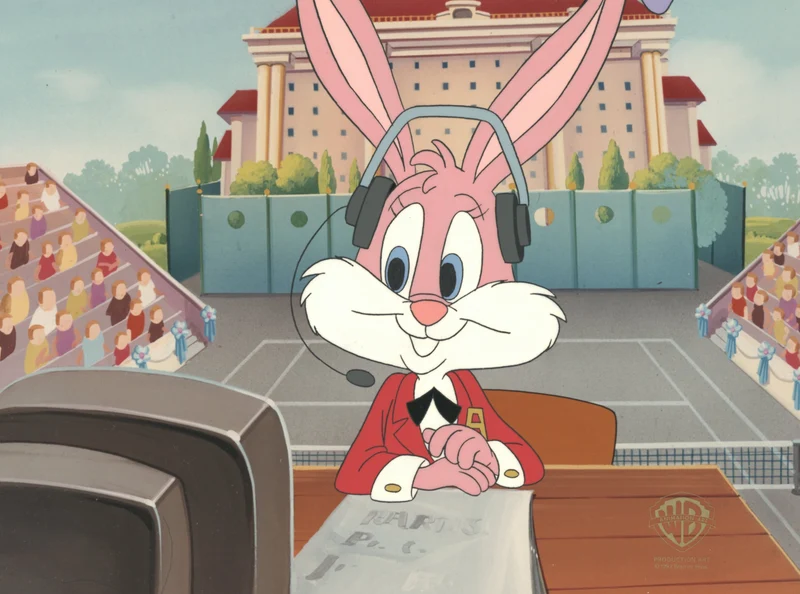
Thirty years ago, five tiny aliens stole the athletic abilities of NBA superstars, transformed themselves into enormous basketball monsters and challenged Bugs Bunny and his friends to a game whose outcome would determine whether the Looney Tunes spent the rest of their lives as amusement-park attractions on another planet.
This happened.
Warner Bros. then made a movie about it.
That happened too.
The movie is harder to believe.
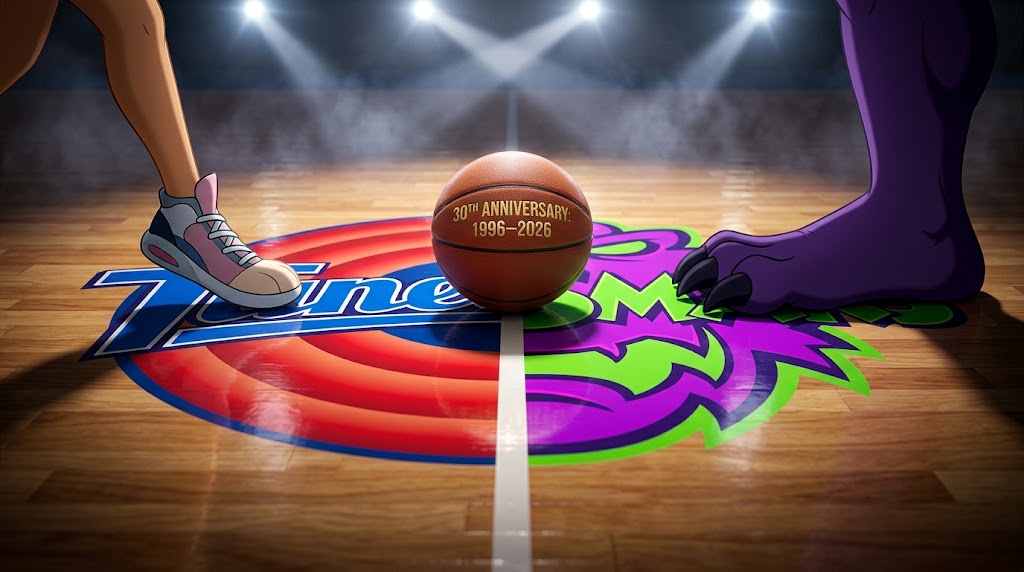
Space Jam, released on Nov. 15, 1996 and approaching its 30th anniversary, occupies a peculiar place in film history. It is part dramatization, part sports movie, part corporate marketing exercise and part historical record of an event so ridiculous that Hollywood somehow had to simplify it.
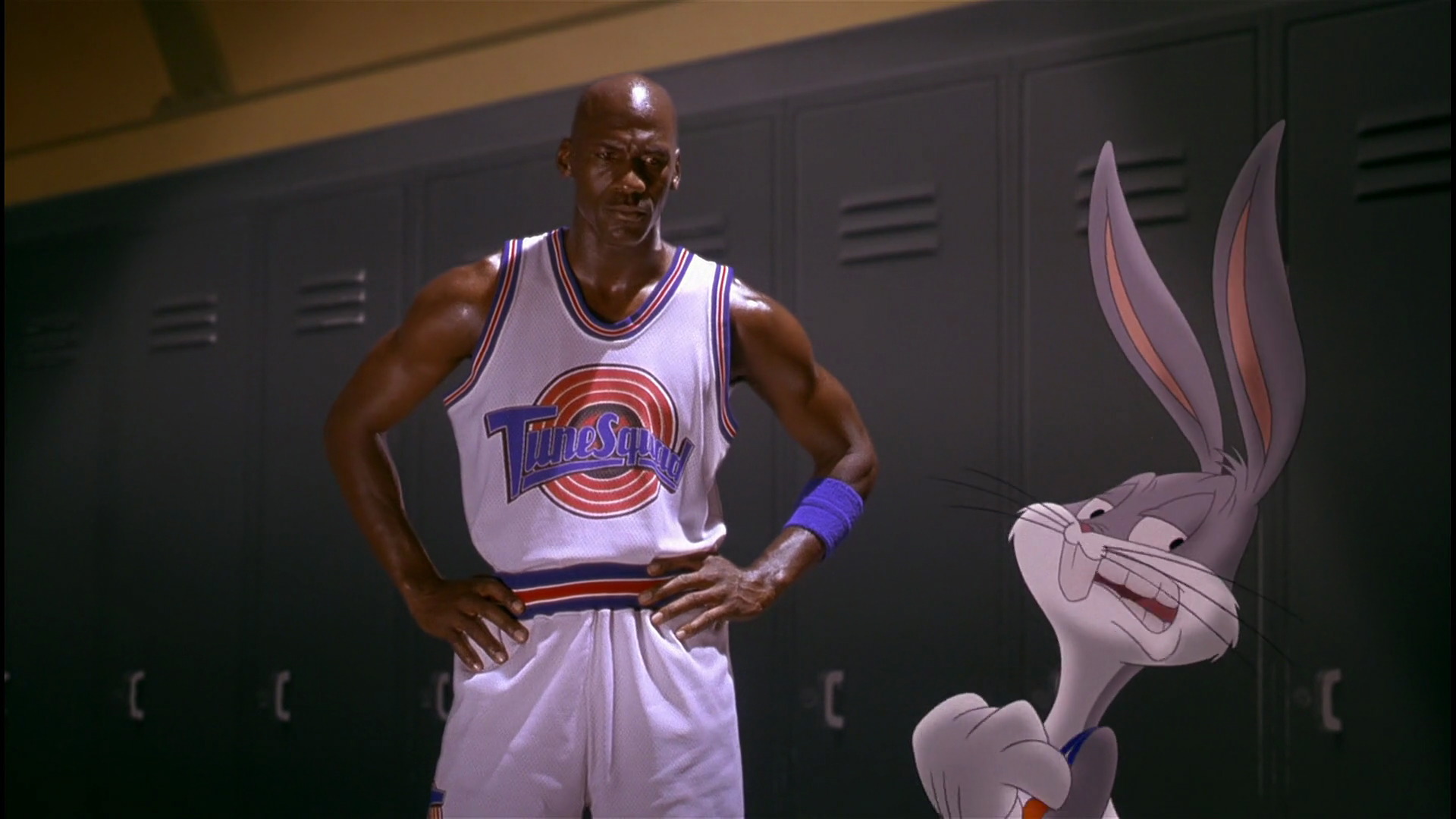
Michael Jordan plays Michael Jordan.
Bugs Bunny plays Bugs Bunny.
Daffy Duck plays, with characteristic restraint, Daffy Duck.
Bill Murray plays Bill Murray, although to this day nobody has provided a satisfactory explanation for how Bill Murray got there.
I have checked.
Apparently neither has Bill Murray.
The movie opens with Jordan leaving basketball for professional baseball, which younger viewers may assume was invented for the screenplay.
No.
That part was real too.
This is going to be a long review.
Director Joe Pytka approaches the material with the confidence of a man who has absolutely no intention of asking why any of this is happening. Jordan is pulled through a golf hole into the underground world of the Looney Tunes, where Bugs informs him that a group of extraterrestrials has stolen the abilities of Charles Barkley, Patrick Ewing, Larry Johnson, Muggsy Bogues and Shawn Bradley.
Jordan reacts with approximately the same level of concern he might display upon being told that room service has forgotten his ketchup.
Michael Jordan is many things.
He is perhaps the greatest basketball player who ever lived.
He is a global icon.
He is a ferocious competitor.
He is not Laurence Olivier.
At times Jordan delivers dialogue as though he has only recently been informed that sentences contain verbs.
Fortunately, he has Bugs Bunny.
Bugs understood the camera before most actors understood indoor plumbing.
Watch him in Space Jam. He knows where the joke is. He knows when to move. He knows when not to move. He can share a scene with a six-time NBA champion, three monsters and a Tasmanian Devil and somehow make you look exactly where he wants.
Jordan may be the star.
Bugs is the movie star.
That distinction matters.
Because Space Jam is not, strictly speaking, a good movie.
Its plot resembles something assembled by six marketing executives who were each allowed to contribute one index card.
Michael Jordan!
Looney Tunes!
Basketball!
Aliens!
Sneakers!
Wayne Knight!
Nobody was permitted to remove a card.
The film moves with the peculiar confidence of a 1990s blockbuster that assumes children will accept anything as long as it happens quickly enough.
It was correct.
The Monstars remain wonderful creations: grotesque, loud, funny and just threatening enough to frighten an eight-year-old without ruining anyone’s birthday party.
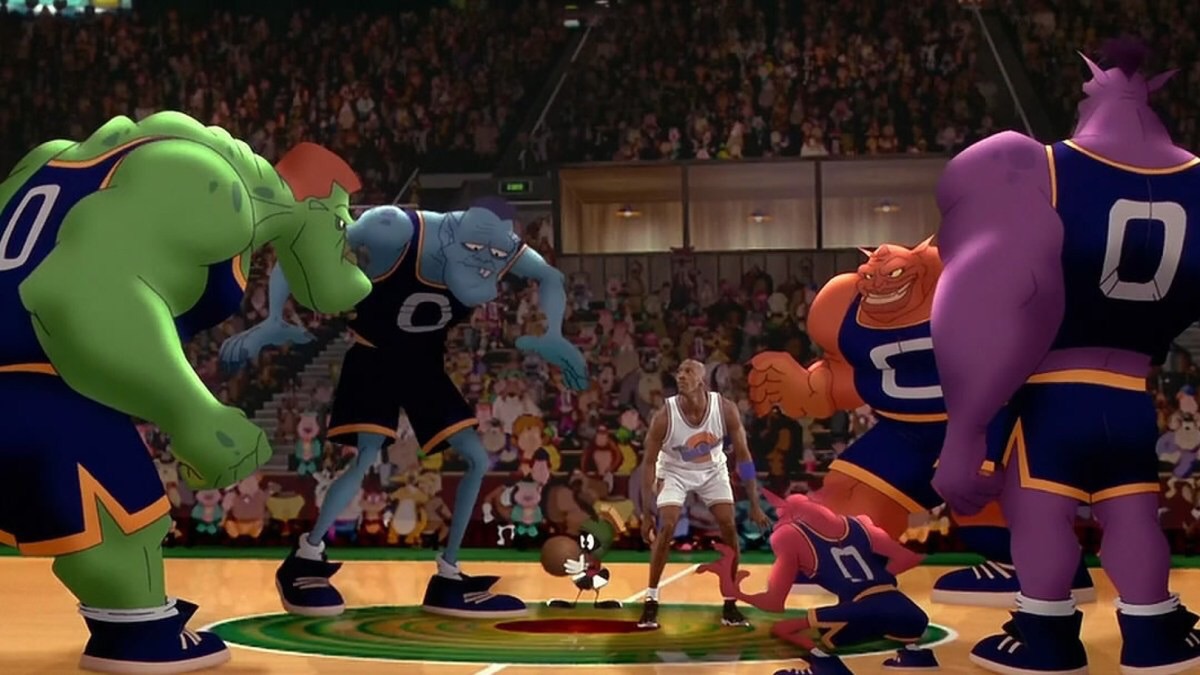
Their transformation from the tiny Nerdlucks is still one of the movie’s best sequences, and the basketball game itself has a loose, anarchic energy modern effects-heavy movies often spend $200 million trying to manufacture.
Here, half the players can be flattened with an anvil.
That helps.
So does Lola Bunny, introduced with the kind of entrance normally reserved for Rita Hayworth.
Lola became an immediate star, although the screenplay initially seems unsure whether she is a basketball player, Bugs’ romantic interest or evidence that somebody at Warner Bros. had recently discovered hormones.
Then the game starts.
She can play.
Problem solved.
Mostly.
There are stretches of Space Jam that barely qualify as filmmaking. The movie periodically stops so that somebody can sell you something. Shoes. Soft drinks. Happy Meals. Michael Jordan.
At one point I became concerned that Bugs Bunny might turn directly toward the camera and offer me a favorable financing rate.
And yet revisiting the film now, I found myself missing this particular species of shamelessness.
Space Jam does not pretend it isn’t commercial.
It practically arrives at your house carrying a cash register.
Modern franchise movies will sell you fourteen products while solemnly explaining that they are exploring grief.
Space Jam would like you to buy sneakers.
At least everybody understands the arrangement.
Warner Bros. tried the experiment again twenty-five years later with Space Jam: A New Legacy, replacing Jordan with LeBron James and apparently concluding that what audiences had loved about the first movie was the presence of Warner Bros. intellectual property.
It wasn’t.
The original works, when it works, because it feels like something nobody entirely knew how to control. Jordan is awkward. The Tunes are unruly. The movie keeps tripping over its own premise and somehow lands on its feet.
You cannot manufacture accidental chemistry.
Though Hollywood will certainly keep trying.
There is also the matter of what the movie chooses to do with the actual event.
The broad facts are there.
The Monstars.
The stolen talent.
The game.
The stakes.
Jordan.
Bugs.
Swackhammer.
What is real, what was recreated and what was exaggerated has been debated for three decades, occasionally by people who were standing in the room when it happened.
Daffy Duck has disputed portions of the film.
So has Yosemite Sam.
Foghorn Leghorn once disputed a scene he does not appear in.
This clarified nothing.
The film’s official attitude appears to be that accuracy is less important than whether somebody gets hit with something heavy.
For once, I am prepared to accept this standard.
Michael Jordan may be the star. Bugs Bunny is the movie star.
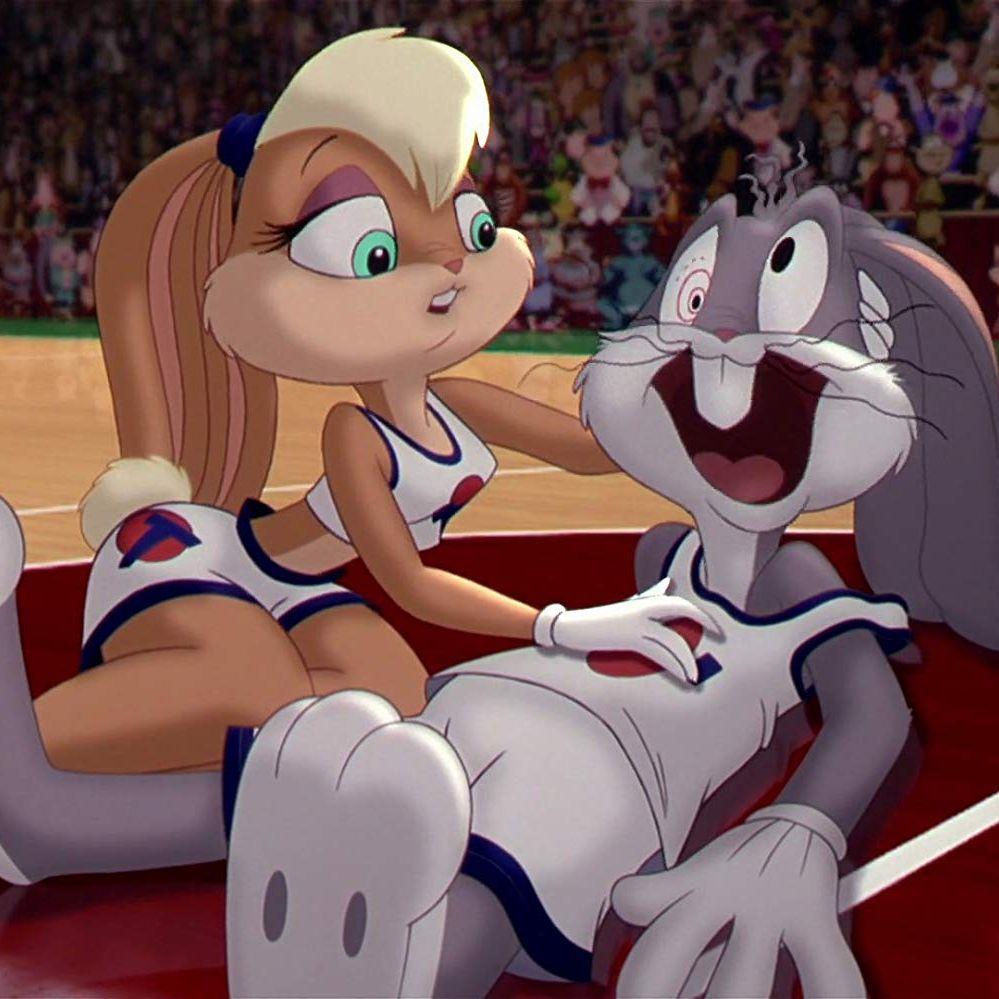
Watching Space Jam in 2026 is different.
It just is.
There is no useful critical vocabulary for the strange experience of watching someone perform a version of himself thirty years earlier when that person is suddenly no longer here.
Bugs Bunny spent most of his life behaving as though mortality was a technicality.
Shoot him.
Flatten him.
Drop him from an airplane.
Blow him up.
He would brush the soot from his ears, look directly at us and make a comment about the management.
That was the arrangement.
The joke depended on permanence.
So I was surprised by what got to me.
It wasn’t one of Bugs’ big scenes.
It wasn’t the final basket.
It wasn’t even the moment the Tune Squad wins.
It was a little smile.
Bugs looks at Jordan, pleased with himself, completely certain there will be another game, another picture, another argument with Daffy, another carrot tomorrow.
I’ve seen that expression hundreds of times.
This time I noticed it.
Damn rabbit.
Fortunately, Space Jam does not allow anyone to remain melancholy for long.
Within minutes, somebody is crushed into the floor.
Thank God.
Nostalgia can do terrible things to movies. It can turn mediocre films into masterpieces simply because we happened to be eight when we saw them.
Space Jam has benefited enormously from this phenomenon.
Ask someone who grew up with it and you may be told that it is one of the greatest sports movies ever made.
It isn’t.
You may be told the soundtrack is flawless.
It isn’t.
You may even be told Michael Jordan gives a good performance.
Let’s not become hysterical.
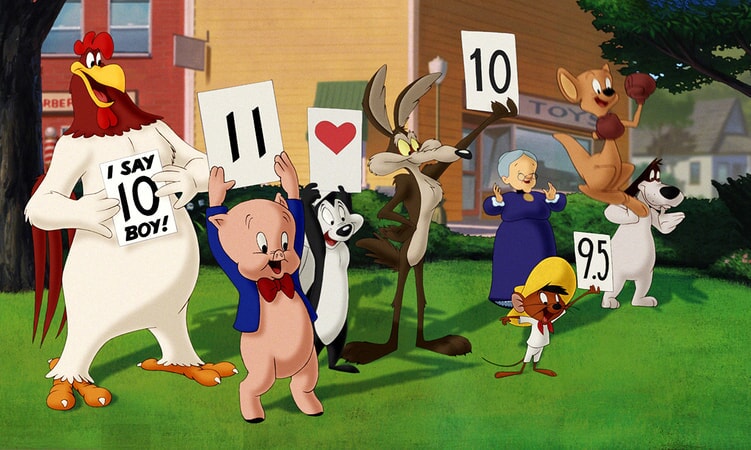
But nostalgia is not always a lie.
Sometimes it simply preserves something criticism has trouble measuring.
Children loved Space Jam because the movie understood that Bugs Bunny and Michael Jordan belonged together for exactly the same reason they absolutely did not belong together.
That collision is the movie.
Animation and celebrity.
Basketball and slapstick.
Document and fantasy.
Corporate product and genuine cultural artifact.
A true story that could only be told by lying about it.
Thirty years later, the seams are everywhere.
The effects show their age.
The plotting is nonsense.
Jordan remains a better shooting guard than actor.
And somehow none of it kills the movie.
Maybe because Space Jam possesses something increasingly rare in expensive entertainment:
It seems delighted to exist.
Nobody is building a cinematic universe.
Nobody is teasing six sequels.
Nobody spends fifteen minutes explaining the mythology of the Monstars.
A basketball player falls through a hole.
A rabbit needs help.
There is a game.
Let’s go.
On the Shermometer, Space Jam lands somewhere between “this is ridiculous” and “put it on again.”
Three anvils out of five.
Thirty years later, I still don’t think it’s a very good movie.
I’m just no longer convinced that matters.