Ancient Mars
Barsoom, Helium & Thark
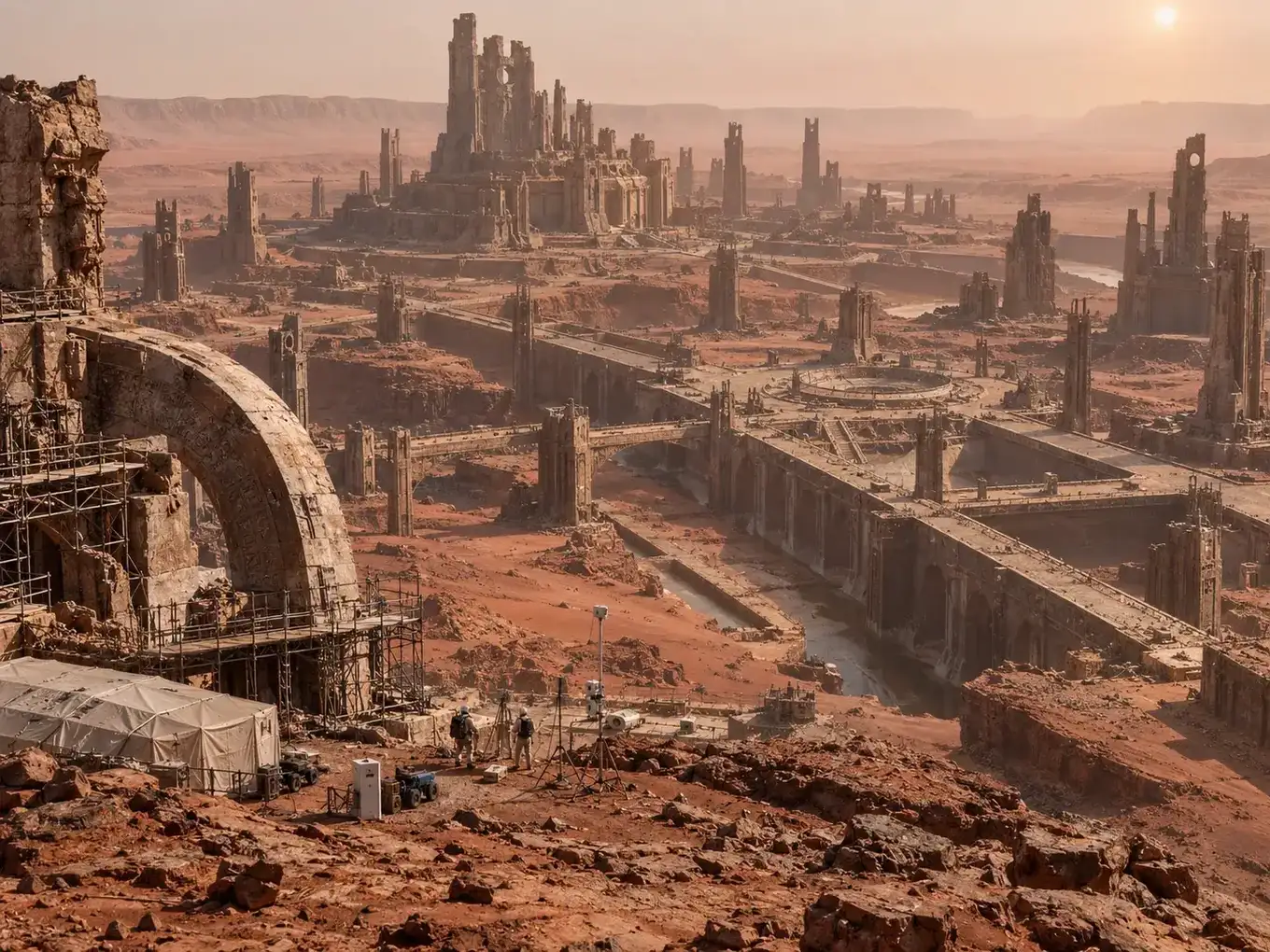
Early city-states, desert cultures and regional political traditions leave the first major archaeological record still visible to modern visitors.
Earth arrived late. The planet’s indigenous, imperial and archaeological record stretches much further back.
The chronology combines archaeological eras, indigenous history, Imperial consolidation, Earth contact and the rise of modern passenger travel.
Early city-states, desert cultures and regional political traditions leave the first major archaeological record still visible to modern visitors.
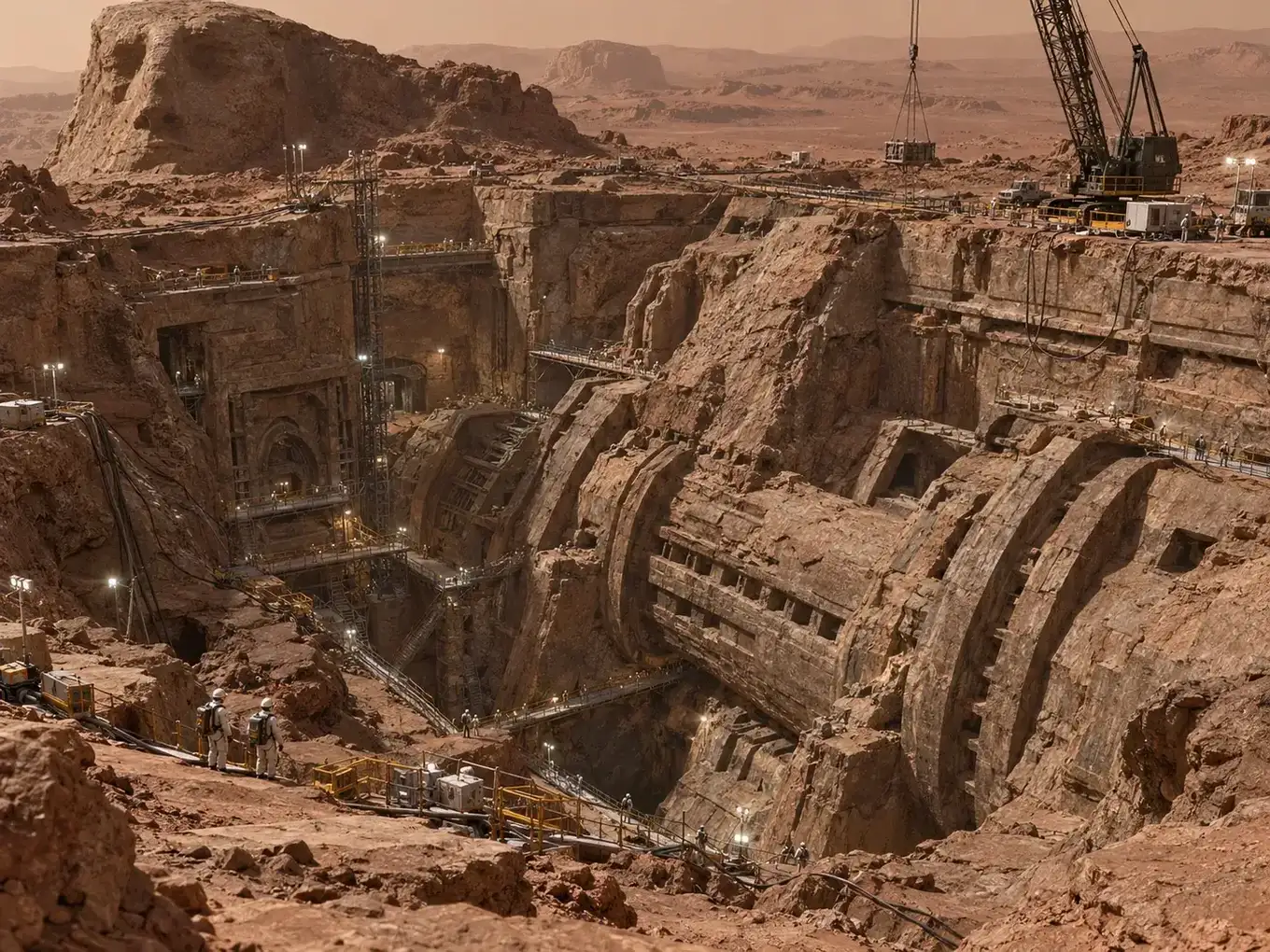
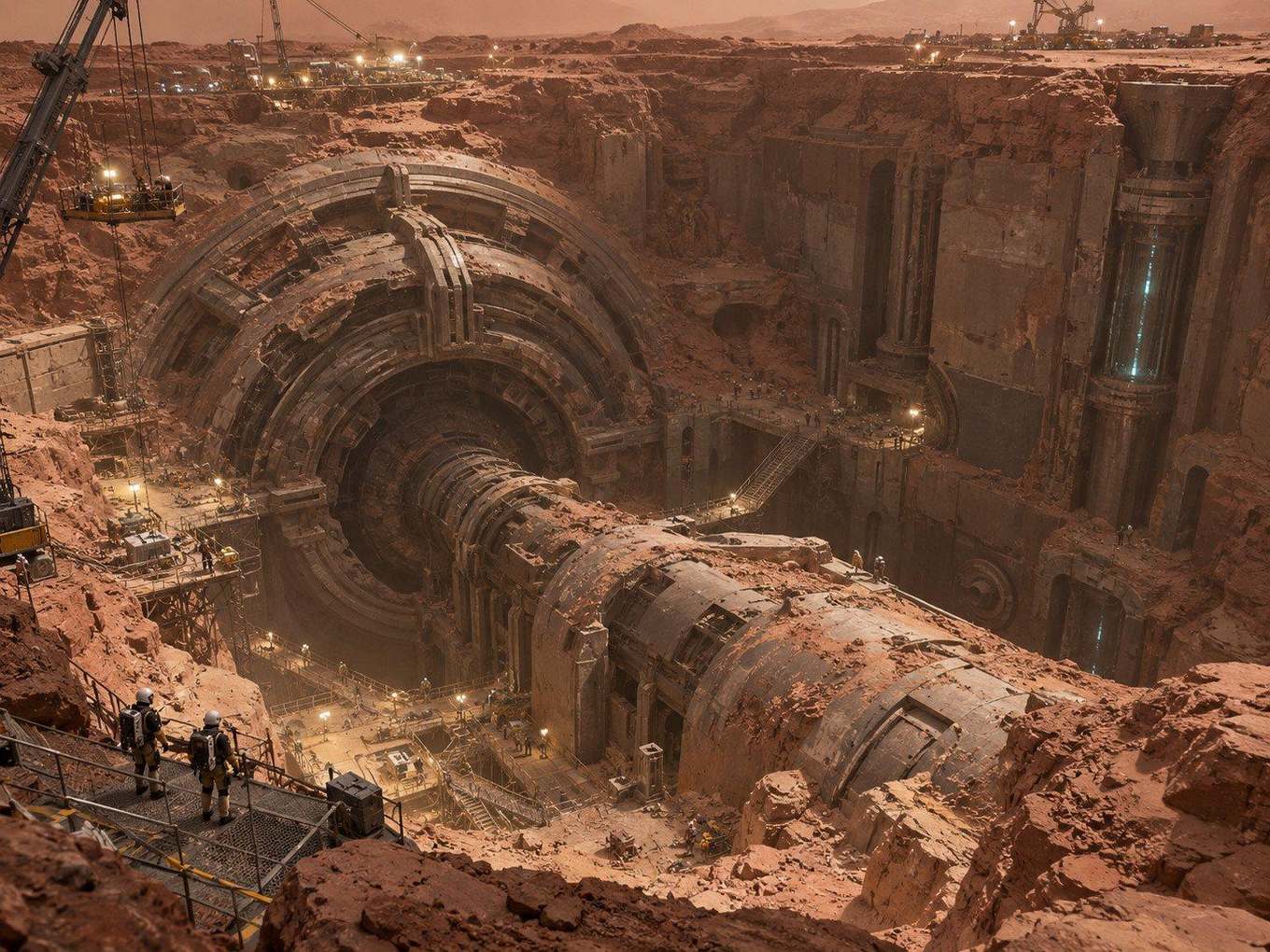
Protected ruins preserve evidence of advanced engineering long before the current Imperial order. Cydonia’s buried machinery remains among Mars’s most debated archaeological complexes.
Subterranean civilizations develop distinct systems of government, kinship, technology and land use. Their histories are not sidebars to the planet’s story; they are part of its central chronology.
Life on Mars →The Imperial tradition associated with Queen Tyr’ahnee brings major territories under a shared Crown while regional governments and autonomous communities retain different degrees of control.
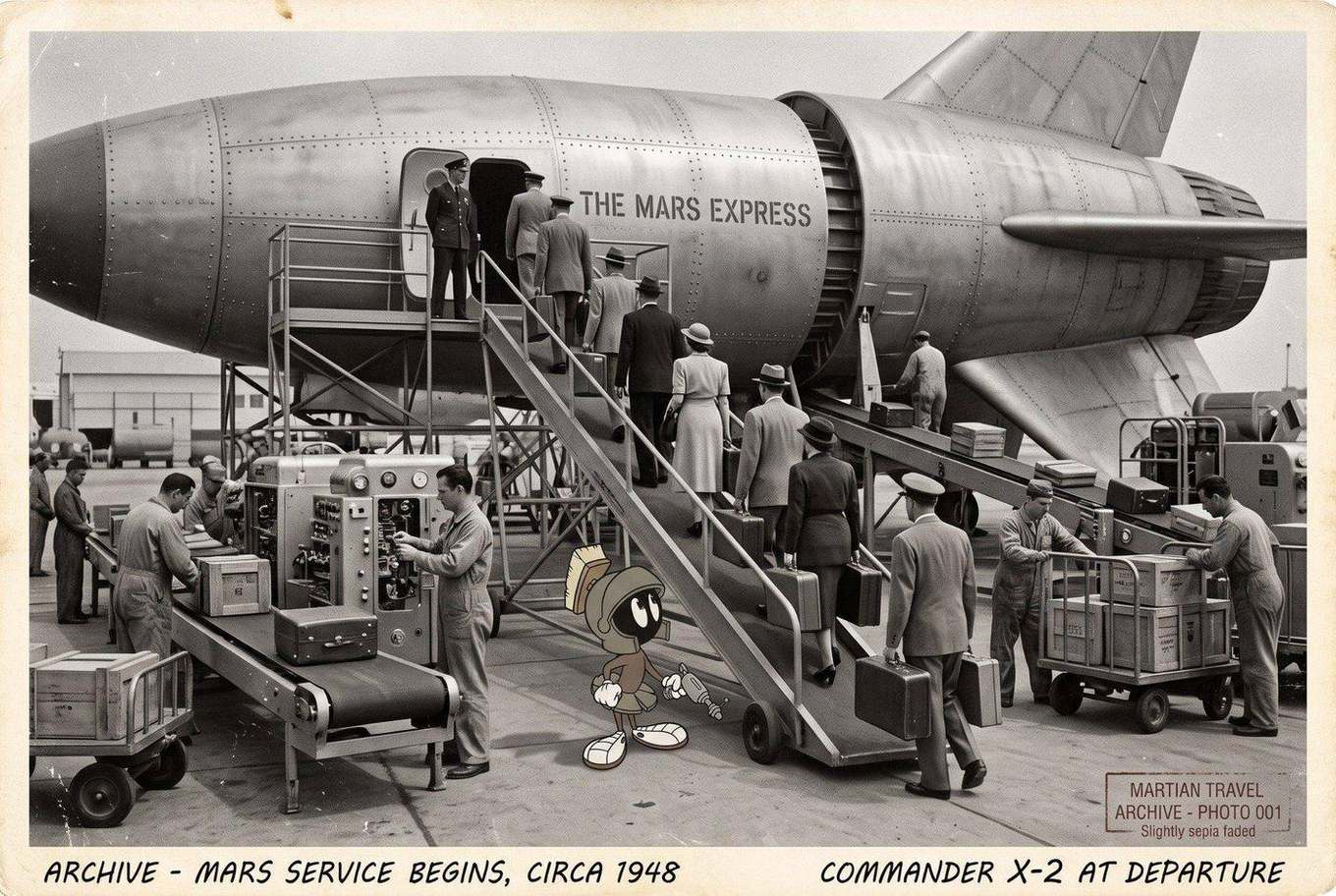
The Martian Empire →Commander X-2 becomes the best-known face of Martian military exploration and off-world claims, including the long-disputed Planet X.
Planet X →Early scheduled Earth–Mars passenger operations establish the lineage that becomes modern Mars Travel.
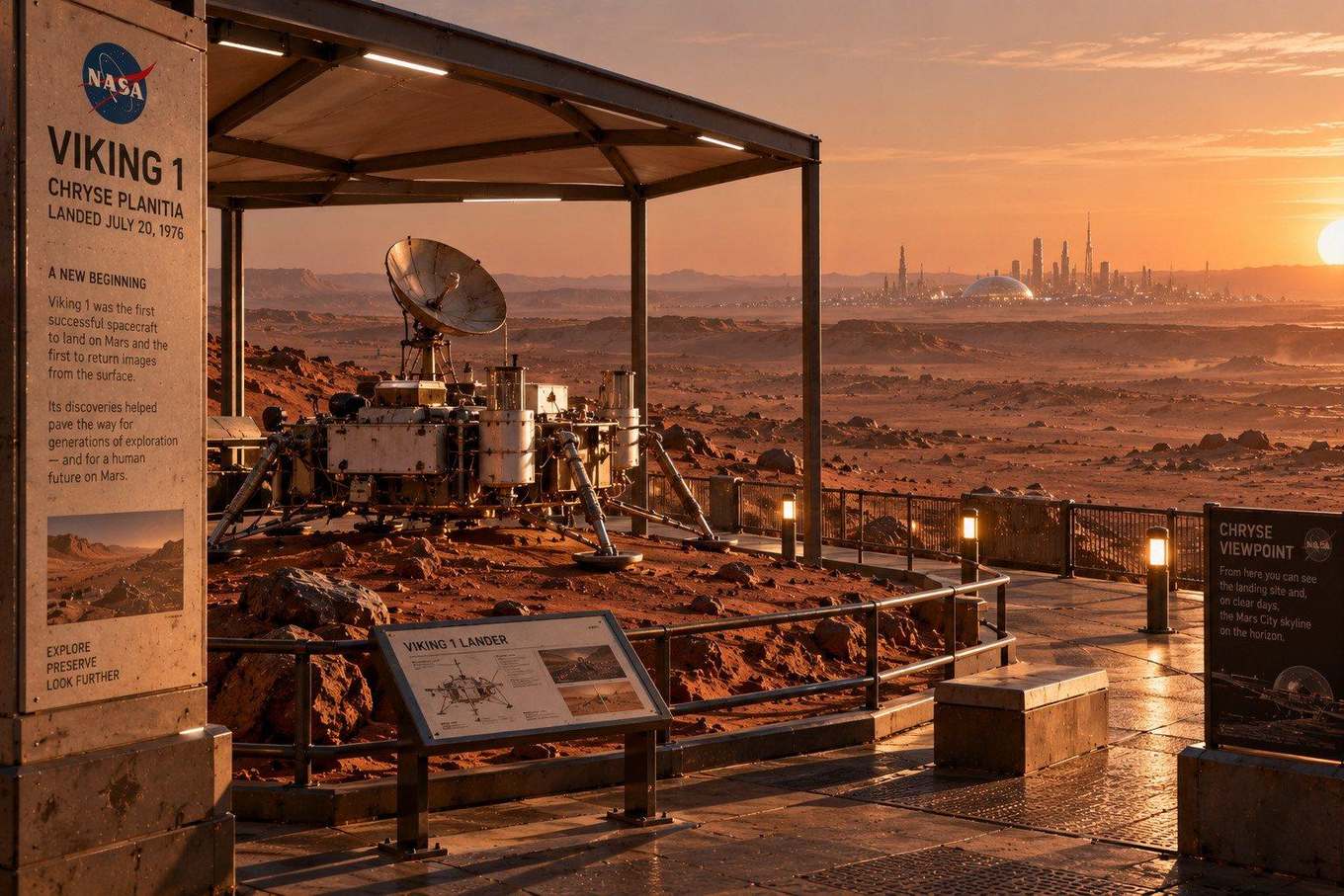
Earth’s robotic landing becomes a protected heritage site, linking the age of remote exploration to the inhabited Chryse region visitors know today.
The occupation reshapes parts of Mars and becomes a defining chapter in modern resistance history. Museum collections now preserve vehicles, equipment and testimony from the period.
Resistance history →Climate engineering, water infrastructure and regular interplanetary transfers turn Mars into both a destination and the principal gateway to Imperial and associated worlds.
Mars enters the current visitor era amid debates over water, autonomy, expansion, heritage protection and the future shape of the Empire.
Mars today →