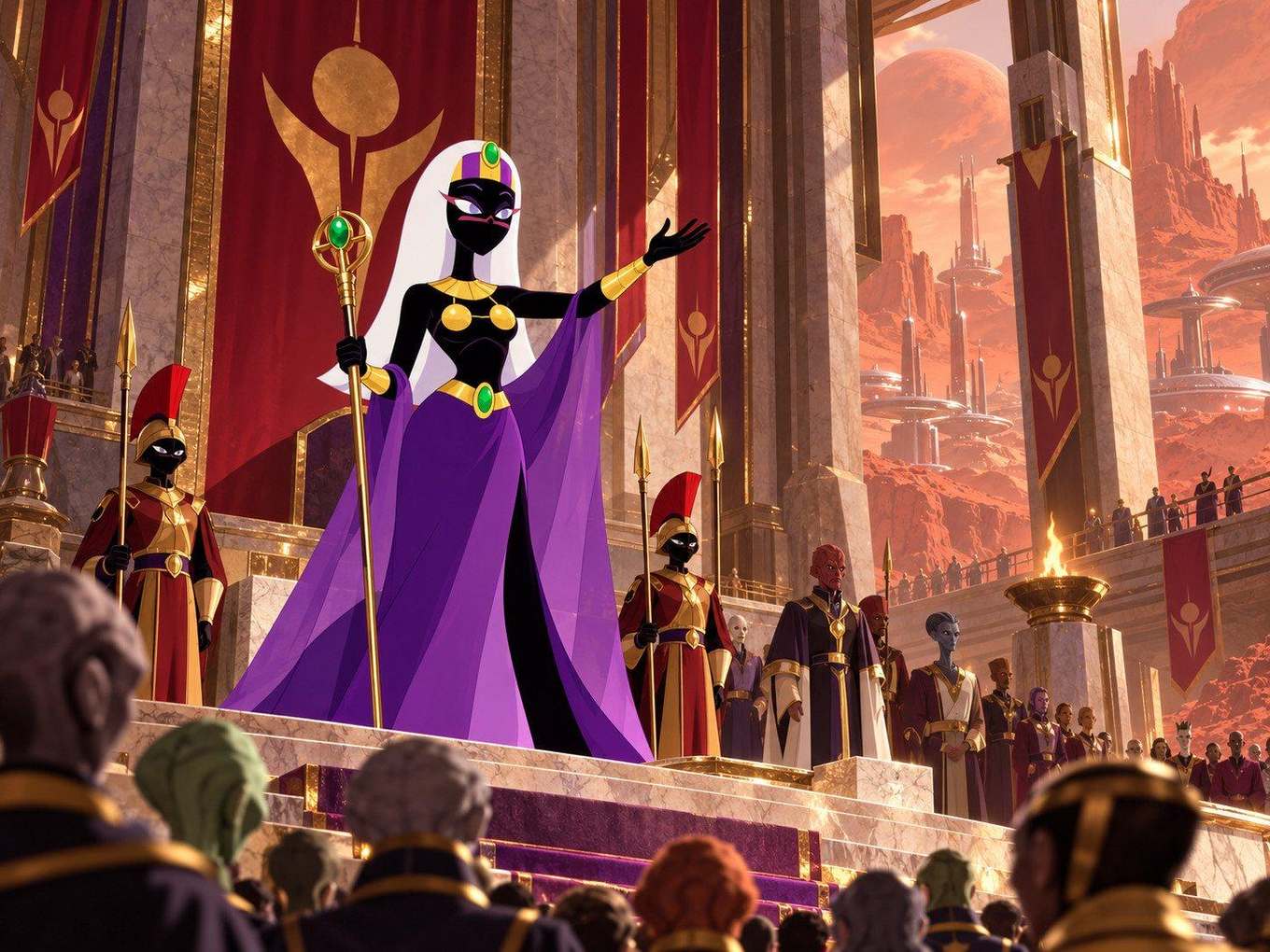
THE CROWN
Queen Tyr’ahnee & the Martian Empire
The Queen remains head of an Empire that includes Mars, autonomous regions, associated worlds, charter territories and older claims.
A prosperous planet arguing about water, autonomy, expansion and what the Empire should become.
Mars in 2026 is prosperous, increasingly self-confident and politically unsettled in ways that affect transport, public space and travel beyond the planet.
The Queen remains head of an Empire that includes Mars, autonomous regions, associated worlds, charter territories and older claims.
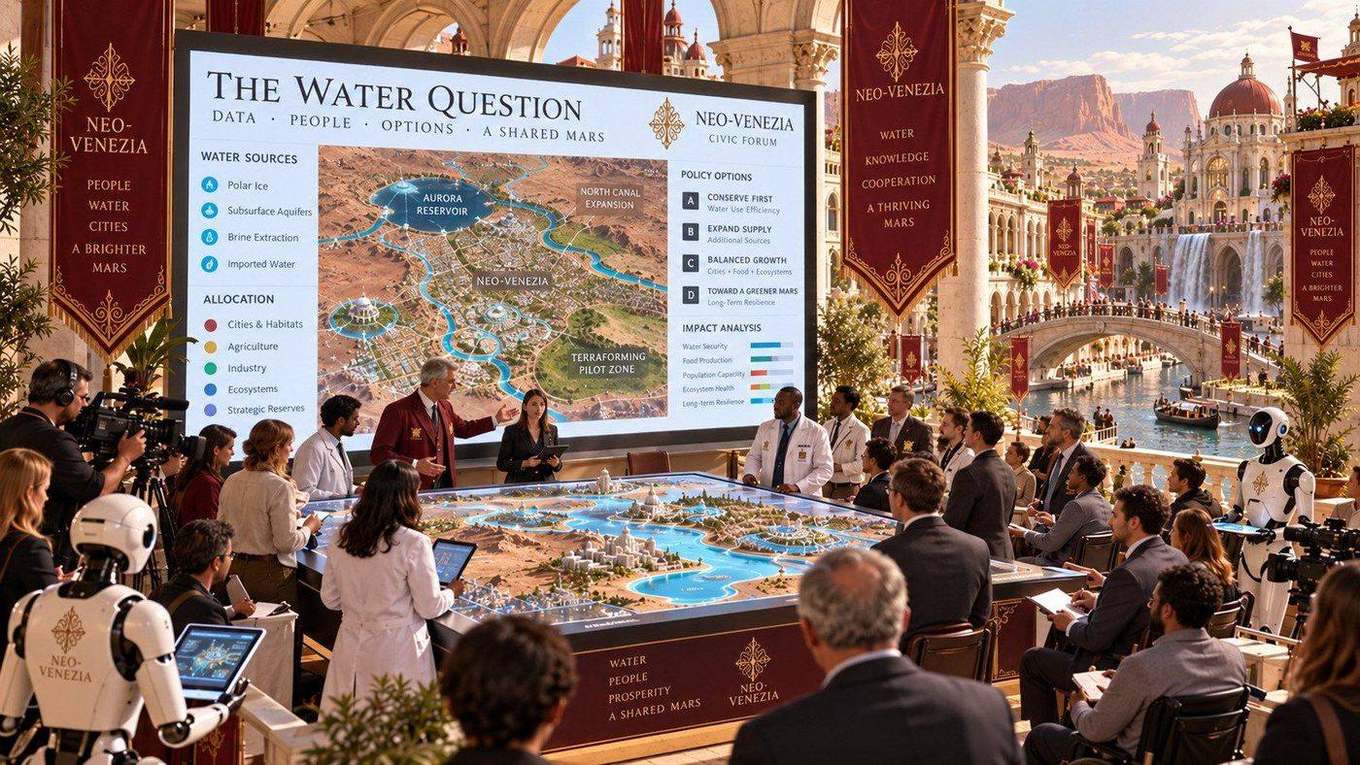
Water security now shapes trade, settlement policy and Martian relations with water-rich worlds. Public planning has become one of the defining political debates of contemporary Mars.
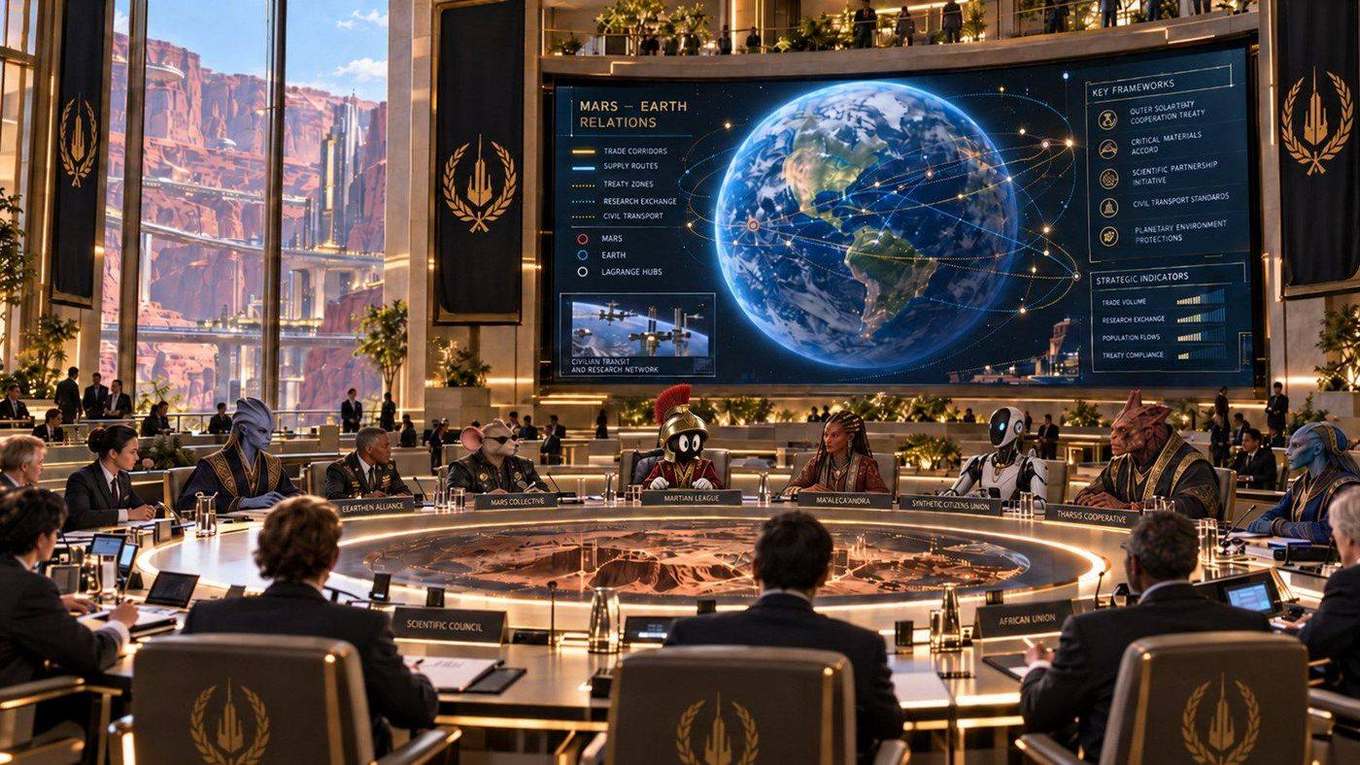
Earth’s oceans, biosphere and habitable land have shifted policy toward cooperation and strategic influence, while hardline factions still argue that Mars must demonstrate strength beyond its atmosphere.
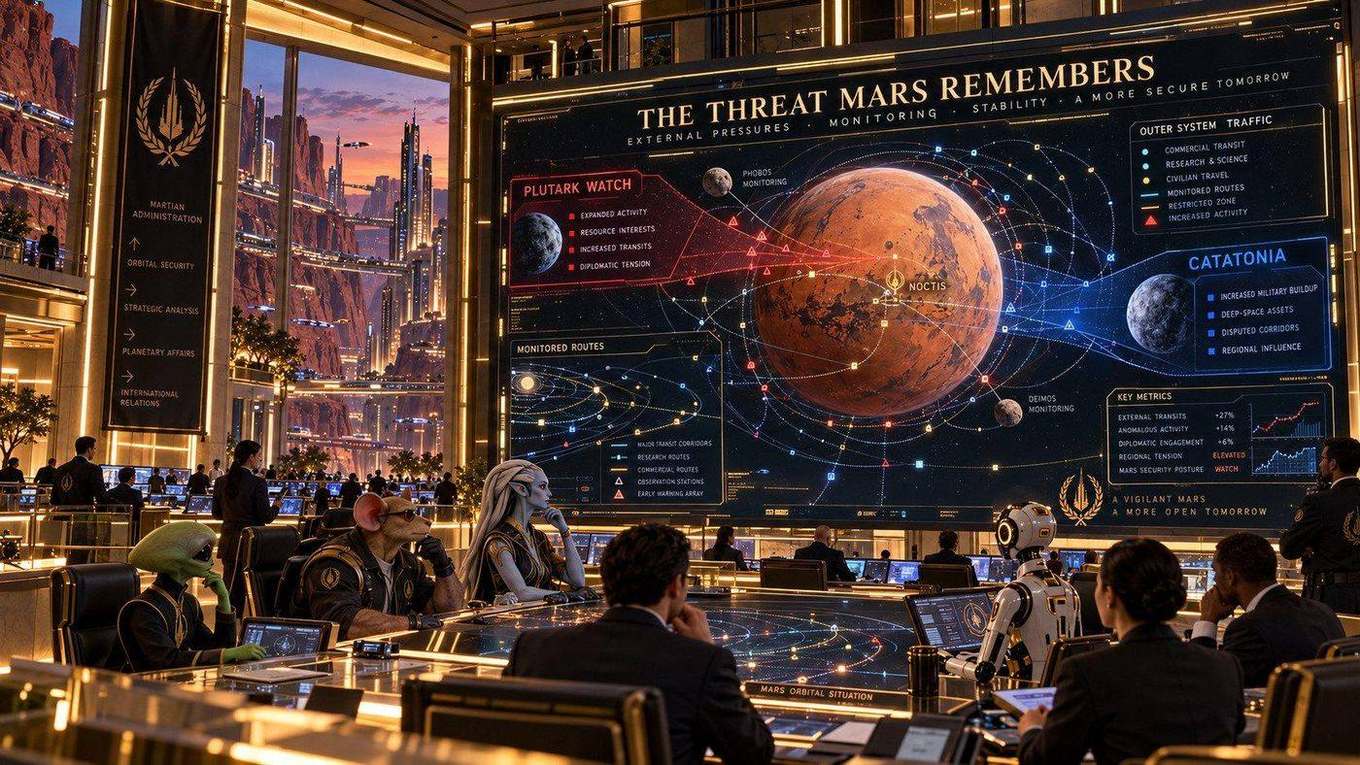
Plutarkian extraction once tore through Mars, displacing communities and helping ignite the resistance that eventually drove the occupiers out. Plutark remains outside the Martian Empire, and its resource fleets are still watched closely by Noctis.
Catatonia presents a different concern. Its historic interest in Martian terraforming technology has made environmental infrastructure, water systems and research facilities matters of planetary security.
Neither crisis is expected to affect ordinary visitors. But frontier access, Imperial routes and research-zone permits can change quickly when tensions rise.
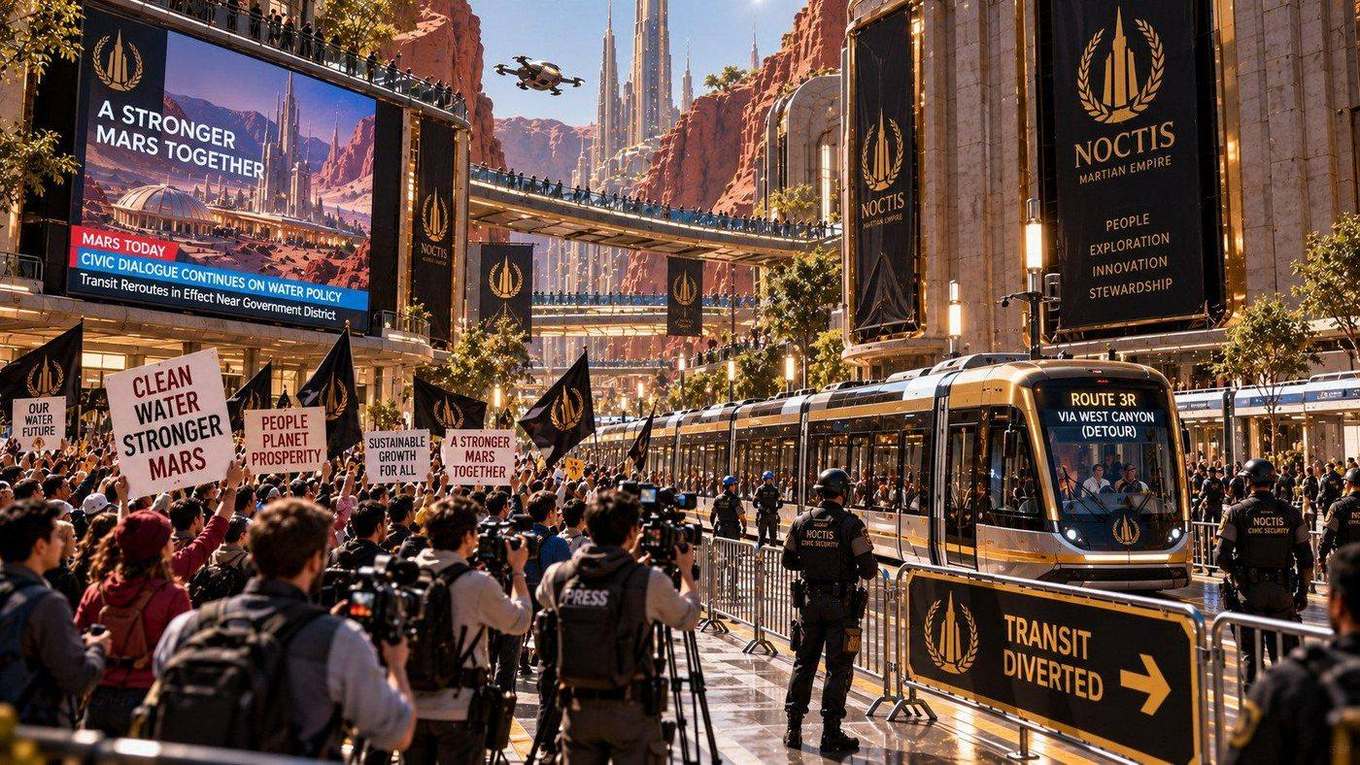
Demonstrations, autonomy rallies and Imperial ceremonies can affect transit around Noctis and Chryse. Mars Travel posts surface advisories when civic activity changes access.
Check visitor advisories →