Neo-Venezia
Mars’s most visible water-city experiment is now also one of its most polished hospitality destinations.
Neo-Venezia
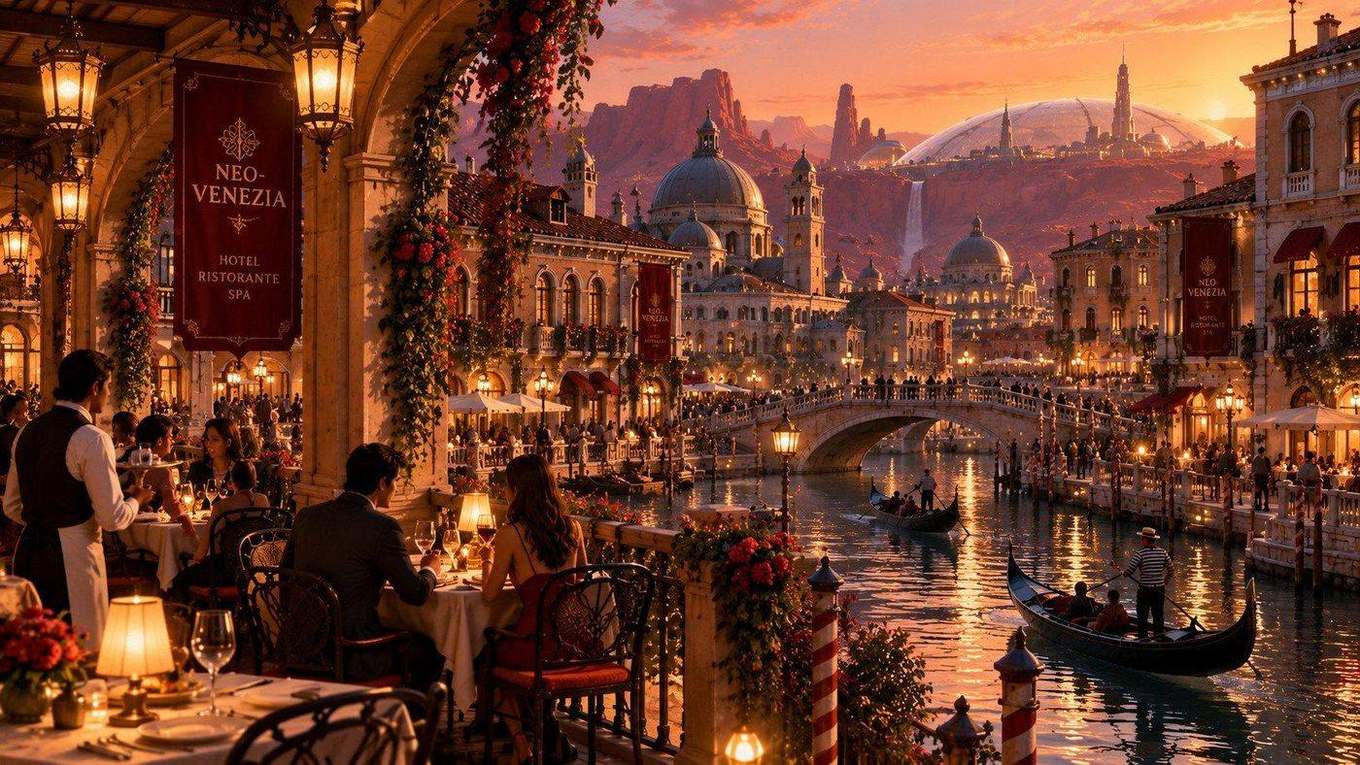
Neo-Venezia began as an audacious attempt to prove that a water-based city could be sustained on Mars. Its planners recreated the spatial logic and architectural memory of Venice inside a controlled climate district, then allowed the city to grow into something more complicated: part functioning municipality, part engineering demonstration and part symbol in the argument over how much of Mars should ever be remade.
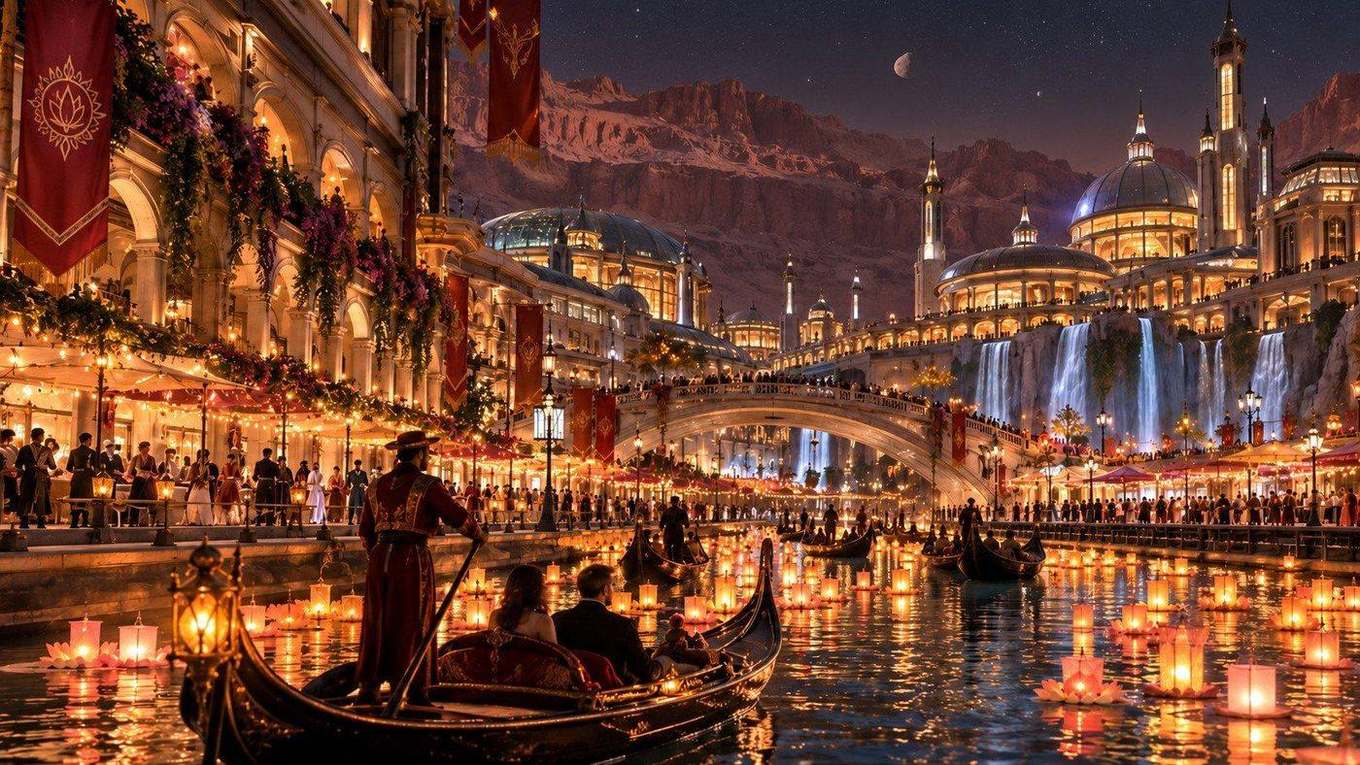
The canals are not decorative. They are transit infrastructure, public space and one of the largest visible water-management systems on the planet. The city’s Undines—licensed gondoliers who operate both as pilots and local guides—remain an important profession, and the best first experience is still from the water. Their routes link residential canals, market quays, civic squares and the recreated historic core without pretending that the city is a museum piece.
Because every liter of open water on Mars is political, Neo-Venezia lives under a level of scrutiny that Earth visitors do not always expect. Scientists monitor evaporation, atmospheric exchange and basin stability; critics elsewhere on Mars question the resources devoted to the project; supporters point to the district as proof that large-scale restoration can create durable, humane places. The city’s public forums on water policy are therefore as characteristic as its cafés and bridges.
Visitors experience a slower rhythm here than in Alba or Noctis. Walking and canal travel dominate the central districts, evenings are busiest along the quays, and major festivals can make water transport more useful than the streets. Reserve an Undine tour in advance during Canal Light Week, but leave unstructured time as well—the appeal of Neo-Venezia is as much ordinary waterfront life as any single landmark.