Noctis
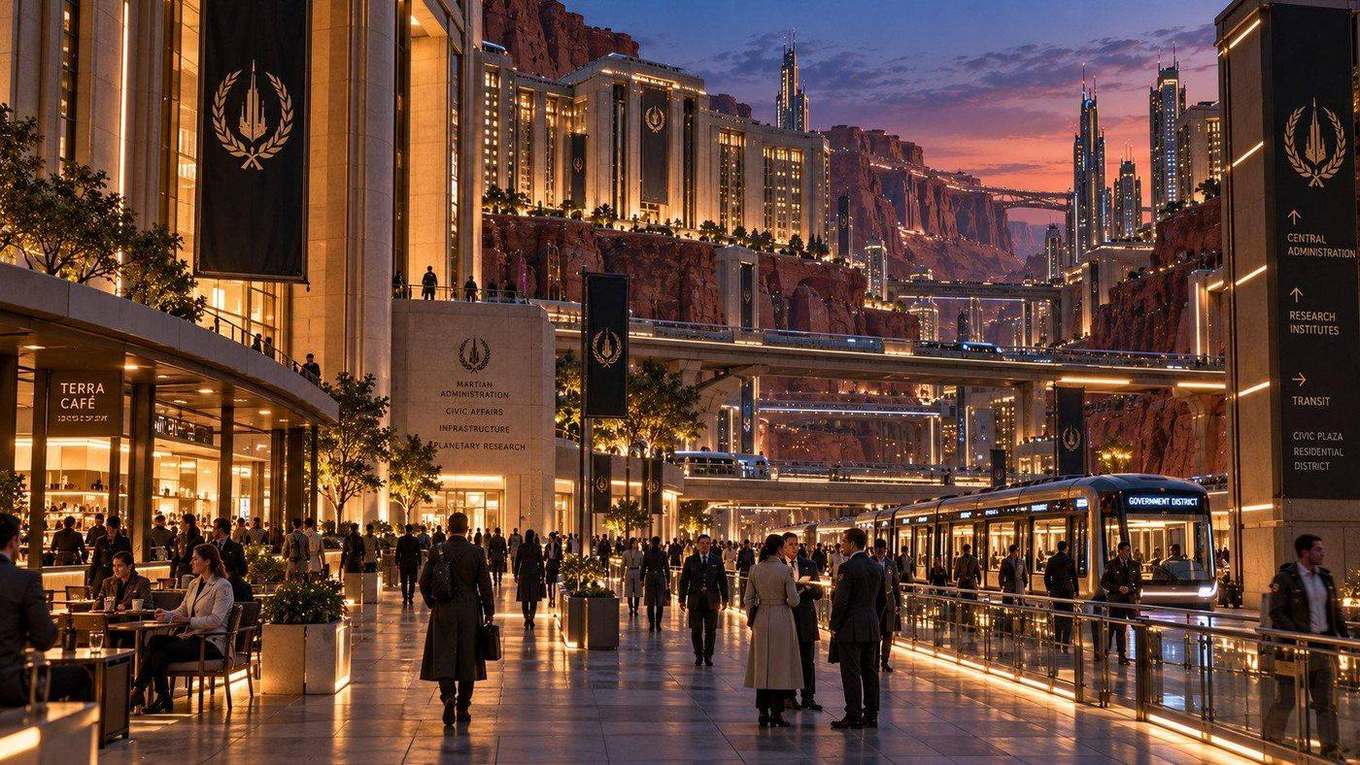
The formal Martian capital is also a working city of ministries, research institutes, commuters and synthetic citizens.
Noctis
Noctis is Mars’s formal capital, built through the canyon systems of Noctis Labyrinthus at the western edge of Valles Marineris. Ministries, research institutes and civic plazas occupy terraces cut into the rock, while bridges, rail lines and vertical transit connect districts that can sit hundreds of meters above or below one another. The result is a capital that feels engineered around geology rather than laid across it.
Government is only half the city’s identity. Noctis became the center of Martian robotics, synthetic-person research and legal debates over machine citizenship, so human and synthetic residents share ordinary public life here more visibly than almost anywhere else on the planet. Laboratories that once looked experimental now sit beside apartment districts, cafés and schools, and many of the policies governing synthetic citizens across Mars were argued out in these same civic corridors.
Visitors should expect politics to be visible. Demonstrations, press lines, Crown ceremonies, ministry hearings and temporary transit diversions are part of normal capital life rather than signs that the city has shut down. Black-and-gold civic banners mark government districts, but beyond the formal plazas Noctis is surprisingly lived-in: civil servants eat lunch beside researchers, students crowd canyon cafés and late trains carry commuters between research terraces and residential levels.
For a first visit, stay near Central Administration or the main canyon transit spine and give the city at least two sols. The distances on a map can be deceptive because changing elevation often matters more than straight-line distance, and the best way to understand Noctis is to move between its formal government core, research districts and everyday neighborhoods rather than treating the capital as one monumental square.