Mars Vegas
Casino towers, arena shows and low-gravity spectacle packed into a neon canyon destination.
Mars Vegas
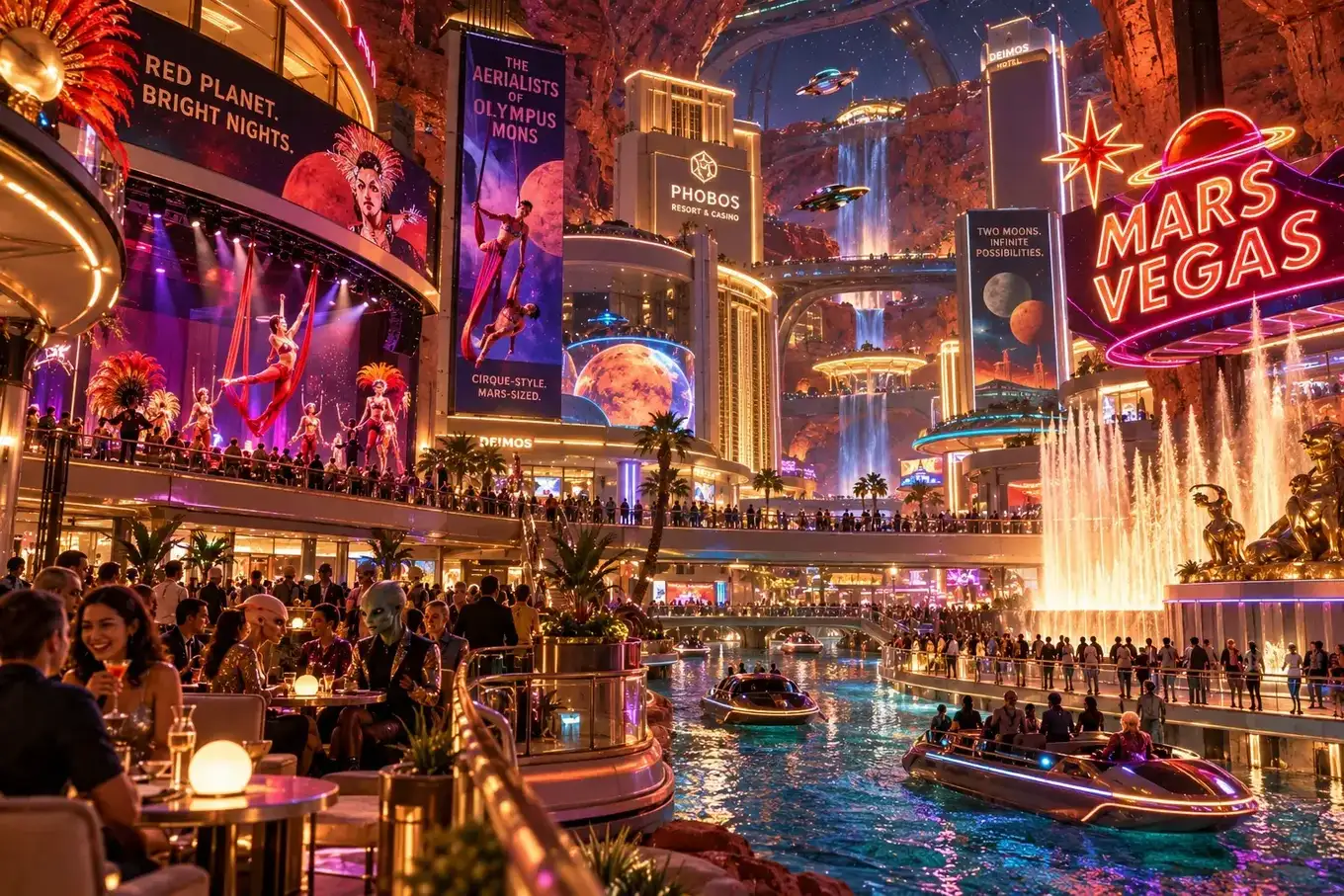
Mars Vegas exists because gambling became one of the first Martian industries built primarily for visitors rather than settlers. The modern resort canyon grew from an older casino district that was repeatedly expanded, demolished and rebuilt as passenger traffic increased. Wong-backed development helped turn the city into a destination in its own right, but the result is much larger than one family’s resort empire: competing casinos, hotels, arenas and entertainment complexes now operate as a twenty-four-hour city.
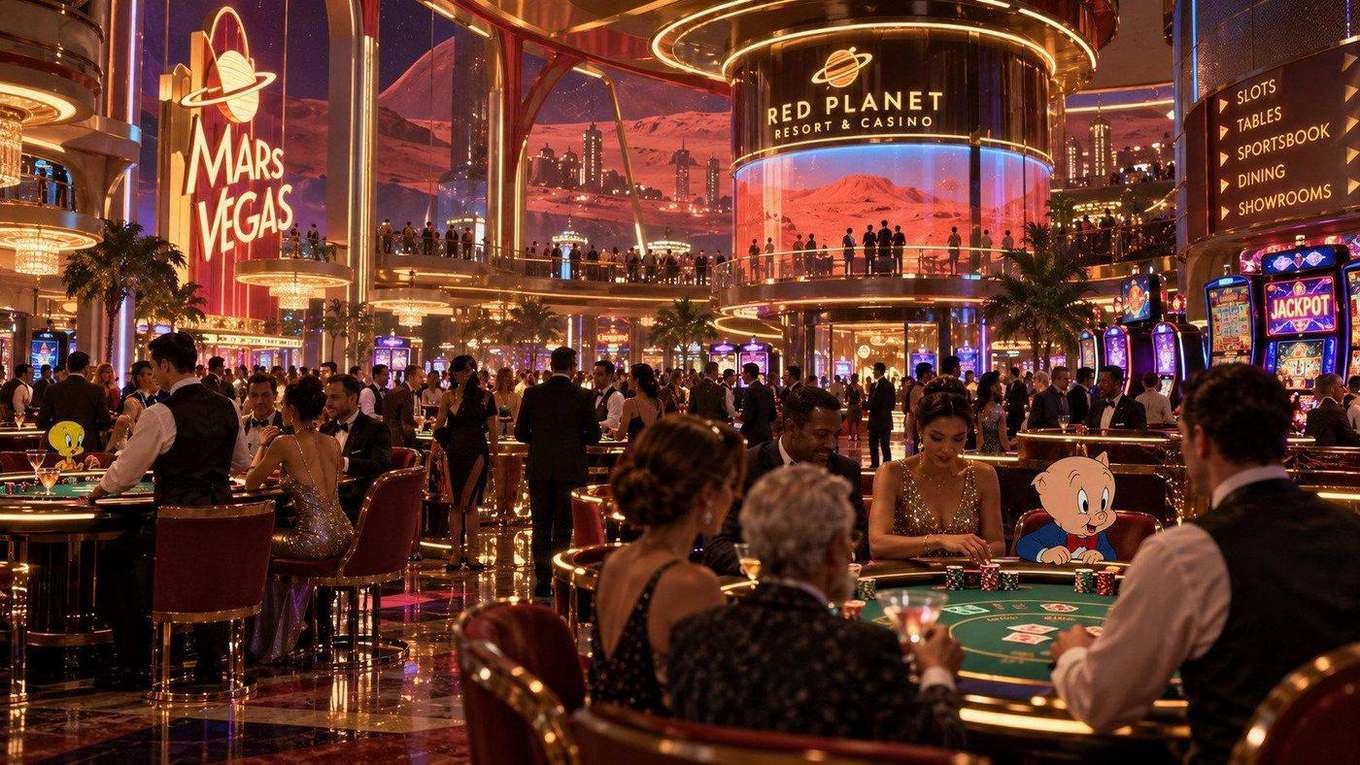
Gaming is the center of the economy. Traditional blackjack, poker, roulette, baccarat and machine gaming sit beside Martian-specific tables designed around 0.38 g, kinetic games that would be impractical on Earth, robot-only tournament rooms and enormous sportsbook floors carrying Earth leagues, Martian competitions and selected Imperial events. High-limit rooms can be extremely private, while the main casino floors are intentionally theatrical—part gambling hall, part public spectacle.
All licensed gaming is regulated by the Martian Gaming Commission, which oversees odds disclosure, identity and age verification, casino credit, robotic gaming systems and visitor-protection rules. The city makes an extraordinary amount of tax revenue from gambling, and that money finances infrastructure well beyond the Strip; it also guarantees that debates over addiction, casino influence and political donations never stay quiet for long.
Ownership has its own history. Native Martian land claims and the settlements that followed the old Mars Vegas redevelopment permanently changed who could control major resort property. Some casino and land interests returned to Martian ownership, while the Wongs retained important holdings under a more complicated system of leases, partnerships and community agreements. That history is why locals tend to bristle when visitors describe the city as nothing more than a Wong company town.
The major resorts deliberately cultivate different personalities. The Red Planet Resort & Casino is the classic all-purpose flagship, with one of the city’s largest gaming floors, an enormous interplanetary sportsbook and a showroom that regularly hosts long-running residencies. Phobos Resort & Casino is older and more traditional, known for table games, serious poker rooms and discreet high-limit salons. Olympus Resort & Casino is newer and more theatrical, combining luxury rooms with arena events, convention business and some of the Strip’s most elaborate low-gravity attractions. The Deimos Hotel sits closer to the performance district and trades the scale of the megaresorts for restaurants, rooftop lounges and direct access to smaller theaters.
Visitors rarely experience those properties as isolated hotels. Climate-controlled walkways, the twenty-four-hour resort loop and pedestrian concourses connect much of the central Strip, and casino loyalty programs routinely cross property lines through partnerships and shared ownership. Most tables accept both Martian and major Earth settlement systems, while casino credit and high-limit play require additional identity checks. Posted rules are unusually detailed by Earth standards: the Gaming Commission requires clear disclosure of odds, machine behavior and any gravity-assisted mechanics before a visitor places a wager.
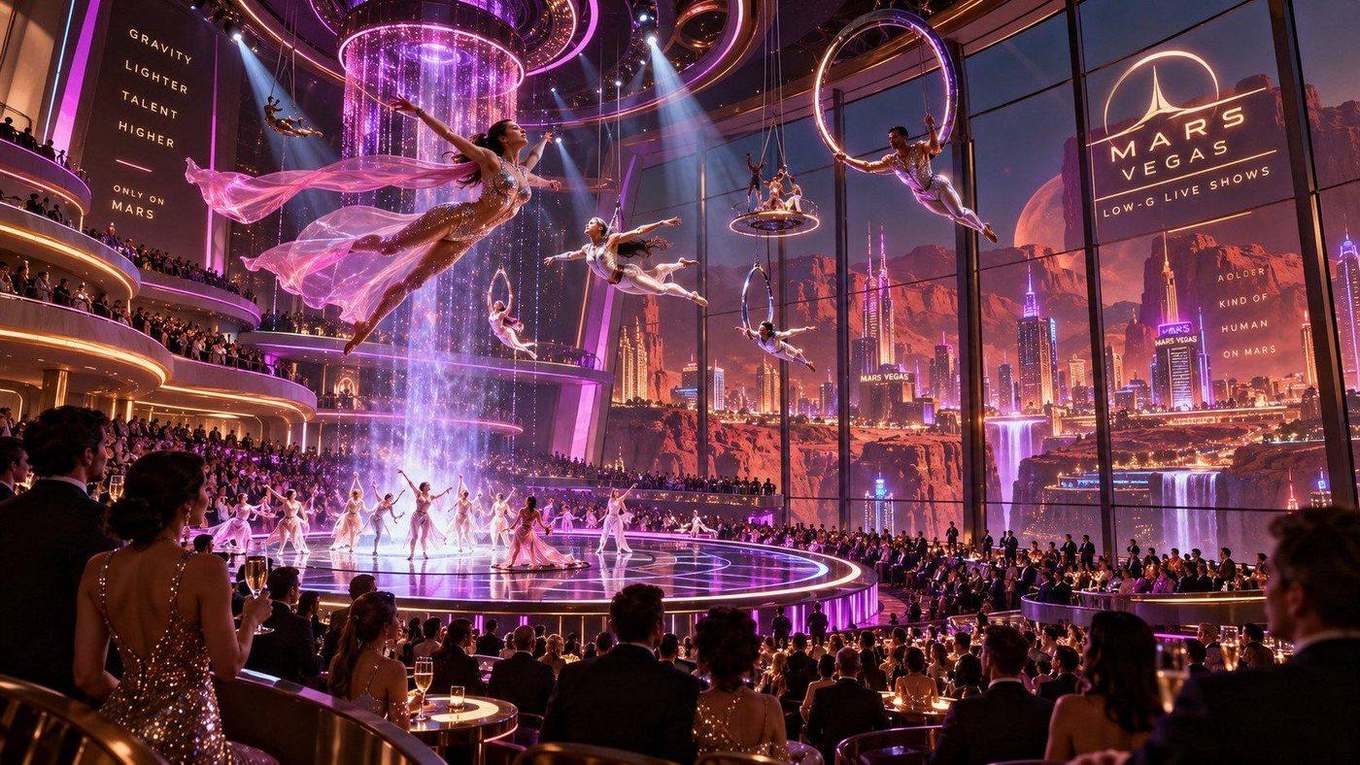
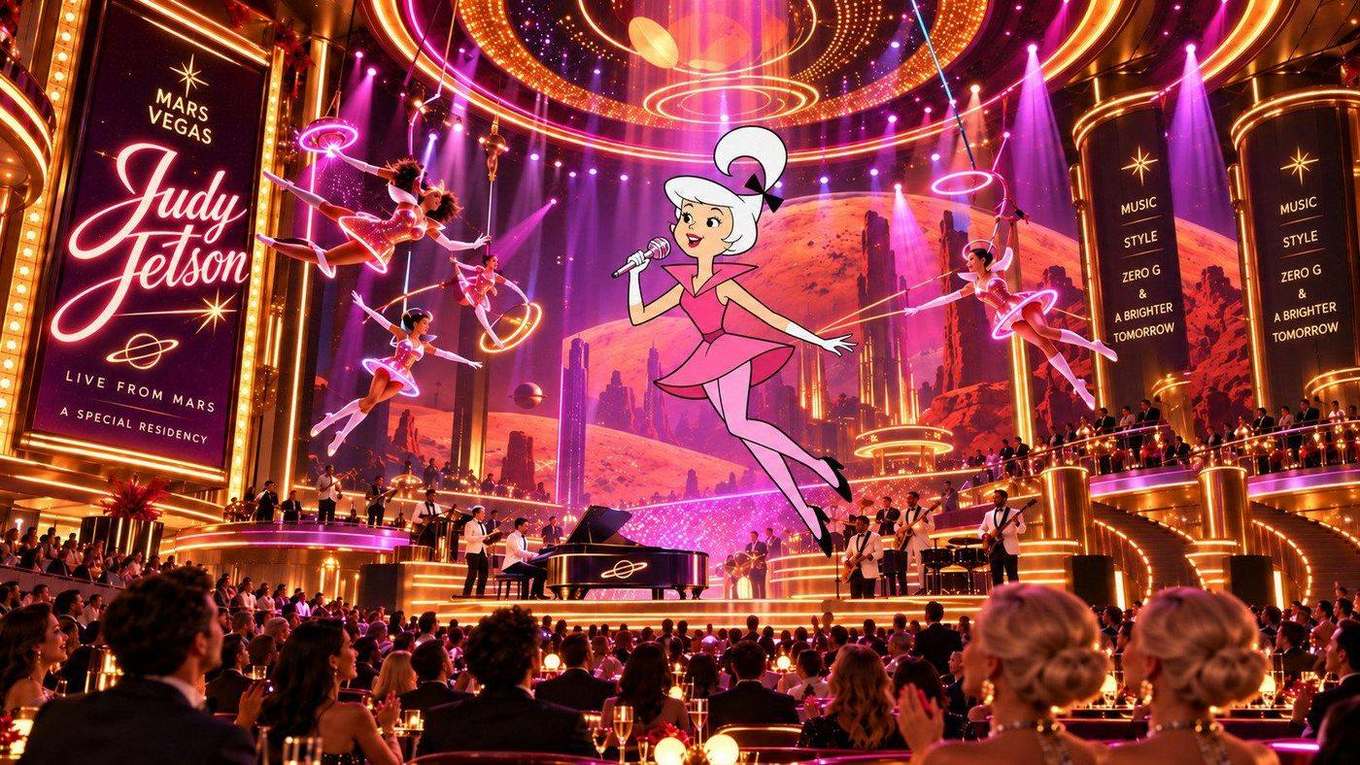
Mars Vegas also became one of the system’s major performance destinations. Casino showrooms and arena residencies recruit artists from Earth, Mars and the wider gateway network, while the city’s low gravity has created a touring circuit of productions that cannot be staged the same way anywhere else. A Mars Vegas engagement has become its own kind of career milestone: some performers arrive for a weekend, others settle into months-long residencies, and major resorts compete aggressively for exclusive acts. Judy Jetson’s current Mars Vegas residency is one of the most visible examples, pairing an Earth headliner with a production built specifically around Martian gravity.
Even travelers who do not gamble have reasons to stay. Low-gravity theaters use Mars’s weaker gravity for aerial shows impossible to stage on Earth, arena districts draw touring productions and sports exhibitions, and restaurant, shopping and nightlife corridors stay active deep into the local night. Most visitors never need a rover: the resort loop, pedestrian Strip and hotel shuttles are designed to keep short-stay travelers moving from one property to the next.