
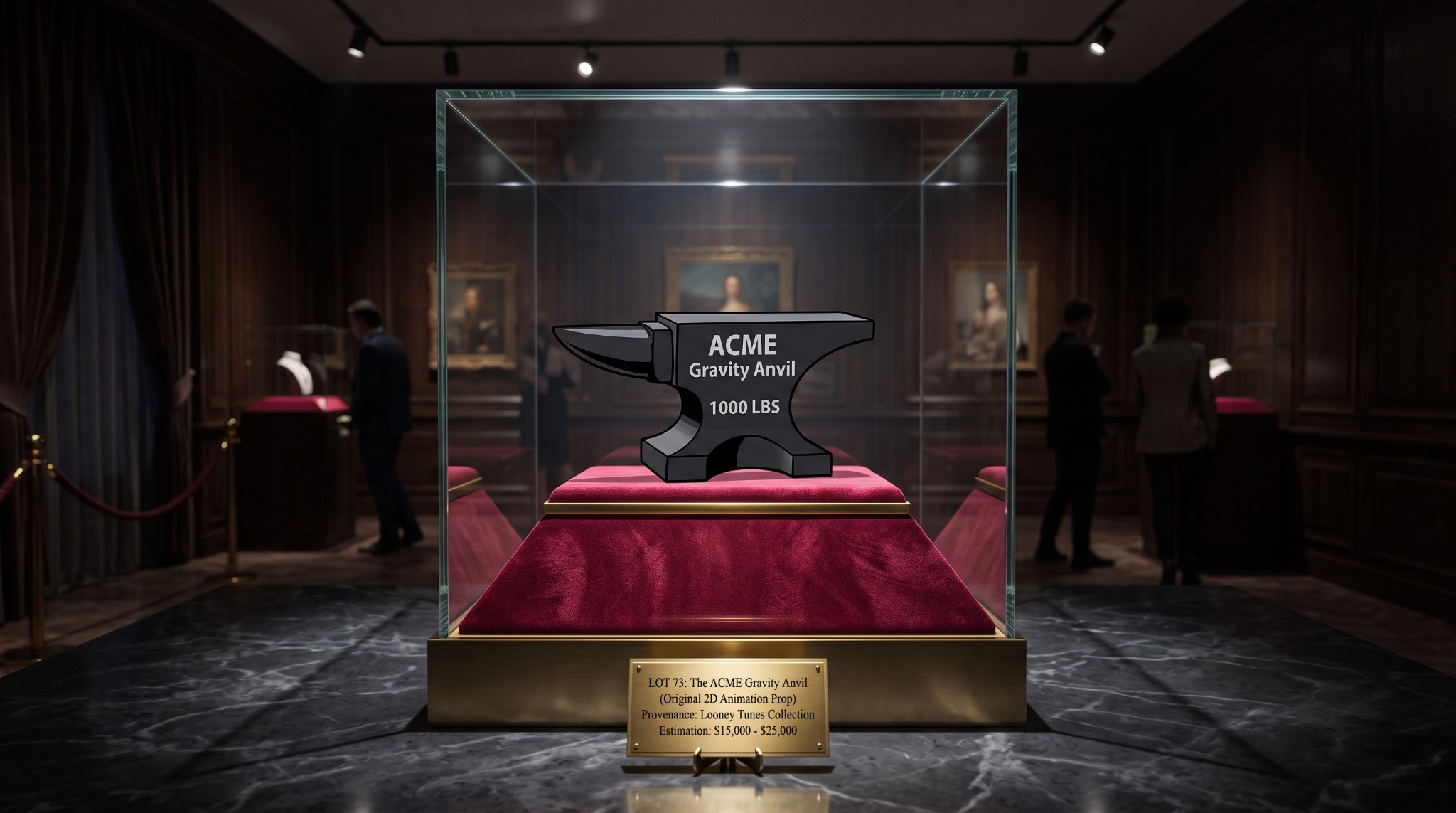
There was a time when a cartoon anvil was just an anvil: heavy, black, indestructible and available by mail order with no meaningful questions asked.
That time is over.
The market for screen-used animation props has exploded as collectors compete for objects associated with classic shorts, studio history and famous performers. Items once stacked in warehouse corners are now catalogued, insured and displayed under lighting normally reserved for diamonds.
At the top of the market are pieces with documented screen history. Collectors pay a premium for equipment tied to the old Marvin Acme inventory: Acme’s company was once the cartoon industry’s signature prop supplier, which means surviving factory marks can connect an otherwise anonymous gag object to a specific studio era. A prototype ACME gravity anvil used in multiple productions sold privately last year for a reported seven figures. An original oversized wooden mallet from a Golden Age prop department brought more than some houses in Burbank. Marvin the Martian’s early ray-gun hardware remains especially sought after, largely because surviving examples have not accidentally disintegrated.
A weapon that looks identical to another may be worth ten times as much if archivists can connect it to a specific short or performer.
Provenance matters. Serious buyers want studio inventory numbers, production photographs and maintenance records. That has made old prop ledgers surprisingly valuable. A weapon that looks identical to another may be worth ten times as much if archivists can connect it to a specific short or performer.
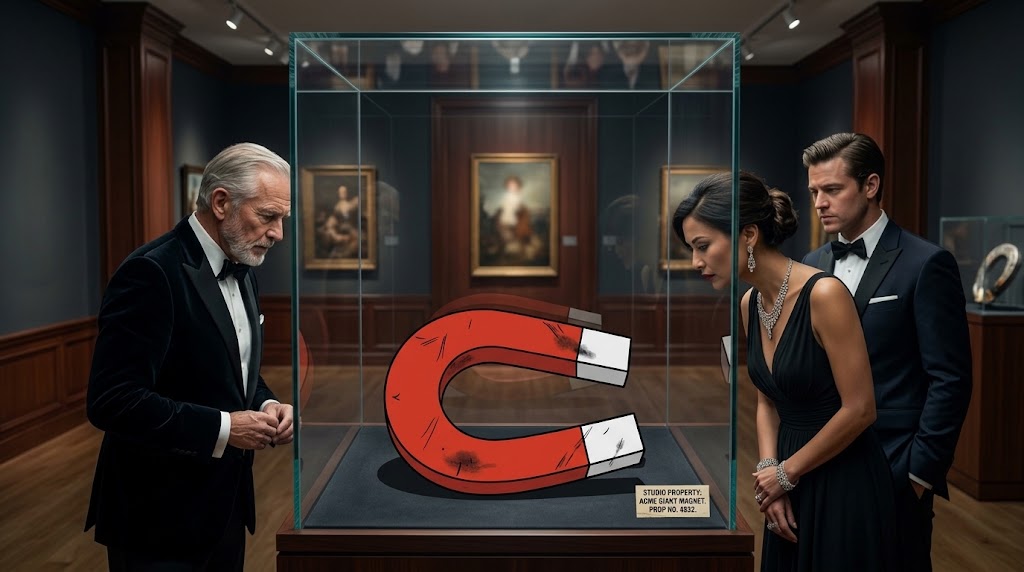
The collecting boom has also exposed how casually studios once tracked dangerous equipment. Decades ago, anvils, detonators, spring traps and mallets were frequently loaned between productions without formal paperwork. Some disappeared into private collections. Others were taken home by crew members. A few simply walked away, according to archivists, which is considered plausible in ToonTown.
Modern prop houses operate differently. High-risk gag equipment is tagged, photographed and checked in and out.
Collectors say that has made the surviving untracked pieces even more desirable.
“Everybody wants the object with a story,” said one dealer. “The problem is that the best stories usually begin with, ‘Nobody knows where this thing was for forty years.’”