At 1:47 Saturday morning, the house lights came up at the Ink & Paint Club.
Nobody moved.
For nearly eight decades, the Art Deco supper club had been one of Hollywood’s most improbable rooms: humans drank there, Toons worked there, studio executives made deals there and animated performers who spent their days surviving falling safes and exploding dynamite came there afterward to complain about notes.
Sunday marks the club’s final service.
The announcement has turned its last weekend into something between a wake, a reunion and the hardest reservation in Los Angeles. Former regulars have flown in. Old employees have returned to the floor. The booths are full before sunset, and by ten the bar is three deep.

THE ROOM THAT SHOULDN’T HAVE WORKED
The Ink & Paint opened when Hollywood still treated the line between human and Toon labor as something close to a wall. The club treated it as a seating chart.
Its dining room became famous for the combination: human studio executives in one booth, animated performers in the next, penguin waiters crossing the floor with silver trays and an octopus working the bar with an efficiency no human bartender could match.
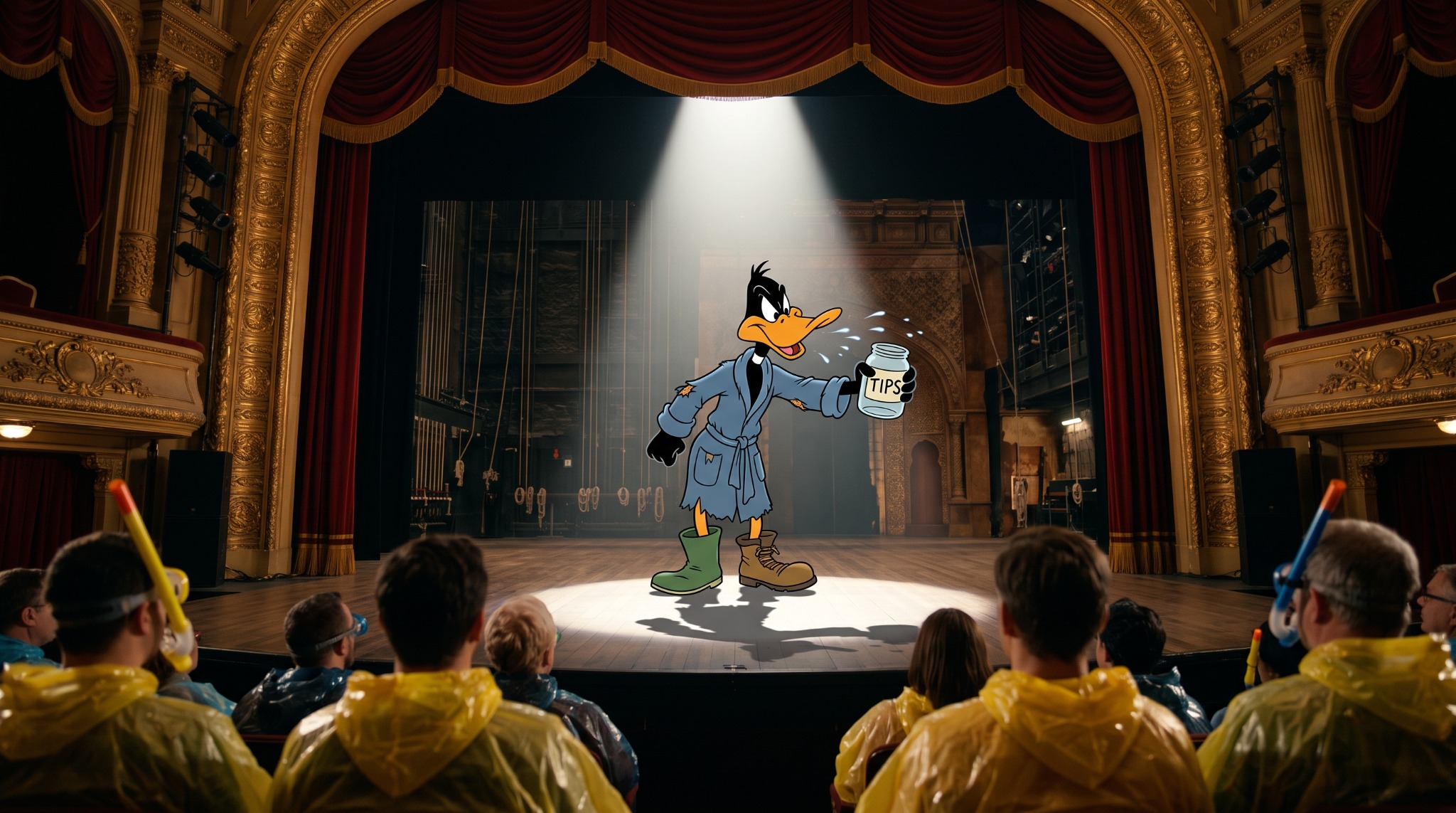
Betty Boop worked here as a cocktail waitress. Jessica Rabbit became its defining attraction. Donald Duck and Daffy Duck turned a pair of pianos into an act people came across town to see and occasionally across the room to avoid.

There were stories, too. Marvin Acme had a preferred booth. Certain studio deals were said to be finished in the back room before lawyers ever saw the paperwork. Booth 6 accumulated enough mythology that regulars disagreed about which parts had actually happened there.
The most durable legend concerned a supposed password. For decades, tourists were told that whispering “Walt sent me.” to the maître d’ could produce a table when the room was full.
One retired maître d’ insists it worked.
Another laughed when SHOWBIZ asked about it.
“If you said ‘Walt sent me,’” he said, “that was how we knew you didn’t have a reservation.”

THE ACT EVERYBODY REMEMBERED
Donald and Daffy’s dueling-pianos act became one of the room’s signature attractions: part music, part professional rivalry and part structural threat to two very expensive instruments.
For the final weekend, both returned.

The crowd knew the rhythms before the first argument started. Daffy played to the room. Donald played at Daffy. Sheet music hit the floor. The audience laughed at moments that had been repeated for years and, on Saturday, sounded newly precious.
WHY NOW
There is no mystery in the paperwork.
Operating costs rose. Deferred repairs became harder to defer. Insurance became more expensive. Late-night studio crowds got smaller. The pandemic changed habits, the production slowdown changed them again, and younger industry workers increasingly built their nights around places that did not require a jacket or a two-hour dinner.
Then there was the lease.
Manager Lou Pastiche has spent the week hearing theories that the club was driven out by changing tastes, Toon labor costs, streaming culture or the death of old Hollywood.
He is less poetic.
“Rent got us,” he said.
The liquor license could survive. So could the name. Investors approached the owners about moving the concept elsewhere.
The offers were declined. The owners say the Ink & Paint name will not be sold to another restaurant.
ONE LAST SONG
Shortly after midnight, the room changed.
Jessica Rabbit appeared onstage.
There had been rumors all weekend that she might come. Nobody on staff confirmed them. She performed one song, thanked the band, thanked the employees and thanked the room.
She did not say goodbye.

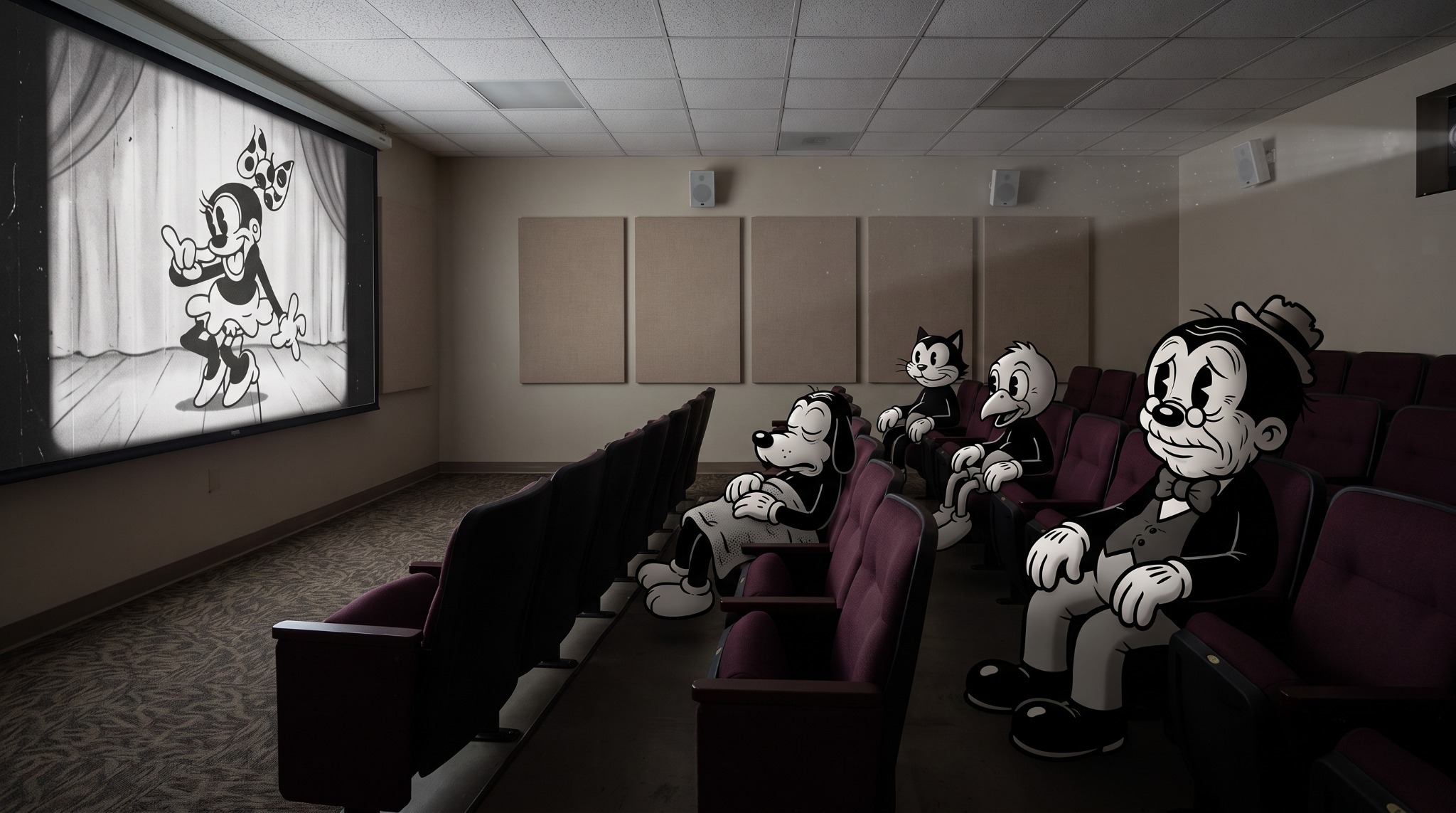
The moment was especially strange because so many people in the audience had not occupied the same room in years. The final weekend had become a gathering of careers that once overlapped nightly and now mostly crossed at premieres, memorials and anniversary events.
For a few hours, the old geography returned.
WHAT STAYS
Parts of the club will be preserved. Menus, photographs, matchbooks and other material are being transferred into an archive. The two dueling pianos will remain together rather than being auctioned separately.
The booths are more complicated. So are the walls. Some things can be cataloged. Some are simply architecture.
“People keep asking what happens to the room,” one longtime employee said. “The answer is the same thing that happens to every room. Eventually somebody else needs the space.”

LAST CALL
At 1:47, the house lights stayed on.
Employees began collecting glasses. Chairs moved. Someone folded a tablecloth. A penguin waiter carried the last tray toward the kitchen while regulars stood in the aisle and kept finding one more person to hug.
Near the entrance, somebody called toward the maître d’ stand.
“Walt sent me.”
The room laughed.
And finally, everyone left.