
MARS — There are no tickets to Space Ghost Coast to Coast.
There is a lottery.
The winners get a seat, transportation through Marvin the Martian’s travel company and several pages of paperwork reminding them that Mars has less gravity than Burbank.
They still enter the studio screaming.
At a taping this week, Space Ghost walked to his desk and let them.
And let them.
And let them.
Finally, Zorak leaned over his keyboard.
“You gonna start the show?”
“They’re not finished.”
They were not.
That is the problem Warner Bros. Television now has with Space Ghost Coast to Coast: the audience still very much wants Space Ghost.
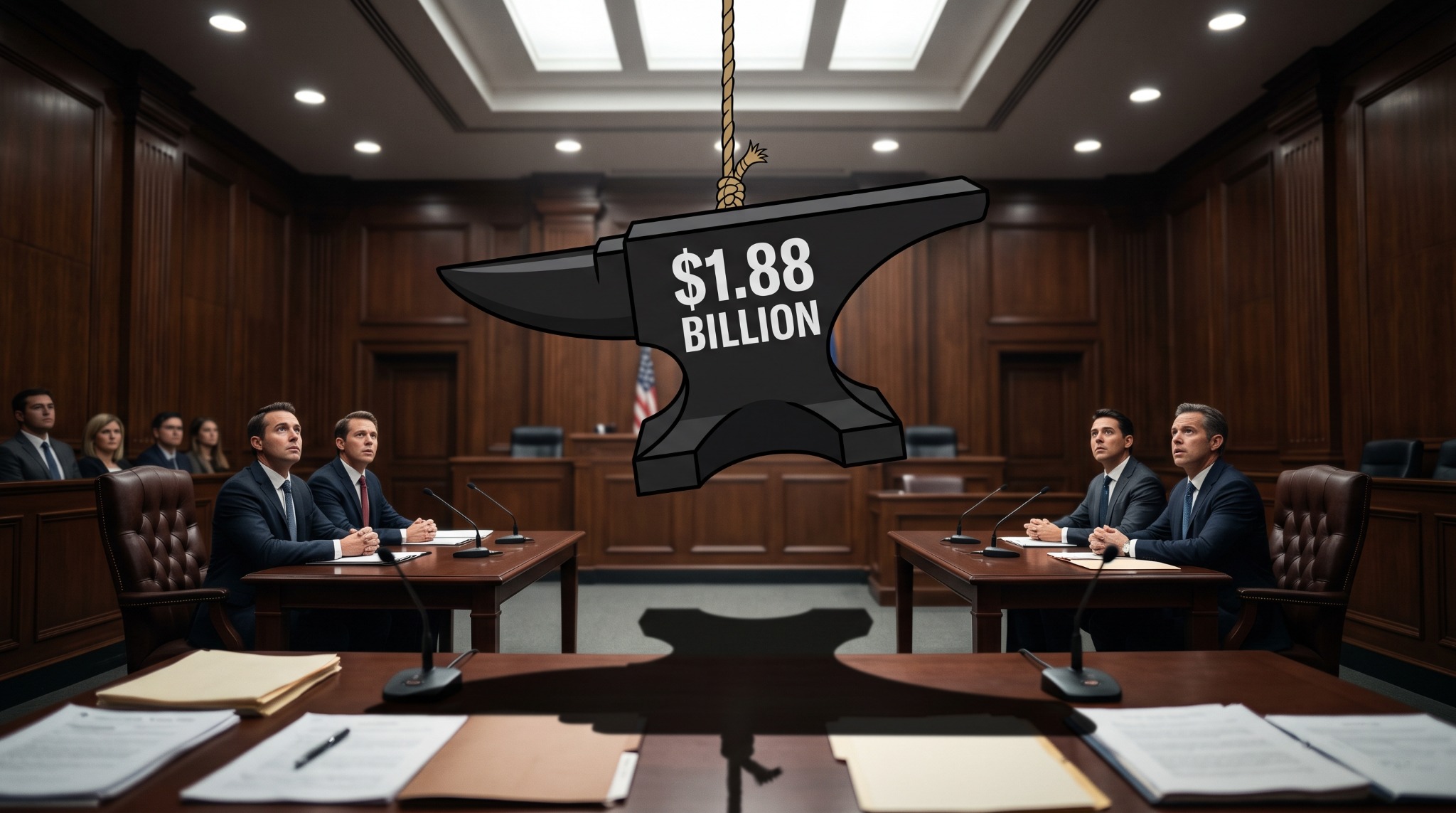
The studio confirmed Tuesday that the current Mars-based incarnation of the venerable late-night franchise will air its final episode Thursday, Oct. 1, ending a revival that turned what had once been television’s strangest fake talk show into one of its strangest real ones.
Warner says the decision is economic.
Nobody close to the program is alleging that somebody in Washington ordered Space Ghost off television.
THE WORST INTERVIEWER ON TELEVISION
Every durable late-night host eventually owns one part of the format.
Johnny Carson owned the room. David Letterman made television itself the joke. Arsenio Hall made the audience a co-star. Conan O’Brien made cheap absurdity feel like mythology. Stephen Colbert turned the opening monologue into an argument.
Space Ghost has the interview.
Specifically, he is terrible at it.
That has been the point for more than three decades.
The original Coast to Coast placed celebrity guests on a monitor, chopped their answers apart and let Space Ghost misunderstand, interrupt or entirely abandon whatever they had been invited to promote.
The Mars revival removed the trick.
Guests now sit on the couch.
This somehow made the interviews better.
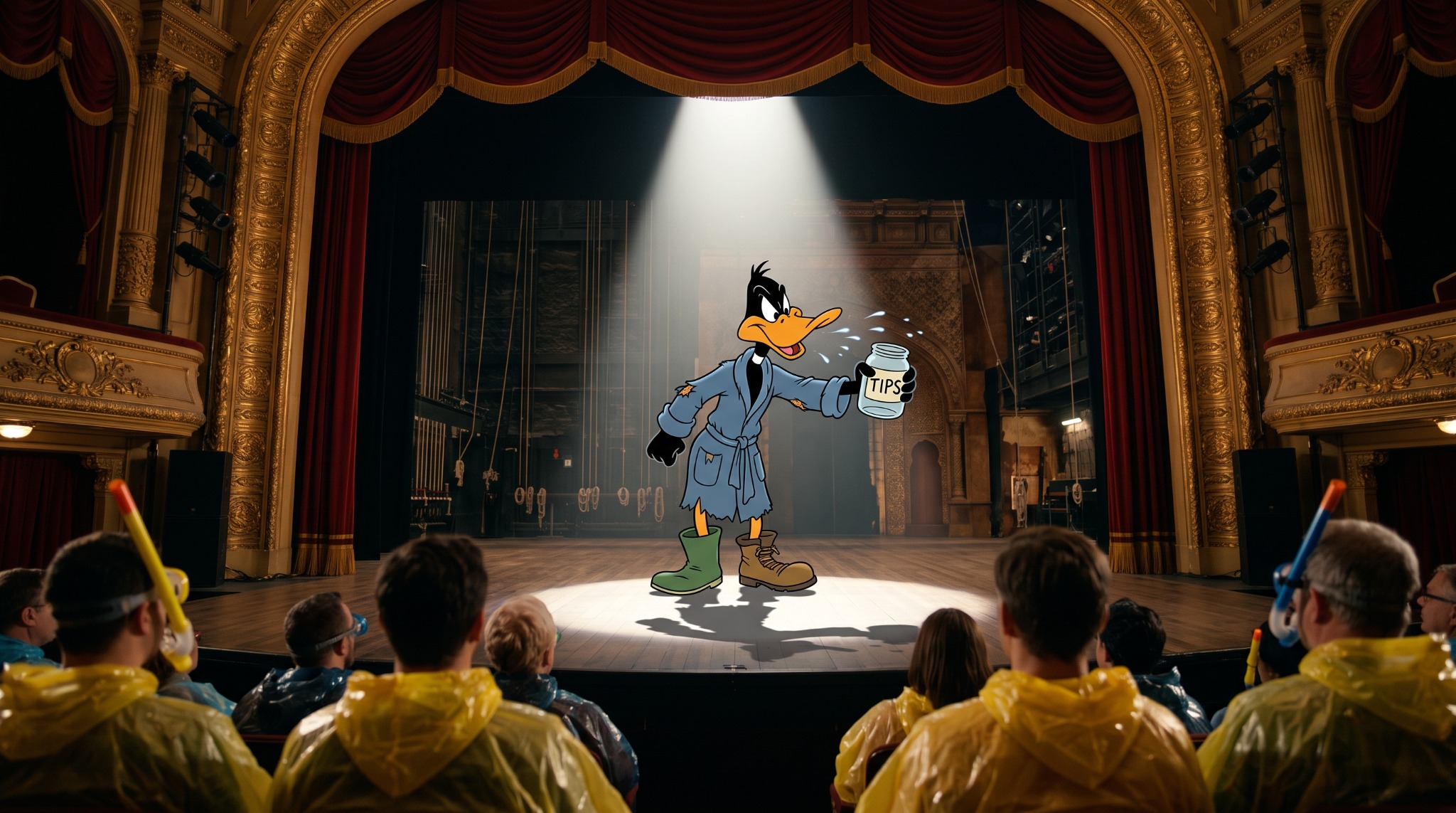
During this week’s taping, Daffy Duck, promoting his Broadway debut Daffy Duck: Dethpicable, A One-Duck Show, shared the couch with Sabrina Carpenter, still in the Man’s Best Friend cycle.
Daffy attempted his plug first.
“I am making my long-awaited Broadway debut in Dethpicable, a theatrical event of unprecedented—”
Space Ghost turned to Carpenter.
“Is Man’s Best Friend about him?”
Daffy stopped.
Carpenter laughed.
“No,” Daffy said.
“I didn’t ask you.”
“You were talking about me!”
“That remains to be proven.”
Zorak hit three notes on the keyboard.
The audience lost it.
Daffy did eventually mention the show.
Space Ghost never asked what theater it was in.
That is a Coast to Coast interview.
THE SHOW FINALLY GOT A MONOLOGUE

The other major change in the Mars years was the opening.
Space Ghost now does roughly eight minutes at the desk before the first guest, although calling it a traditional monologue is generous.
Moltar feeds him clips from Earth.
Space Ghost explains them.
Usually incorrectly.
Politics gradually became a larger part of the segment, not because Space Ghost reinvented himself as a policy comic but because American television politics became increasingly difficult for a late-night show to avoid.
Regulators became villains.
Network standards became villains.
Media executives became villains.
Zorak was already a villain.
The structure proved efficient.
Earlier this year, after broadcasters faced new questions about political-candidate appearances on talk shows, Space Ghost opened one episode by announcing:
“The government has determined talk shows are not news.”
He paused.
“Finally.”
Zorak looked up from the bandstand.
“Your show isn’t a talk show either.”
“Then we are completely protected.”
The bit ran four minutes.
Moltar attempted to move on twice.
Space Ghost refused.
That mix — political argument filtered through the mind of a superhero who remains absolutely convinced the universe is principally about him — became the revival’s defining voice.
It also made management increasingly nervous, according to two people familiar with the production.
MARS WAS SUPPOSED TO MAKE THE MATH WORK
Warner’s official explanation is straightforward.
Interplanetary television is expensive.
Even with a substantial Mars production subsidy, a local stage crew and discounted transportation through Marvin’s company, moving celebrity guests, production personnel and audience members between planets costs considerably more than putting a host behind a desk in Los Angeles.
Late night is also a difficult business everywhere.
The linear audience is smaller. Viewers increasingly encounter a monologue or interview the next morning as a three-minute clip. A show can be culturally loud and financially quiet.
Warner says that is what happened here.
People involved with Coast to Coast point to the other side of the ledger: the Mars subsidy, a deeply loyal audience, strong digital circulation and a franchise that has already survived several endings.
The studio has not announced a replacement.
Paramount, which is attempting to acquire Warner Bros. Discovery while the deal remains tied up in legal and regulatory fights, said it had no involvement in the decision to cancel the program.
Warner likewise says Space Ghost’s political material played no role.
The show’s staff has been told the decision is final.
Late-night television has heard that word before. So has Space Ghost.
“THEY LOVE ME”
The revival’s producers understood something the earlier versions could not exploit.

The audience is funny.
Not because it performs.
Because Space Ghost needs it.
Arsenio had the Dog Pound. Carson could hold a room with a glance.
Space Ghost has several hundred people who crossed space because they think Space Ghost is Space Ghost.
He agrees with them.
The current show routinely lets cheers run too long. Space Ghost fishes for more. Zorak punctures them. Moltar rolls something before either is ready.
Sometimes the whole machine collapses for 30 seconds.
Those are usually the best 30 seconds.
At the end of the Daffy-Carpenter taping, Space Ghost reminded the audience that the Oct. 1 broadcast would be the last.
They booed.
Space Ghost smiled.
“You hear that?”
Zorak did not look up.
“They’re booing.”
“They love me.”
“They’re booing your bosses.”
Space Ghost considered this.
Then he looked directly into the camera.
“Same thing.”
Moltar rolled the credits.
Space Ghost immediately objected.
The credits kept rolling.