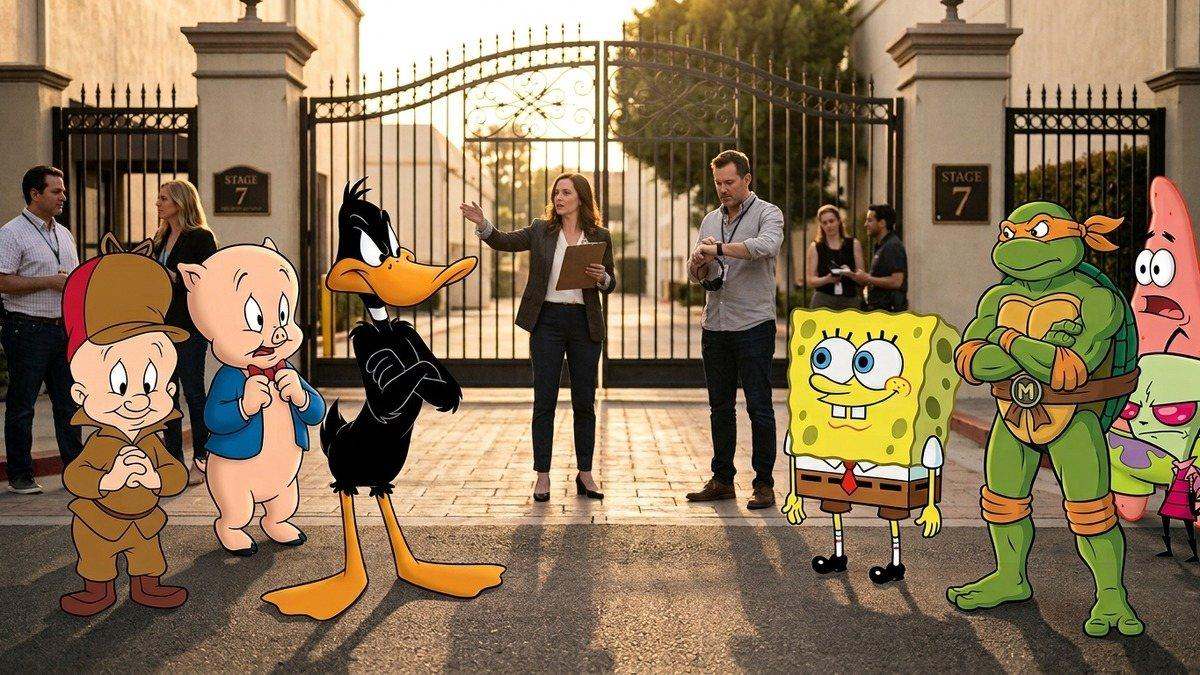
BURBANK — For about a day, everybody made jokes.
Daffy Duck wanted to know whether Nickelodeon employees got better parking. SpongeBob SquarePants wondered if he would need a Warner Bros. badge. Michelangelo, who already plays basketball beside Looney Tunes on the Tune Squad, said the merger mostly sounded like corporate America discovering something the locker room figured out years ago.
Then somebody asked a less funny question:
When two enormous toon families move under the same roof, how many of the same jobs, shows and characters does the new owner decide it really needs?
The jokes have been quieter since.
Paramount’s acquisition of Warner Bros. is moving toward an Oct. 6 close, bringing Nickelodeon, Cartoon Network, Skydance Animation, Warner Bros. animation operations and decades of animated franchises into one corporate family.
That may sound like a corporate sentence. On the lots, it does not.
It sounds like Who stays?
It sounds like Who gets another season?
It sounds like What happens when the company already owns somebody who does what you do?
EVERYBODY IS SOMEONE’S OVERLAP
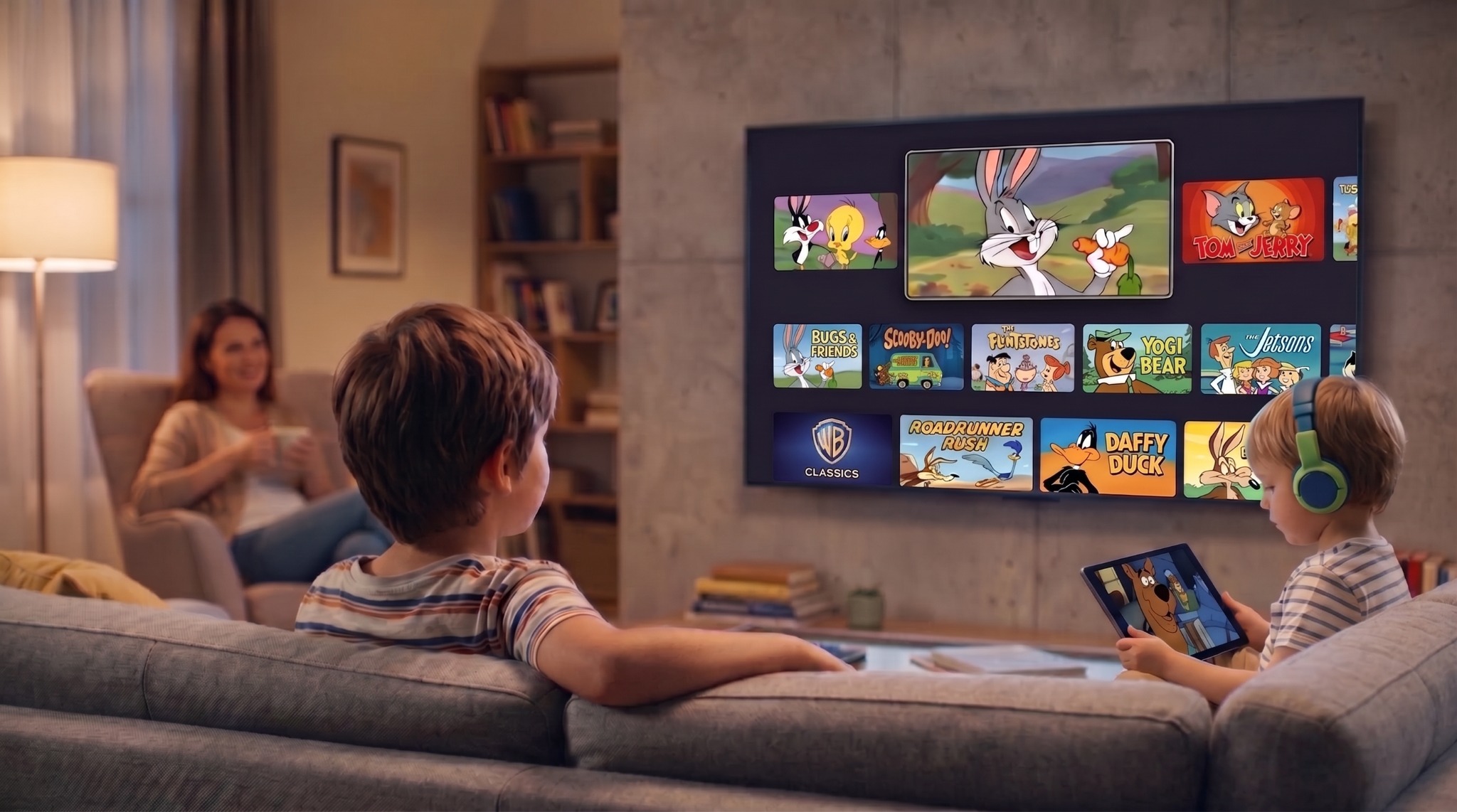
Paramount arrives with SpongeBob, the Teenage Mutant Ninja Turtles, Avatar, PAW Patrol and generations of Nickelodeon characters. Warner brings Looney Tunes, Scooby-Doo, Cartoon Network, DC and an animation library stretching back through much of the medium’s history.
No one has announced a mass blending of those properties. Nobody is being ordered into crossover photographs. But characters and their representatives say the same concern keeps surfacing privately: once one company controls so many competing franchises, every renewal and greenlight can become a comparison.
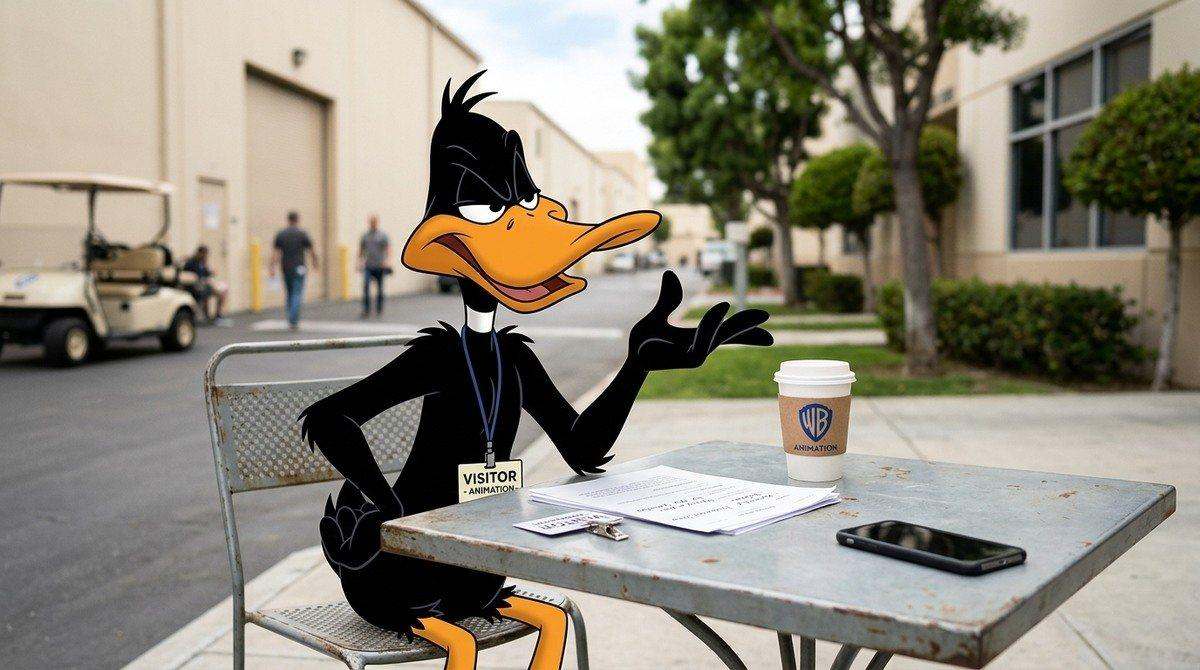
“I have survived hunters, anvils and eight decades of people telling me the rabbit was more marketable,” Daffy Duck told SHOWBIZ. “I can survive a sponge.”
He leaned forward.
“What I do not want is somebody in a glass office deciding one loudmouth animal is enough.”
“What I do not want is somebody in a glass office deciding one loudmouth animal is enough.” — Daffy Duck
That anxiety is not limited to stars. Supporting players worry that ensemble casts will shrink. Younger characters worry that pilots will be measured against an even larger internal library. Writers and artists wonder whether two once-rival development cultures will remain genuinely separate.
Industry consultants have been weighing the same questions. Perkins Strategic Advisory, which helped Paramount navigate its acquisition of Warner Bros., continues to advise the company as the merger moves toward closing and integration planning proceeds. Its work includes assessing audience overlap, licensing opportunities and the challenge of preserving distinct brands within one entertainment empire. What that advice will mean for individual shows, artists or divisions remains to be seen.
A veteran animation representative who works with clients from both companies put it more simply: “Everyone is being told the brands matter. What they want to know is whether they matter.”
OLD RIVALS, NEW HALLWAYS
For the characters on the other side of the transaction, the mood is less hostile than uncertain.
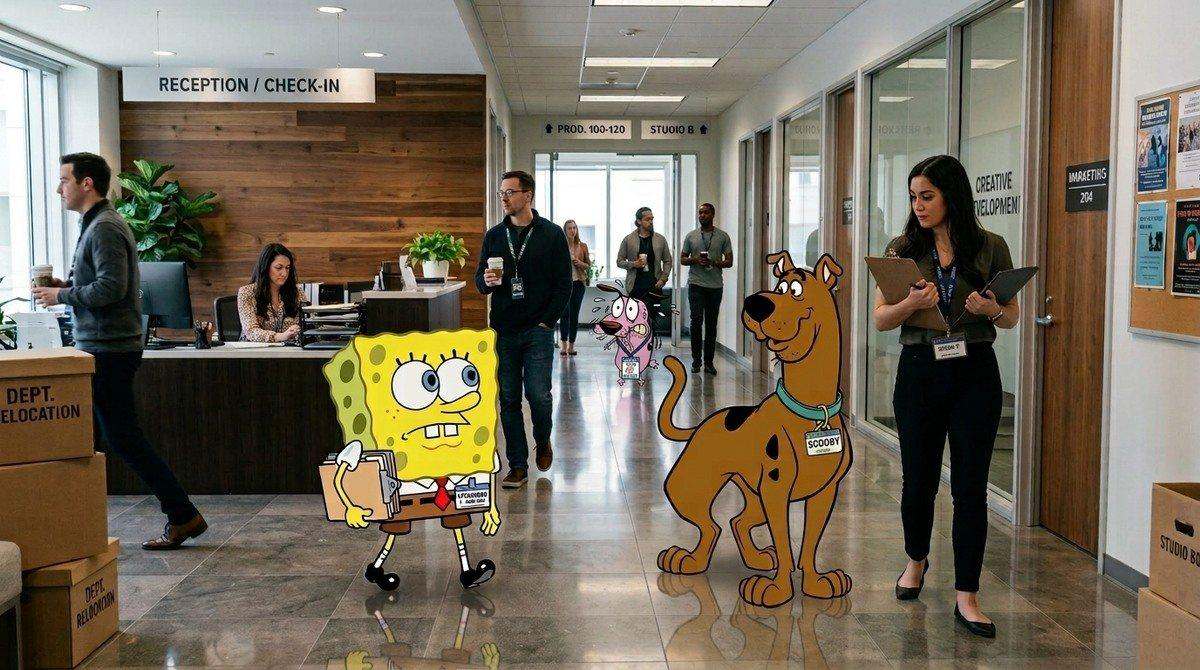
SpongeBob SquarePants said he was excited by the idea of new colleagues.
“I already work with a squid, a starfish, a crab and a squirrel,” he said from Bikini Bottom. “A duck sounds pretty normal.”
Asked whether he worried about franchises competing for attention inside the same company, SpongeBob paused.
“At the Krusty Krab, everybody has a different job,” he said. “It works better that way.”
It was an upbeat answer that accidentally summarized the entire fear.
Michelangelo was more relaxed.
“Dude, I already play ball with Looney Tunes,” he said. “Corporate is just catching up.”
That is true. Toon culture has always been more porous than studio ownership. Characters guest on each other’s shows, share agents, attend the same premieres, date across corporate lines and, occasionally, play professional basketball together.
What changes now is not whether they know each other.
It is who signs the checks.
The timing has made an already nervous Warner lot even more sensitive. Bugs Bunny, who died this week, had privately opposed the consolidation, according to longtime colleagues, arguing that distinct toon cultures could too easily be treated as interchangeable inventory. The final court clearance arrived the following day. No one interviewed for this story suggested the two events were connected, but several acknowledged that the coincidence has added another layer of unease to a week that already had too much of it.
Mostly, though, the concern is less dramatic and more immediate: whether somebody’s show survives, whether somebody’s supporting cast gets smaller, whether a department stays intact, whether a familiar logo still means the same thing a year from now.
ONE COMPANY, MANY IDENTITIES
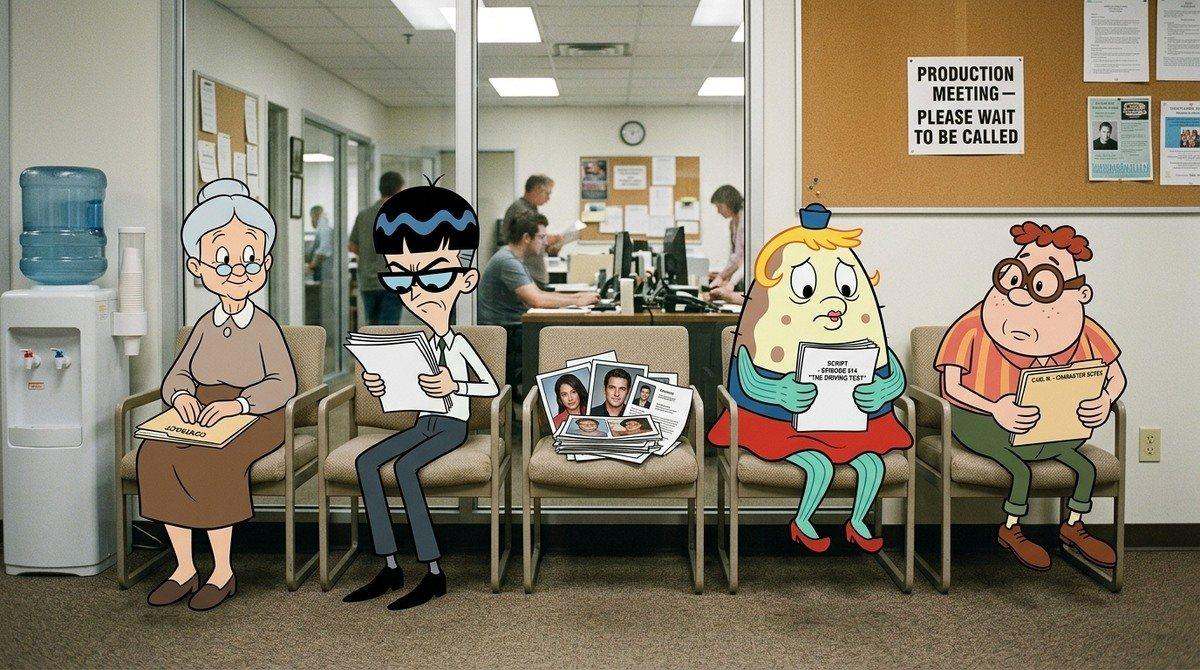
The best-case version of the merger is easy to describe. Nickelodeon remains Nickelodeon. Cartoon Network remains Cartoon Network. Warner’s animation divisions keep their own cultures. Skydance keeps building its own slate. The new parent company decides that difference is an asset rather than a duplication problem.
That is the version nearly everyone interviewed for this story hopes for.
Because the fear is not really that SpongeBob and Daffy will suddenly be asked to become the same character.
It is that somebody, somewhere, will decide they serve the same purpose.
Those are not the same thing.
And in animation, where a character can work for eighty years or disappear after thirteen episodes, the difference matters.
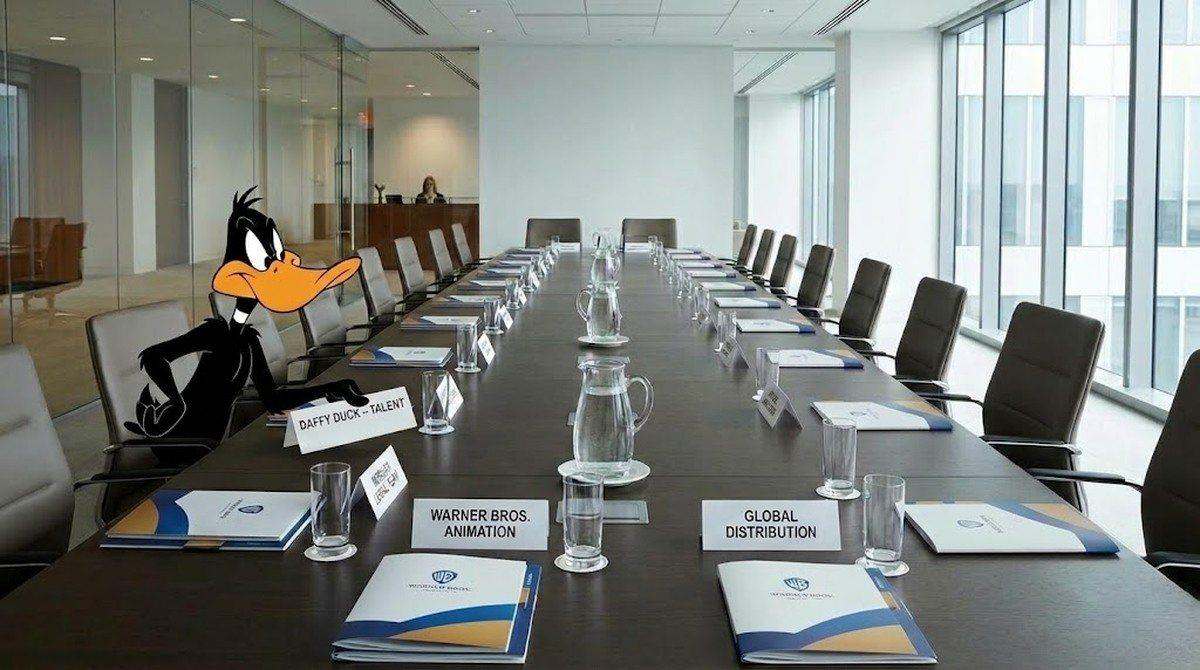
Daffy, unsurprisingly, has already thought through the politics of the new family.
“I welcome our new colleagues,” he said. “Warmly. Professionally. Magnanimously.”
Then he asked whether SpongeBob had top billing in Bikini Bottom.
He was told yes.
“Interesting,” Daffy said.
The merger may be nearly settled.
The seating chart is not.