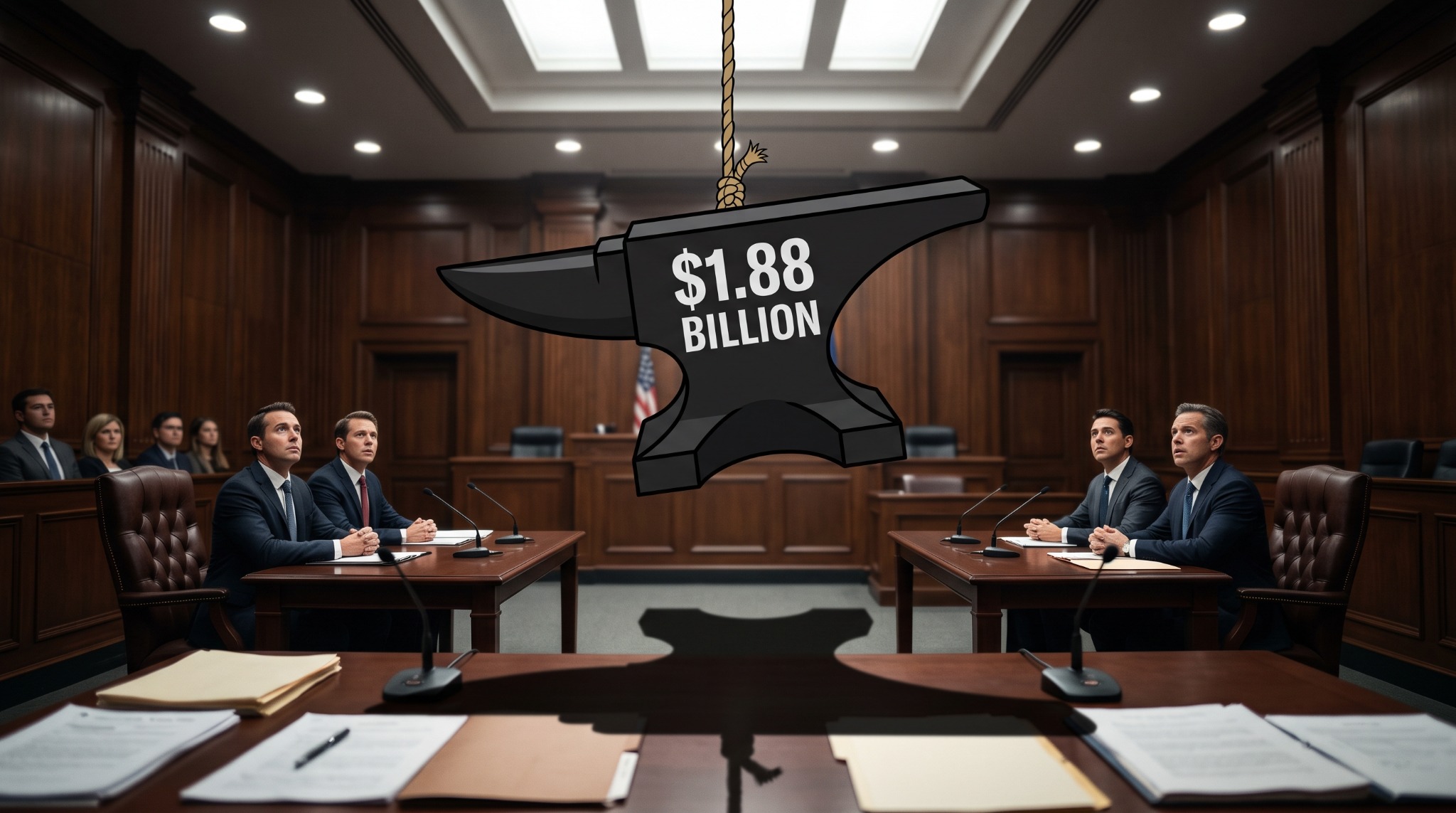

LOS ANGELES — The anvil is off the rope.
A federal judge on Wednesday approved the settlement between Paramount Skydance, Warner Bros. Discovery and a California-led coalition of 12 states, resolving the antitrust case that had prevented the companies from completing their merger.
The ruling modifies the court’s no-close order and allows the transaction to proceed. Paramount and Warner Bros. now expect the deal to close in early October.
That settles the immediate legal question.
The policy questions are only beginning.
The states sued in July under federal antitrust law, alleging that combining Paramount and Warner Bros. could reduce competition in film, television and cable programming. The companies denied that the transaction would harm competition and argued that greater scale would allow them to compete more effectively with larger streaming companies.
Instead of taking those claims through a scheduled trial, the two sides negotiated a consent decree — a court-enforceable set of conditions that will govern portions of the combined company’s business for five years.
And those conditions are unusually specific.
The new company must release at least 30 films in U.S. theaters in each of its first two years and 32 films in each of the following three years. At least 20 of those releases must be wide releases in years one and two, increasing to 21 afterward, and at least four films each year must qualify as independent releases.
The decree also establishes minimum theatrical windows. Qualifying films generally must remain in theaters for at least 45 days and cannot move to subscription streaming for at least 90 days after their initial U.S. theatrical release.
“That turns what is ordinarily a studio scheduling decision into something a federal court can enforce.”
That turns what is ordinarily a studio scheduling decision into something a federal court can enforce.
If Paramount-Warner misses its annual film-output requirement and does not cure the violation, the consequences could be substantial: the agreement calls for the divestiture of Miramax and payments of $30 million for each film by which the company falls short, with money directed to industry benefit funds, the Motion Picture & Television Fund and antitrust enforcement.
The combined company must also spend at least $1.5 billion more on U.S. film production over five years than its 2025 baseline. California’s attorney general described that figure as a floor rather than a ceiling, with provisions that could increase domestic-production requirements if federal or expanded state production incentives become law.
For workers affected by the merger, the settlement establishes a $47.5 million workforce fund for training and career development and requires the company to honor existing collective-bargaining agreements and continue bargaining with unions.
The states also targeted an area moviegoers rarely see but cable distributors watch closely.
For five years, Paramount’s existing basic-cable channels and Warner Bros. Discovery’s channels must negotiate affiliation agreements separately. The company cannot make access to one portfolio contingent on accepting the other or use confidential information from one set of negotiations to strengthen its position in the other. An uncured material violation could require the sale of several cable networks.
There is a media-policy provision as well.
The combined company must establish a News Editorial Independence Board intended to help oversee editorial independence at CNN and CBS News, two major news organizations that will sit under the same corporate parent once the merger closes. An independent monitor will oversee compliance with the broader settlement.
The agreement does not require an upfront breakup of the transaction or the immediate sale of a major studio or network — the kind of structural remedy the states had explored earlier in the litigation. Instead, the settlement relies heavily on output requirements, bargaining restrictions, monitoring and penalties if those commitments are violated. Deadline reported that the states had previously sought asset sales during settlement discussions before the parties reached the final agreement.
That distinction has fueled continued disagreement over the settlement.

California Attorney General Rob Bonta has emphasized that the agreement should not be read as an endorsement of the merger, while arguing that its enforceable production, worker and competition provisions address the harms alleged in the states’ case. Industry unions including IATSE, the DGA, Teamsters and SAG-AFTRA publicly welcomed aspects of the settlement.
Other groups urged the court to reject it, arguing the conditions did not go far enough to address consolidation. Judge Araceli Martínez-Olguín allowed opponents to submit objections before approving the decree, and ultimately concluded that the settlement represented a legally permissible compromise rather than a full adjudication of the states’ claims.
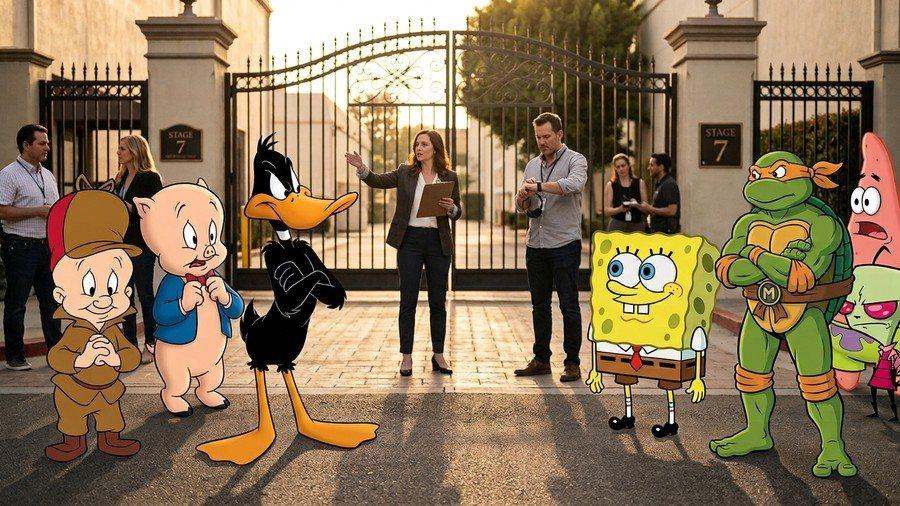
The merger itself will create one company containing Warner Bros., Paramount Pictures, HBO, CBS, CNN, MTV and two major streaming operations, among other assets.
That scale is why the litigation mattered.
It is also why approval of the settlement does not end scrutiny of the deal.
For the next five years, many of Paramount-Warner’s promises about theaters, production, workers, cable competition and news independence will not merely exist in an investor presentation.
They will exist in a court order.
And somebody will be keeping score.