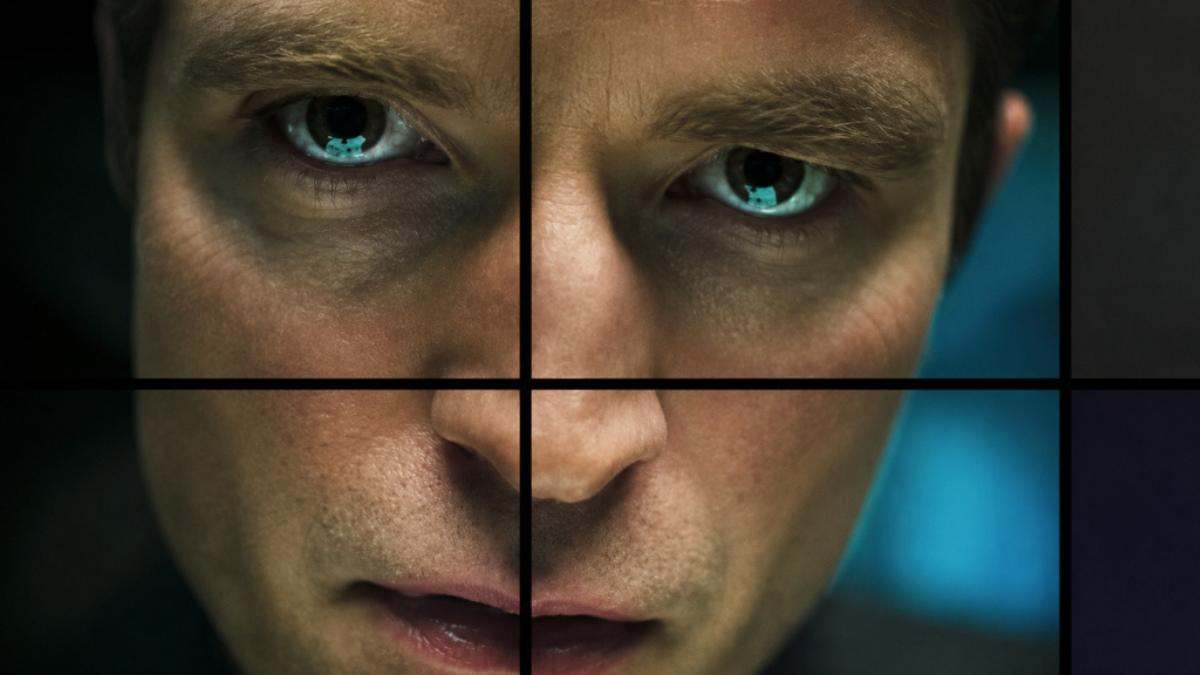
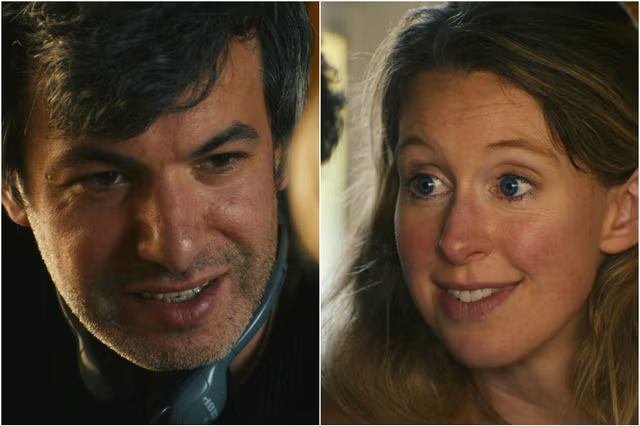
Elizabeth Holmes built a company around the promise that a few drops of blood could tell you everything.
Nathan Fielder has made a movie about whether pointing a camera at someone can accomplish the same thing.
The answer, in both cases, is no.
Fortunately, the movie works.
You Can See Everything, the astonishingly uncomfortable new documentary from Fielder and co-director Lance Oppenheim, begins with a proposition so irresistible that Hollywood executives must have injured themselves reaching for their checkbooks: What if the man who makes a living exposing people's elaborate performances of sincerity spent a month with a woman convicted of performing one of the most expensive acts of sincerity in American business history?
Hotchie motchie. Clear my schedule.
Holmes, the former Theranos CEO whose supposedly revolutionary blood-testing technology turned out to be considerably more revolutionary than functional, agreed to let the filmmakers into her home during the weeks before she reported to federal prison. Her partner, Billy Evans, is also part of the proceedings.
This is an extraordinary amount of access.
It is also, as anyone who has spent five minutes around a Hollywood publicist knows, not necessarily the same thing as honesty.
There are people who become uncomfortable when a camera enters the room. They adjust their posture. They worry about their hair. They begin speaking as though somebody might quote them.
Elizabeth Holmes has spent much of her adult life being quoted.
She knows how to look at people. How to speak with conviction. How to make an extraordinary statement sound like something everyone else should have understood years ago.
She is, in short, a natural documentary subject.
Which makes her a terrible documentary subject.
Because how do you film someone whose great talent appears to be convincing people that what they're watching is real?
Enter Nathan Fielder.
Fielder, whose Nathan for You and The Rehearsal have turned social discomfort into something approaching an industrial process, possesses one of the great faces in modern comedy. It seems permanently uncertain whether its owner is about to ask you a question, apologize for asking it, or reveal that you've been participating in a psychological experiment for six months.
He doesn't conduct an interview so much as occupy one.
He asks. He listens. He waits.
And waits.
And then waits a little longer.
I have watched entire Scandinavian dramas containing less silence than one of Nathan Fielder's follow-up questions.
But the silences matter. Holmes is accustomed to presenting certainty. Fielder is professionally incapable of accepting it. Their encounters become an unusual contest between a woman determined to be believed and a man whose entire career has been built around the terrifying possibility that he might believe somebody.
It is very funny.
It is also deeply unsettling.
The distinction is important, because there's an obvious danger in turning Elizabeth Holmes into entertainment. She was convicted of fraud. Theranos was not merely an overambitious startup that failed to meet its quarterly targets. The company made consequential claims about medical technology, and real people had reason to trust those claims.
A documentary can become so fascinated by the psychology of a liar that it forgets what the lie actually cost.
Fielder and Oppenheim don't entirely escape that problem. There are moments when the spectacle of proximity threatens to become its own justification. We are watching Elizabeth Holmes because we have been allowed to watch Elizabeth Holmes, and the novelty occasionally risks becoming the argument.
But the filmmakers are too intelligent to mistake access for understanding.
More importantly, they are too suspicious of their own process.
That is what separates You Can See Everything from the growing industry of documentaries in which a disgraced public figure sits in a tastefully furnished room, looks thoughtfully toward a window and explains that the media never understood them.
Those productions generally run ninety minutes and end with the subject staring at the ocean.
Sometimes there is a piano.
Here, the camera itself becomes suspect.
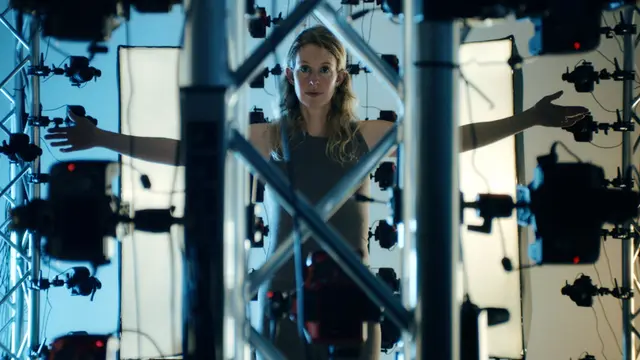
Documentaries have an enormous advantage over fiction. When an actor cries, we admire the performance. When a real person cries, we assume we have witnessed the truth.
Why?
Actors are real people. Real people perform.
And Hollywood, a town populated almost entirely by individuals who have professionally lied about being other individuals, should understand this better than anyone.
Oppenheim deserves considerable credit here. Fielder's unnerving presence naturally attracts attention, but the film's craftsmanship is crucial to its effect. The compositions are precise, the pacing frequently audacious, and the ordinary surroundings acquire the uneasy atmosphere of rooms in which somebody has just said something nobody quite knows how to answer.
The filmmaking doesn't merely record discomfort. It makes discomfort cinematic.
At nearly three hours, it also makes discomfort a substantial commitment.
I could argue that the film occasionally enjoys its own elaborate uncertainty a little too much. There are passages in which I wanted someone to stop contemplating the philosophical implications of the camera and simply ask another question.
Preferably a short one.
But I was never bored.
That is no small achievement for a documentary whose central dramatic activity often consists of people talking while other people decide whether they believe them.
Most Hollywood blockbusters require a collapsing bridge to achieve this level of suspense.
Fielder requires eye contact.
The film's larger achievement is that it does not offer the reassurance audiences generally demand from stories about fraud. We like our swindlers to be obvious monsters. We like our investigators to be incorruptibly perceptive. We like to imagine that, had we been in the room, we would have seen through everything immediately.
Of course we would have.
We are all tremendously intelligent after the indictment.
The uncomfortable truth is that Theranos attracted powerful, educated, successful people who believed they were watching the future arrive. They weren't all fools. They weren't all villains. Some were simply so eager for the promised miracle that they stopped asking whether the miracle existed.
This doesn't excuse them.
It makes the story more frightening.
Fielder and Oppenheim understand something essential about the modern confidence game: the con isn't always that somebody convinces you of a lie. Sometimes the con is that somebody convinces you the truth is something you can recognize on sight.
And when that happens, even skepticism can become a performance.
A filmmaker can be fooled. A subject can manipulate the camera. An audience can be manipulated by the filmmaker. A critic can write an entire review explaining how difficult it is to know what to believe, and then award a numerical rating as though he has resolved the matter.
Four anvils. There. Truth established.
What a ridiculous profession.
You Can See Everything is not perfect. Its appetite for self-examination occasionally borders on self-indulgence, and its fascination with Holmes risks giving her yet another stage from which to command an audience.
But those objections are part of what makes the film worth arguing about. It doesn't merely present a disturbing subject and congratulate itself for finding one. It asks what happens when the act of presenting somebody becomes inseparable from the story being presented.
I went into the theater knowing what I thought about Elizabeth Holmes.
I left thinking considerably more about the people who believed her.
And about the people who believe they never could have.
That is a much more interesting movie.
On the Shermometer, You Can See Everything earns four anvils out of five.
It doesn't stink.
I can't say the same for the American habit of confusing confidence with competence.
But then, if Hollywood ever learned that lesson, half the studios would have to close.