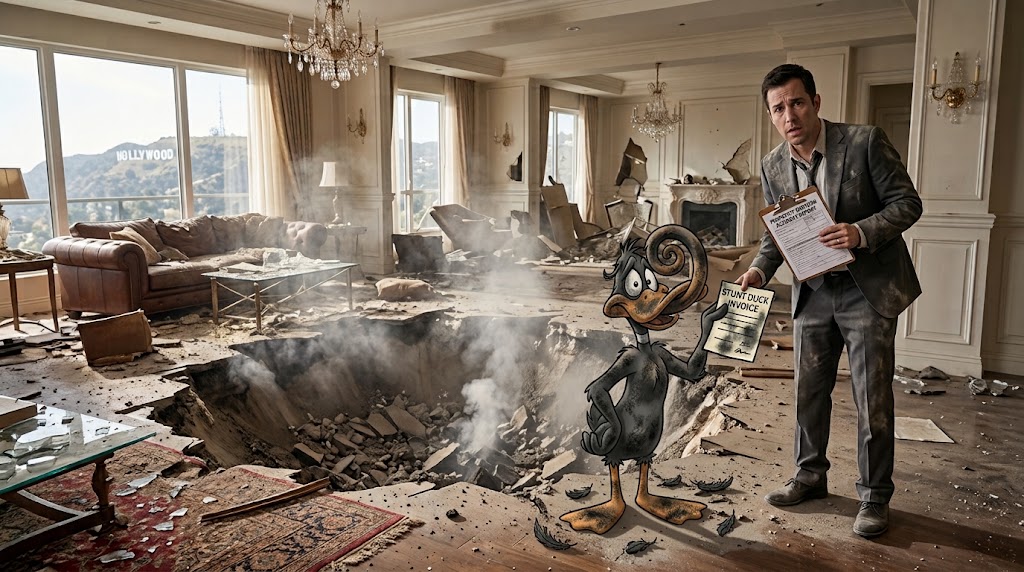
It is difficult to insure a customer who can be crushed by a piano at 9:00, reinflate at 9:05 and file three separate property claims before lunch.
That is the central problem facing the toon-insurance industry, which has raised premiums again after another year of record losses involving explosions, falling objects, tunnels, oversized springs and what actuaries classify as “high-velocity cliff incidents.”
The strange part is that medical costs are not driving the increases.
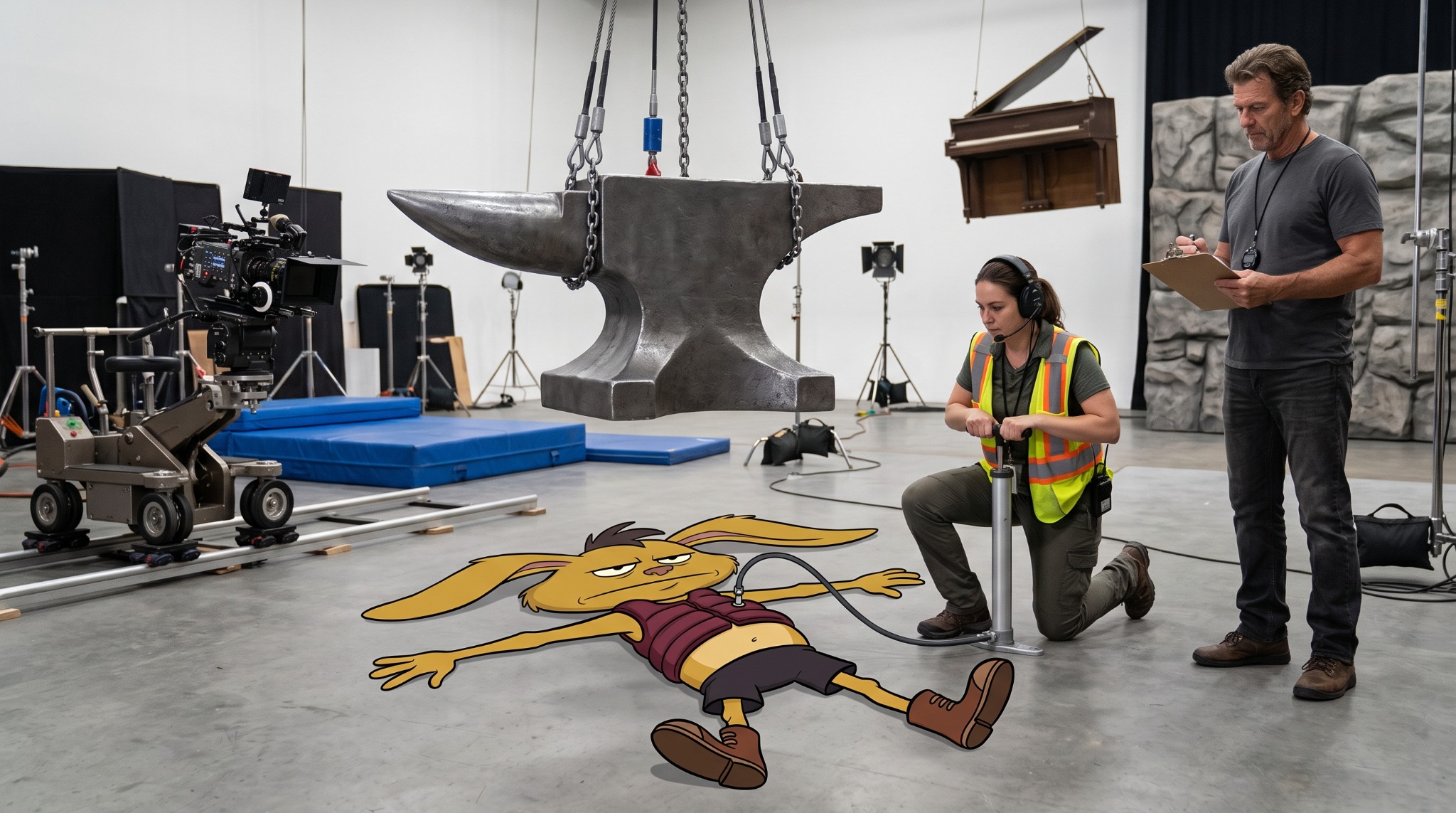
Classic toon physiology means many injuries that would be catastrophic for ordinary people are temporary. Flattened performers are typically restored with air pumps, bicycle pumps or several seconds of privacy. Explosion victims frequently require cosmetic soot removal rather than hospitalization. Detached beaks remain an administrative headache but are rarely permanent.
“The client may be fine,” one adjuster said, “but the apartment is still a crater.”
Property damage is different.
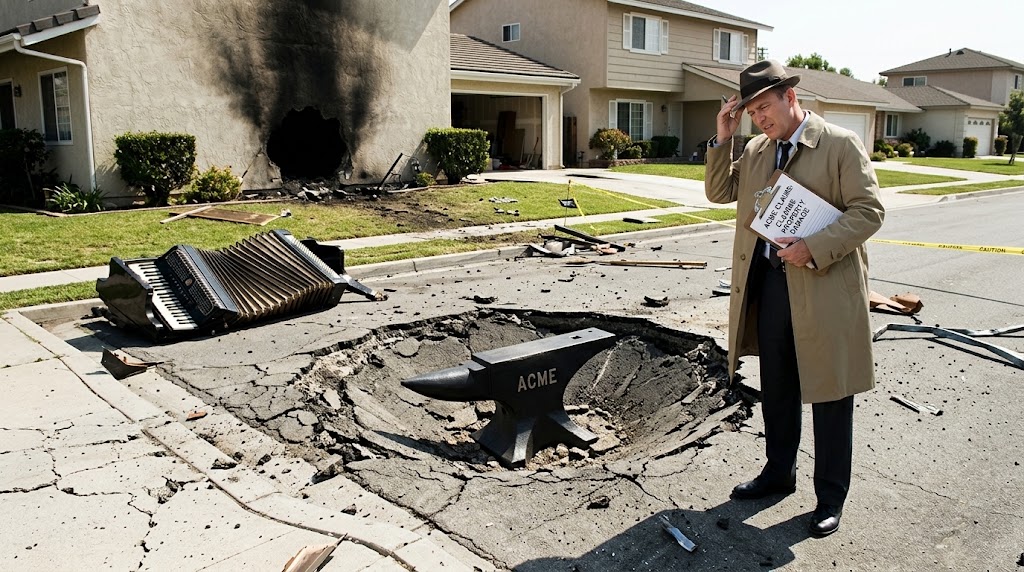
“The client may be fine,” one adjuster said, “but the apartment is still a crater.”
Insurers have responded by separating bodily-harm coverage from gag-related property coverage and charging premiums based on profession. Coyotes, hunters, stunt performers and anyone employed in a dynamite-adjacent field pay the highest rates. Rabbits, oddly, tend to be cheaper unless the policy includes tunnels.
Permanent-fatality claims remain exceptionally uncommon in the toon population, according to industry executives, and are handled differently from ordinary gag injuries. Modern policies still separate ordinary slapstick loss from the small category of hazards capable of producing permanent death. “Dip” exposure remains specifically excluded by several carriers. That rarity makes true fatality cases both financially large and administratively complicated.
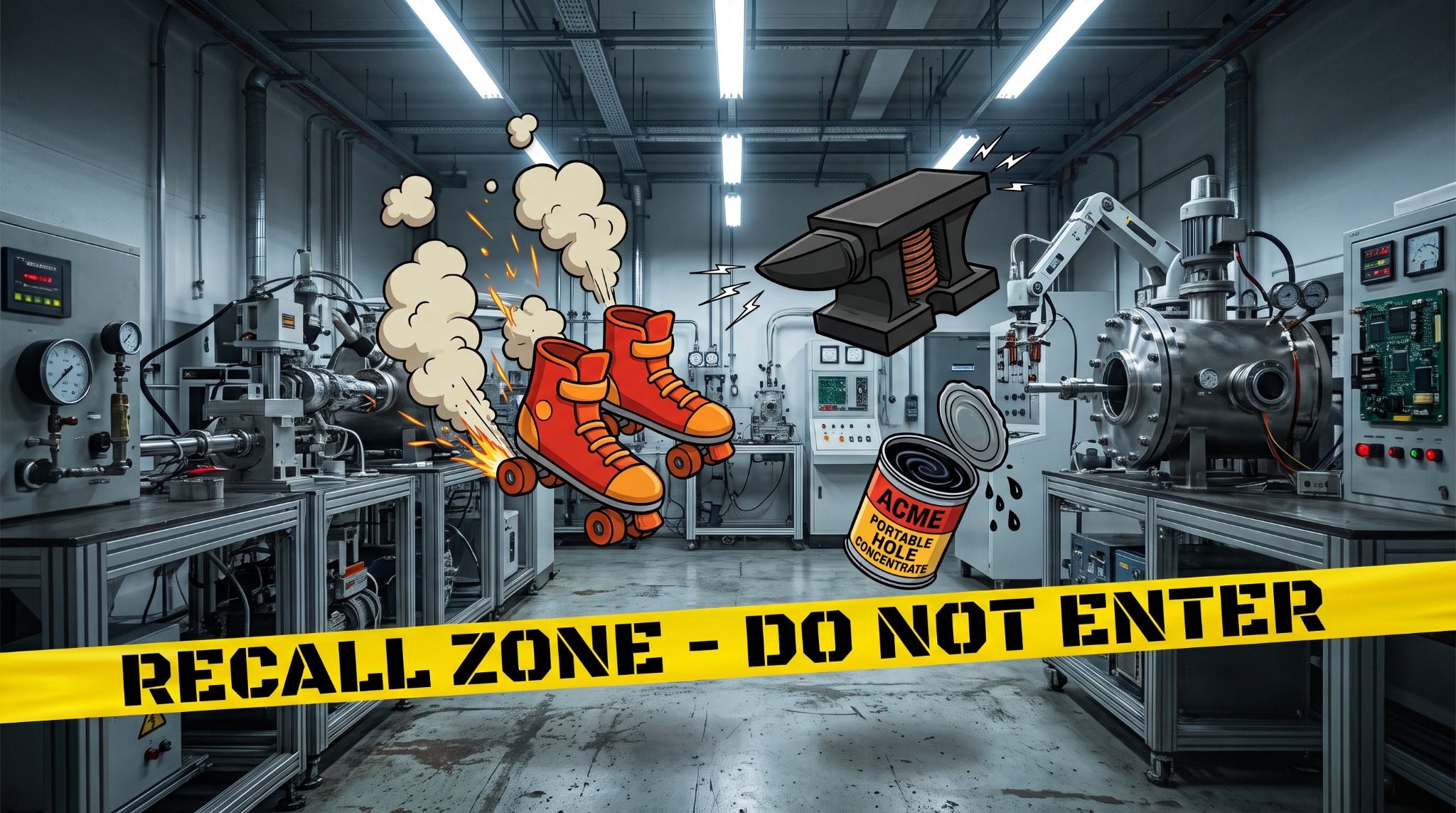
Some companies now require clients to certify whether they own anvils, rockets, portable holes or mallets over twenty pounds. Several offer discounts for homes without cliffs.
Nobody qualifies.