The fastest-growing studio in ToonTown does not have a backlot. It has six microphones, three cameras, a sofa and a neon sign somebody ordered online.
Podcasting has become the preferred second career for performers who already have a recognizable voice and no interest in waiting for a network to greenlight anything. The format is cheap, direct and increasingly visual. A toon can record in the morning, sell three sponsor reads by lunch and spend the afternoon clipping the argument for social media.
The shows fall into familiar lanes. Long-form personality interviews dominate one corner of the business. True-crime and mystery series occupy another. Daily news briefings, celebrity confessionals, sports conversations, explainers and loose “friends talking to friends” shows fill out the rest. ToonTown has copied all of them — sometimes with surprisingly plausible hosts. Porky Pig’s résumé, for instance, already includes accounting, catering and a stint on city council, which is more policy experience than several people currently holding microphones.
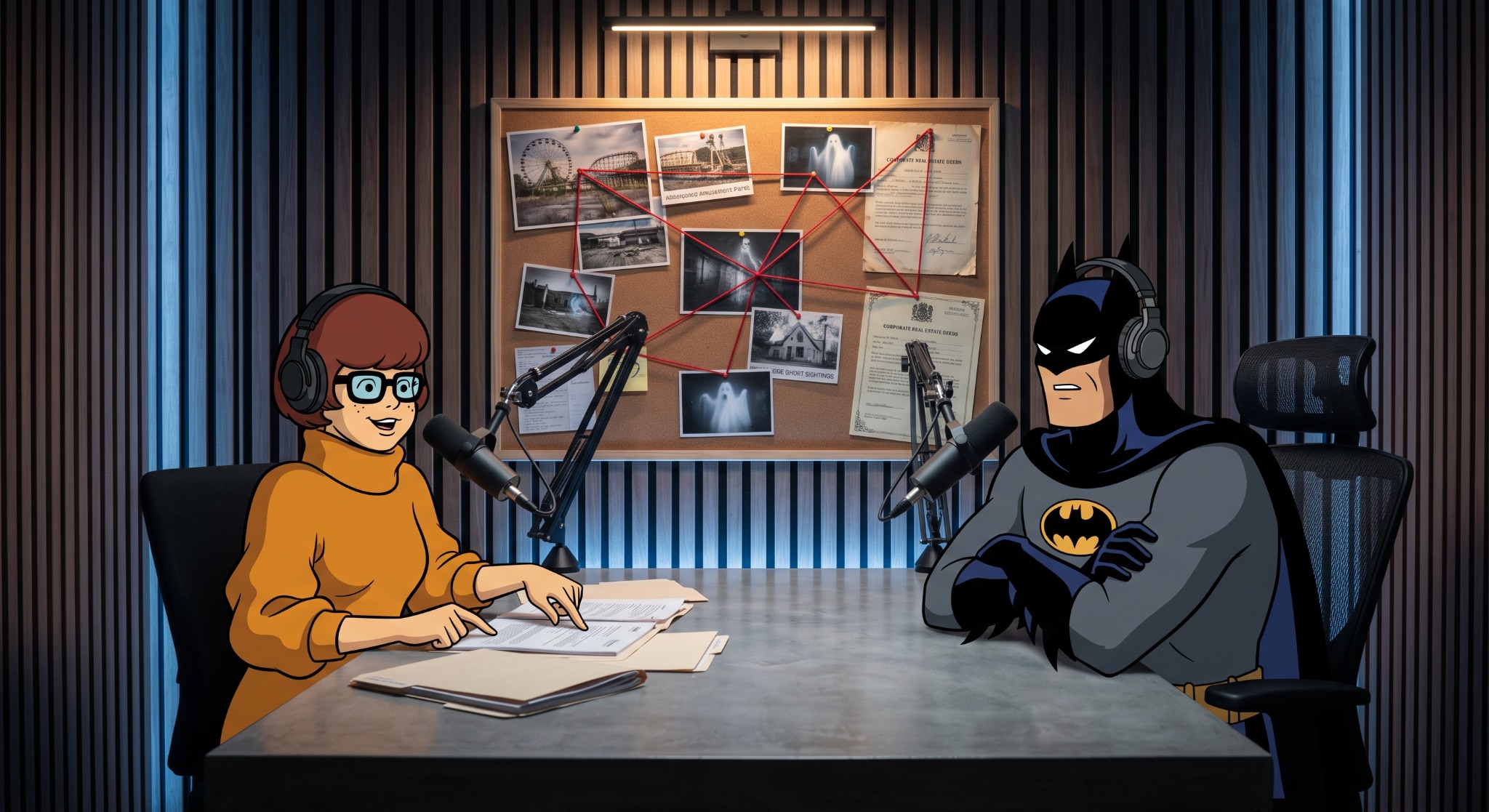
Velma Dinkley and Batman have become the category’s strangest prestige pairing with The Evidence Room, a true-crime series in which Velma methodically dismantles impossible-looking cases while Batman treats every recording session as an active investigation and has yet to acknowledge that microphones are present. Porky Pig records a tightly edited morning-news briefing whose greatest innovation is an aggressive producer with a stopwatch. Lola Bunny has a video-first advice-and-interview show built around candid conversations with athletes and performers. Pinky and the Brain host an explainer program that reliably begins with a serious question and ends with a failed plan for global domination.
Talent attorneys have started reminding clients that “casual conversation” stops being casual when it has a sponsor, a transcript and 2.4 million views.
Celebrity roundtables have become especially crowded. Yakko, Wakko and Dot record together because no booking agent was willing to choose only one of them. The resulting show has three hosts, five cameras and no documented instance of a guest finishing an answer.
Even the business category has toon royalty. Scrooge McDuck’s weekly founder interview, recorded beside the Money Bin, has become required listening for young entrepreneurs who apparently do not find “already possess a building full of gold coins” to be discouraging career advice.
Foghorn Leghorn does, eventually, enter the story. His I Say What I Say belongs to the long-form conversation school, except the conversation is frequently theoretical. Episodes routinely pass three hours. One recent installment advertised as a “quick reaction” required an intermission.
The shift has created a new problem for publicists and lawyers: performers now generate hours of searchable, timestamped speech every week. Studios monitor episodes for accidental announcements, contract disputes and feuds. Campaign staffs clip friendly appearances. Opponents clip everything else. Talent attorneys have started reminding clients that “casual conversation” stops being casual when it has a sponsor, a transcript and 2.4 million views.
Fans consider that a feature. For decades, toon performers were filtered through shorts, press junkets and studio publicity departments. Podcasts let them talk until they reveal who they actually are — or at least who they are after two hours and a meal-kit ad.
There is now a new ToonTown podcast roughly every seven minutes. Most will fail. Several will become television shows. At least one will probably solve a crime.