LOS ANGELES — A cartoon is not finished when the camera stops. Somebody still has to cut the sequence, mix the orchestra, paint out the wire, build the explosion and add the BOING after the frying pan connects.
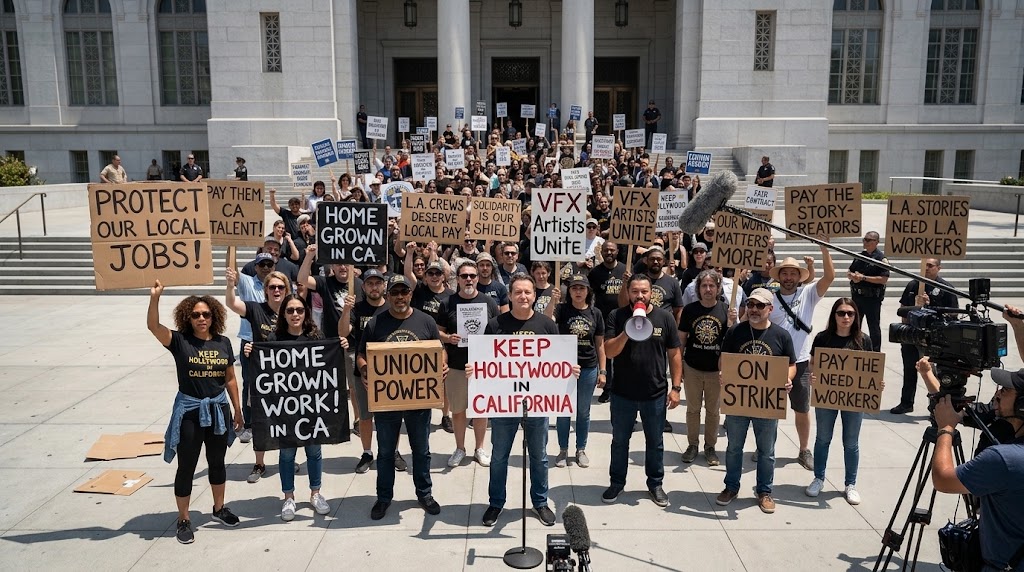
California’s post-production workers are asking Gov. Gavin Newsom to sign AB 2319, a bill that would create the state’s first standalone tax incentive specifically for editing, sound, music and visual-effects work.
The Legislature approved the measure at the end of August, with the Assembly voting 72-2 on the final version and the Senate 33-5. As of SHOWBIZ’s publication date, the bill is awaiting the governor’s decision.
Supporters argue that distinction matters because post is unusually portable.
The proposal would offer a 35% to 50% credit on qualified post-production spending in California. Unlike the state’s broader film and television incentive, a project would not need to shoot in California for its post work to qualify here.
Supporters argue that distinction matters because post is unusually portable. A production can film in Georgia, London or on a soundstage built inside a painted desert and still decide months later where the editors, sound teams, composers and VFX artists will work.
The program would launch at $10 million, far below the $100 million supporters initially sought. California has already expanded its broader film and television credit from $330 million to $750 million annually, but advocates say post-production needs its own tool because the work can leave independently of principal photography.
Some economists question whether film incentives generate enough new activity to justify their cost, particularly when subsidies may reward work that would have remained in the state anyway. Supporters counter that the local post sector is already losing ground and that once specialized crews and facilities disappear, rebuilding them is much harder than moving a project file.
For ToonTown, the argument is easy to visualize: the anvil can fall anywhere. The question is whether the sound, smoke, timing, cleanup and final “THUD” still get finished in California.