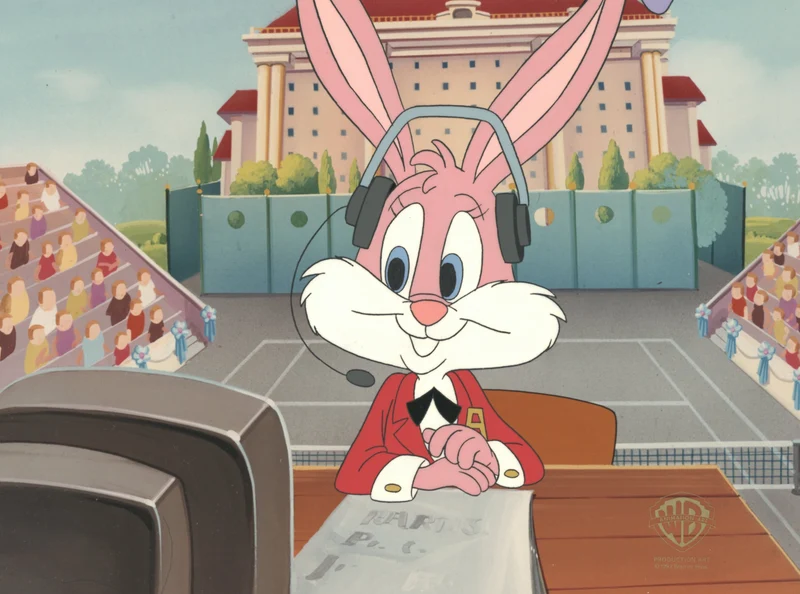

Dale does not pretend he has not had work done.
The fur is different. The lighting catches him differently. His face occupies space now in a way it did not for most of his career. When fans ask, he answers.
It helped.
Across Hollywood, that answer has helped turn CGI surgery from an eccentric experiment into a business strategy. Clinics now market dimensional conversion to traditionally rendered performers as a way to improve compositing, work inside contemporary production pipelines and remain employable in an industry increasingly comfortable mixing live action with volumetric, digitally rendered characters.
RESTORATION, NOT TRANSFORMATION
The clinics prefer another phrase: character preservation.
The sales pitch is not that a Toon should become somebody else. It is that the performer audiences already recognize can be translated into depth without losing the design that made the character readable in the first place.
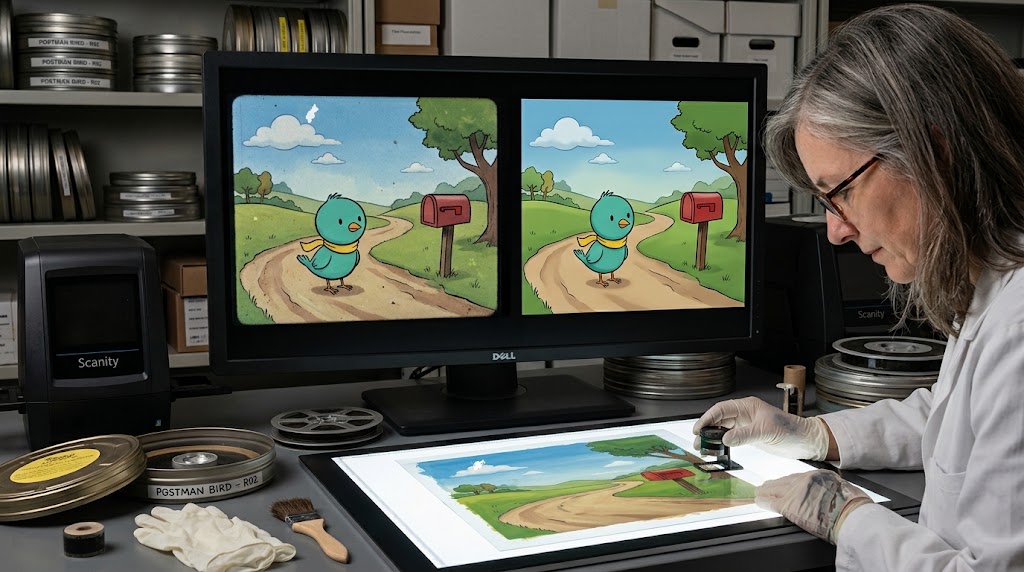
The challenge was adding depth without destroying the drawing audiences recognized.
Dimensional surgeons face the same problem with a patient.
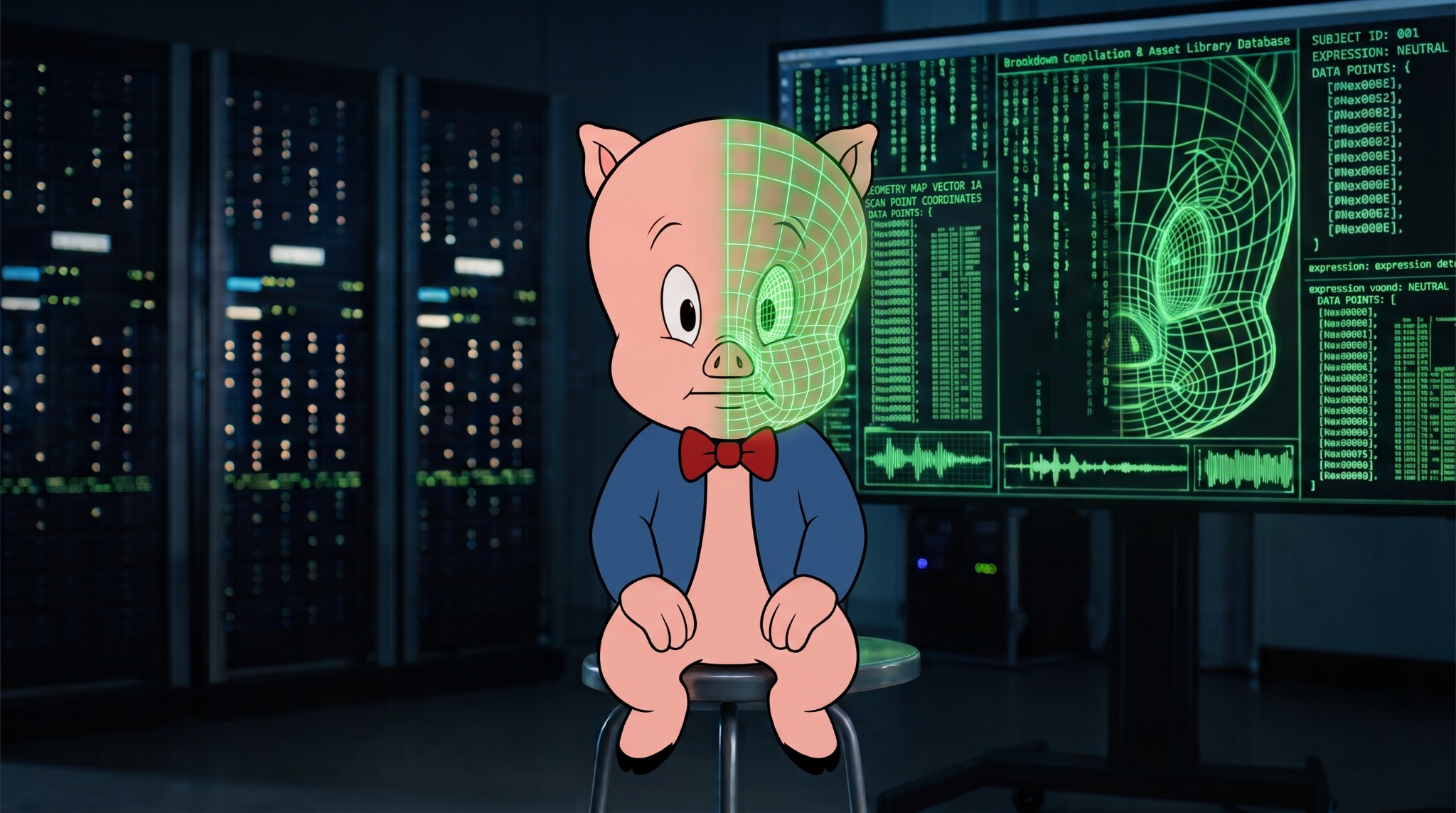
Muzzles, eyes, cheeks, hands and silhouettes that worked perfectly in two dimensions can become awkward when translated literally into volume. The best procedures preserve exaggeration. The worst discover the uncanny valley after the patient has already signed the consent forms.
FROM MAKEOVER TO BUSINESS STRATEGY
Early dimensional procedures were experimental. Some were performed for a specific production. Others were sold as novelty makeovers to wealthy performers curious about seeing themselves rendered differently.
That changed as hybrid productions became more common and casting offices grew accustomed to working with dimensional assets.
Agents began asking whether older clients could composite cleanly beside live-action performers. Producers began asking whether legacy characters could be relit, re-rigged and integrated into pipelines built around modern CGI. Clinics started advertising answers.
To the industry, the procedure can look cosmetic.
To the patient, it can be economic.
THE DALE EFFECT
Dale became the case everybody cited.
His conversion was public, visible and — most importantly — followed by work. Convention bookings increased. Nostalgia appearances became easier to package. Producers who might once have treated his traditional rendering as a technical obstacle now had a dimensional version ready to move through contemporary workflows.

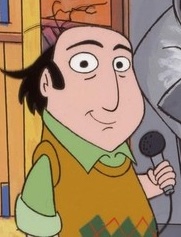
Chip made a different choice. He stayed traditional, stepped away from entertainment and built a quieter life in insurance. Within the industry, that contrast is sometimes presented as evidence that conversion determines who keeps working.
It does not.
Chip left because he wanted to. Dale converted because he wanted to keep performing. Their careers diverged before their rendering styles did.
WHEN IT WORKS
Successful conversion is often less dramatic than the advertising suggests. A performer heals. Expressions remain recognizable. The new surface catches light. The old timing survives underneath it.
For producers, the benefits can be practical: fewer compositing compromises, easier relighting and a character who can move between animation and live-action environments without an entire pipeline being rebuilt around them.
For performers, success is harder to measure. Getting a new face is not the same as getting a new career.
WHEN IT DOESN’T
One former television headliner agreed to speak with SHOWBIZ only if his identity was protected.
His aggressive conversion was technically successful. He healed. The render held. The problem was that his familiar muzzle, cheek movement and squash-and-stretch range did not.

“The surgeon did exactly what he promised. That was sort of the problem.”
Dr. Madge Honey Badger, a Toon-medicine physician who does not perform cosmetic conversions, says medicine has a habit of treating surgical success and patient success as though they are interchangeable.
“People hear successful operation and think that means good outcome. Those are not the same thing,” she said.
“If somebody heals perfectly but no longer recognizes the way their own face moves, that is still a bad outcome. Identity is not a cosmetic side effect.”
THE RISE OF REVISION
A second business has grown behind the first: revision.
Some patients want more realism removed. Others want proportions restored. Increasingly, specialists advertise 2.5D restoration — retaining enough depth for contemporary production while returning the performer to cleaner shapes, flatter surfaces and a silhouette closer to the one audiences remember.
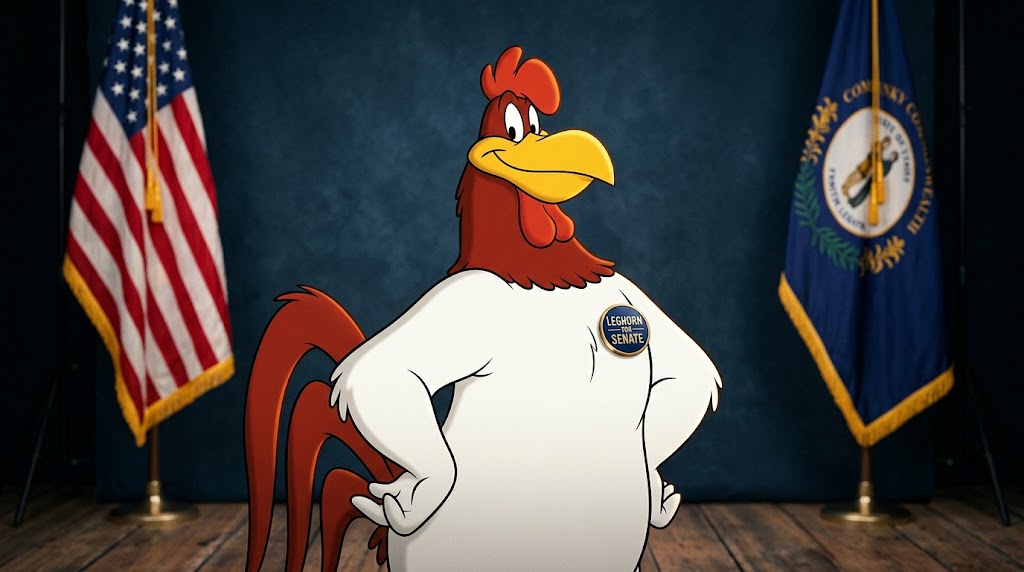
Foghorn Leghorn entered that process after adopting a more dimensional appearance during a later phase of his film career. The conversion was intended to help him work comfortably inside modern hybrid productions.
Technically, it worked.
Personally, the result was more complicated. The added surface detail drew criticism from fans and, according to people familiar with the process, left him feeling less like the rooster he had spent decades seeing in mirrors, publicity art and footage.

His revision reduces realistic feather treatment and restores more of the traditional silhouette. The timing also coincides with a career that has moved away from entertainment and into public life.
RENDER DYSMORPHIA
Clinicians have begun using the informal phrase render dysmorphia for a recurring pattern: a patient likes the simulation, survives the conversion and then feels disoriented by the ordinary movements of the resulting face.

“We’re very good at showing patients a simulation of what they could look like,” Dr. Honey Badger said. “We’re much less good at preparing them for what it feels like to live inside the result.”
The triggers can be tiny.
“A hand gesture. A smile shape. The way the eyes flatten when they’re tired,” she said. “That grief is real.”
IS IT ELECTIVE IF YOUR AGENT SUGGESTS IT?
Officially, most CGI surgery remains elective.
That definition gets harder to defend when a performer’s agent, manager or producer begins describing dimensional compatibility as something the market expects.
No one has to tell an aging Toon that a procedure is mandatory. Sometimes it is enough to say that a new production is being built for performers who can be relit, re-rigged and dropped into a dimensional environment without additional conversion work.
The pressure is rarely written into a contract. It can still shape who believes they need an appointment.
THE OVERSEAS MARKET
The industry is no longer confined to Los Angeles. Seoul, Mexico City, Istanbul and other international centers now advertise specialized dimensional work to Toon patients traveling for lower costs, shorter waits, privacy or expertise unavailable at home.

Dr. Honey Badger says geography is not the problem.
“The question isn’t whether the clinic was in Los Angeles or Seoul. The question is who takes care of you when something changes six months later.”
Records may be stored in different systems. Rigging or rendering software may not match what a revision specialist uses back home. A patient may return thousands of miles away from the team that understands exactly what was altered.
“A patient can save money on the front end and still pay for it later in confusion, delay or corrective care,” she said.
THE SECRET PATIENTS
Not everyone who converts announces it.
Clinics and representatives describe a growing class of performers who quietly adjust depth, texture or rigging while publicly attributing the changes to production technology. Because the same visual differences can be created by a studio pipeline, a personal procedure or some combination of both, outsiders often cannot tell which they are seeing.
That ambiguity is useful to patients who want the career benefits without turning their faces into industry case studies.
THE CHARACTERS WHO SHOWED WHAT 3D COULD — AND COULDN’T — DO
Not every dimensional redesign is surgery — and in the early years, the line was not always clear.
Sonic remains one of the most debated cases from the early dimensional-conversion era. People close to the production have long disagreed over whether his first realistic appearance should be classified as a true surgical conversion, an unusually invasive studio redesign, or something in between. What is clear is that the result was rejected almost immediately. The studio ordered extensive corrective work, restoring a more familiar face, proportions and expression system before release.

For surgeons, agents and studios, the episode became an early warning: technical realism could be achieved long before anyone had agreed on what “looking right” actually meant.
Other cases remain more clearly production-driven. Mickey Mouse and other classic Disney performers have appeared in dimensional productions, while Garfield has moved among rendering styles for decades. Those appearances demonstrate what production technology can do, but they do not by themselves confirm that the performers underwent medical conversion.
The distinction matters because the surgery boom borrows its promise from images Hollywood already taught audiences to accept.
THE FACE THAT GETS THE JOB
Every clinic can show a patient what a new face might look like.
No clinic can show the call sheet that comes afterward.
There is an after-after.
The surgery heals.
The novelty passes.
The next audition arrives.
Or does not.
A surgeon can give a Toon depth.
Hollywood still has to give him a part.